Most Safety Problems Aren't System Failures. They’re Leadership Failures.
This conversation with Michael Dupont explores why better safety outcomes come from mindset, consistent leadership, and systems.
What if the biggest gap in safety performance is not systems, but mindset?
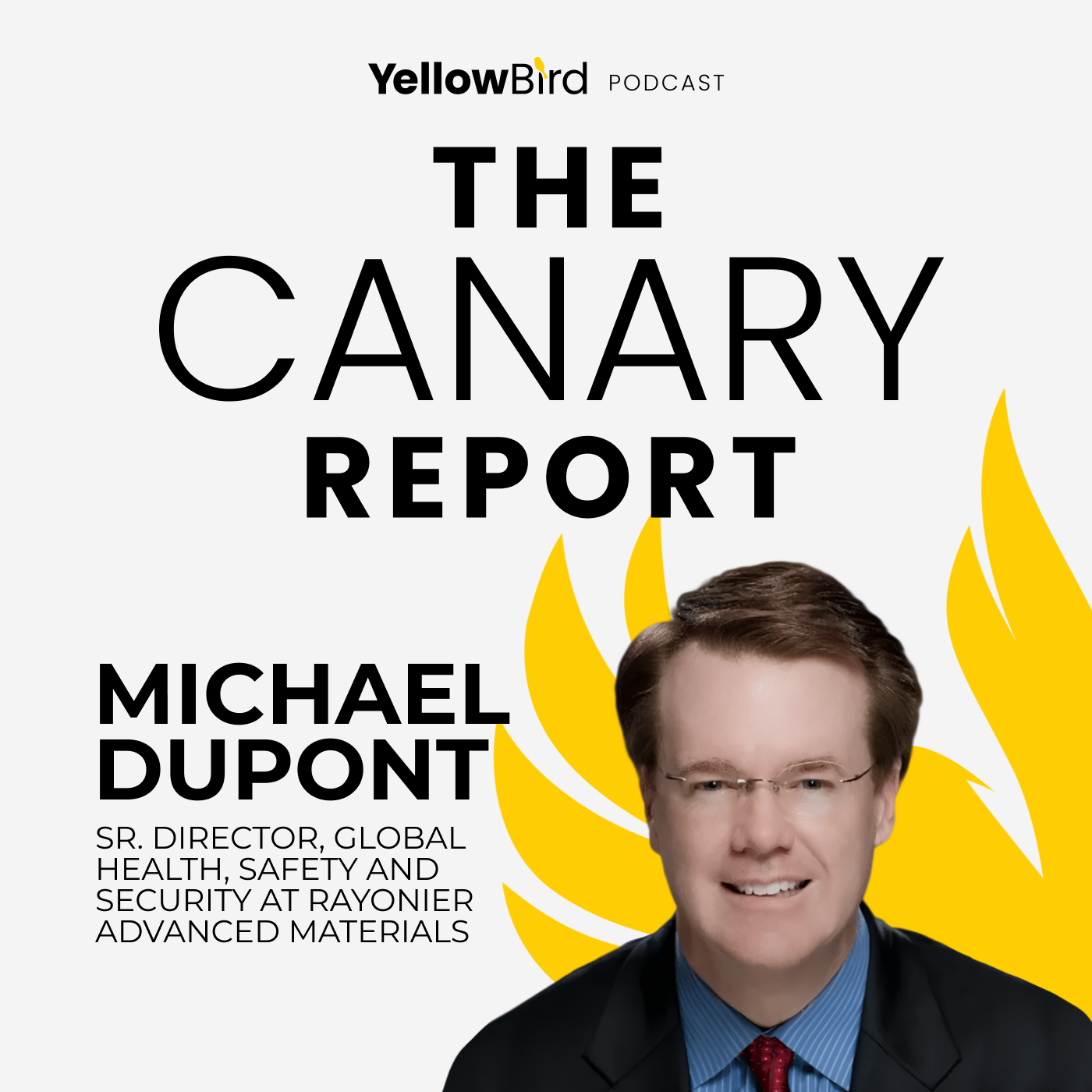
In this episode of The Canary Report: Safety & Risk Management, host Michael Zalle sits down with Michael Dupont, Senior Director of Global Health and Safety at Rayonier Advanced Materials.
The conversation is about how ownership, behaviors, and simple systems shape real outcomes.
With decades of experience across operations and global safety leadership, Michael brings a the message that safety is not an option, but a standard you choose to uphold.
A Professional Mindset Changes the Outcome
Michael often asks a room full of safety leaders: who here considers themselves a real professional?
Very few people stand up. What is the reason for that hesitation? If you are paid to do safety work, then you are a professional. But the impact comes from how seriously you take that role. When people treat safety as temporary, they limit their ability to lead. When they commit to it, the quality of decisions and actions improves.
1. Build Systems That Prevent Harm
Wanting fewer injuries is not a strategy. Michael explains that safety results are a direct outcome of the system in place. If the results are not where they should be, the system needs to change. His “five five five” approach focuses on what leaders actually do each day to prevent injuries. By defining and measuring those actions, the focus shifts from reacting to incidents to preventing them.
2. Leadership Shows Up in Daily Actions
Safety leadership is about what leaders do in small moments, and how they make those judgments. It is not just governed by policies or regulations.
Walking past an unsafe condition, skipping safety in communication, or failing to follow through sends a clear message. Expectations only matter if actions support them.
Consistency in these moments builds trust and reinforces standards across the organization.
3. Experience Brings Perspective
Time spent in operations shaped how Michael leads safety today. Understanding the realities of the job makes it easier to design systems that people can actually follow. It also builds credibility. Leaders who understand the work are better positioned to influence it.
4. Be Present and Make It Count
Travel is part of the role, but being present is a choice. Michael emphasizes the importance of showing up fully engaged. Whether it is a site visit or a training session, focused time creates real impact. If the work is worth doing, it is worth doing well.
5. The Standard To Uphold
Safety is not built through policies alone but through people who take ownership of their role. Being a professional is less about knowing everything and more about committing to doing the work well, every day. If you are responsible for safety outcomes, then the question is straightforward:
Are you showing up like a professional? Listen to the full episode to hear how Michael Dupont says you should find out and do leave a review with your thoughts.
Apple Podcasts:
https://bit.ly/3OEzUoF
Spotify:
https://bit.ly/3QIpwwB
YouTube:
https://youtu.be/1RrauIdJF8s