These Leadership Behaviors Make Safety Culture Stronger
How to identify the trust gap in safety leadership, and strategies on how to close it.
On the floor, credibility is built one response at a time. People decide what they believe about you by watching how you handle concerns, how quickly you act, and what keeps showing up week after week. Those everyday cues add up fast, determining whether safety feels like a shared effort or a program.
For Brian Biancavilla, Director of EHS at Trelleborg Engineered Coated Fabrics in Rutherford, NC, that lesson has been reinforced over a 35+ year career. His work has ranged from hazardous materials response and emergency operations to refinery environments and manufacturing EHS leadership. Over time, he’s learned that people speak up sooner—and more honestly—when they believe their input will lead to action.
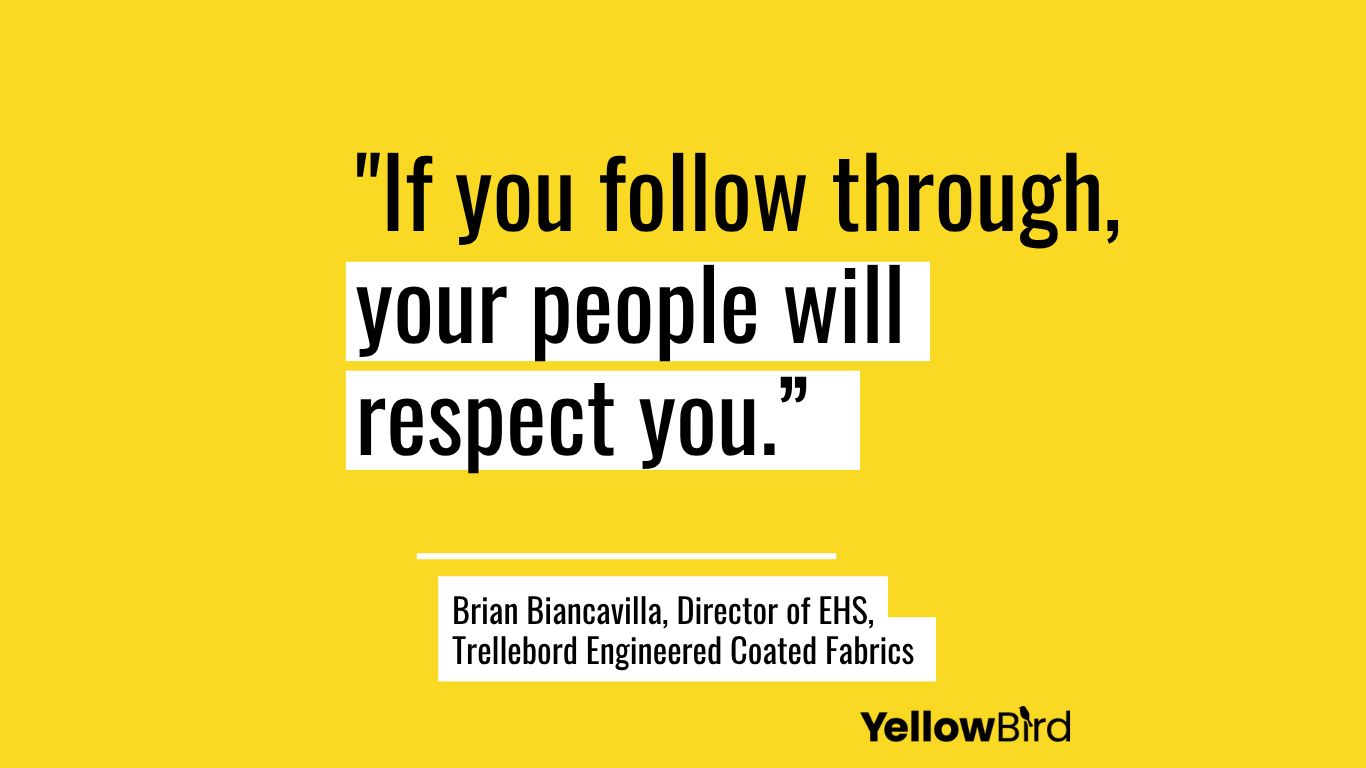
“If you follow through, your people will respect you,” he says. “And they will bring you the problems because they know you’re going to address them.”
Here are four lessons Biancavilla has learned the hard way—practical, floor-tested ways to bring the real issues to light sooner, build trust faster, and strengthen participation in safety.
Lesson 1: The Early Warnings Come Disguised as Small Talk
Frontline employees sense friction long before it turns into an incident, a near miss, or a formal escalation. They feel it in the pace of the work, the shift handoffs, and the equipment quirks everyone has adapted around. Most of the time, what surfaces first is casual—a quick comment that carries more truth than it sounds like it does.
“The hourly people that are on the floor, they will bring you the issues and the problems,” Biancavilla explains. “But they may not bring it to you in the mechanism in which you want it delivered.”
What to tune into early:
- Offhand comments during walkthroughs that repeat across weeks.
- “Normal” workarounds people mention without thinking twice.
- Quick observations shared at shift change, when routines get compared.
One detail that reveals where safe work feels harder than it should.
Lesson 2: Real Listening Starts with What People Don’t Formalize
Biancavilla treats listening like an operating skill. It takes attention in environments where people learn by doing, and where nobody has time to craft the perfect explanation in the middle of production. The most useful insights often arrive in fragments. The leader’s job is to catch them early and pull the thread.
“Pay attention,” he says. “A lot of the subtleties get overlooked, and then those employees feel like they weren’t heard.”
He built familiarity deliberately by showing up consistently until people felt comfortable bringing things directly to him. That kind of rapport changes what people share and when they share it.
Early indicators worth a second look:
- Hesitation and understatement: “It’s probably fine, but…” often points to exposure.
- The gap between procedure language and task language.
- Humor, resignation, or “we’ve always done it this way” masking frustration.
Patterns that emerge only when you compare stories across shifts.
Lesson 3: Follow-Through is the Moment Credibility Becomes Real
Listening earns attention, and follow-through earns trust. When someone raises an issue and sees visible action, confidence spreads beyond that one conversation. People begin to believe the system works, and they bring concerns forward earlier—when the fix is simpler and the exposure is smaller.
“It took me about a year here,” Biancavilla says, “and now I’m on a first name basis with almost 200 people in this plant. And anything that’s going on, they bring it to my attention or my team, and they know we get things fixed.”
That phrase—they know we get things fixed—does a lot of heavy lifting. It’s the engine behind a reporting culture because it makes speaking up feel worthwhile.
How to make follow-through visible and repeatable:
- Circle back to the person who raised the concern, so their effort lands.
- Make improvements obvious in the workspace through tools, labels, layout, and standards.
- Share what changed in plain language so crews see progress.
Build a steady cadence for fixes, so action feels reliable.
Lesson 4: When the Risk is High, the Process Has to Be Bulletproof
Follow-through also shows up in high-liability moments: industrial hygiene, regulatory training, hazardous materials handling, life safety systems. Biancavilla brings in qualified third parties in these areas because credibility has multiple audiences—auditors and regulators, yes, and also the workforce watching whether standards stay strong under pressure.
“You always have to look out for inherent bias,” he says. “If there were a legal action, would they see that as something that you’ve cherry picked?”
A solid process protects outcomes, strengthens defensibility, and reinforces trust. People can feel when a standard holds firm, especially during busy seasons and high-pressure stretches.
Where process integrity strengthens credibility:
- Industrial hygiene surveys and sampling plans designed by certified experts.
- Specialized trainers for high-liability certifications and recurring requirements.
- Annual safety inspections treated as leadership priorities, not check-the-box events.
- Consistent standards across shifts, departments, and seasonal pressure.
Putting it All Together
Biancavilla’s lessons point to a simple truth: operational credibility lives in the loop. When employees see subtle concerns taken seriously, practical fixes show up where the work happens, and leaders return to close the conversation, the flow of information changes. People bring the small stuff while it’s still small.
After a while, that becomes culture. Safety feels shared, reporting feels worth the effort, and trust gets built in the same steady way every day: listen closely, respond clearly, and follow through.
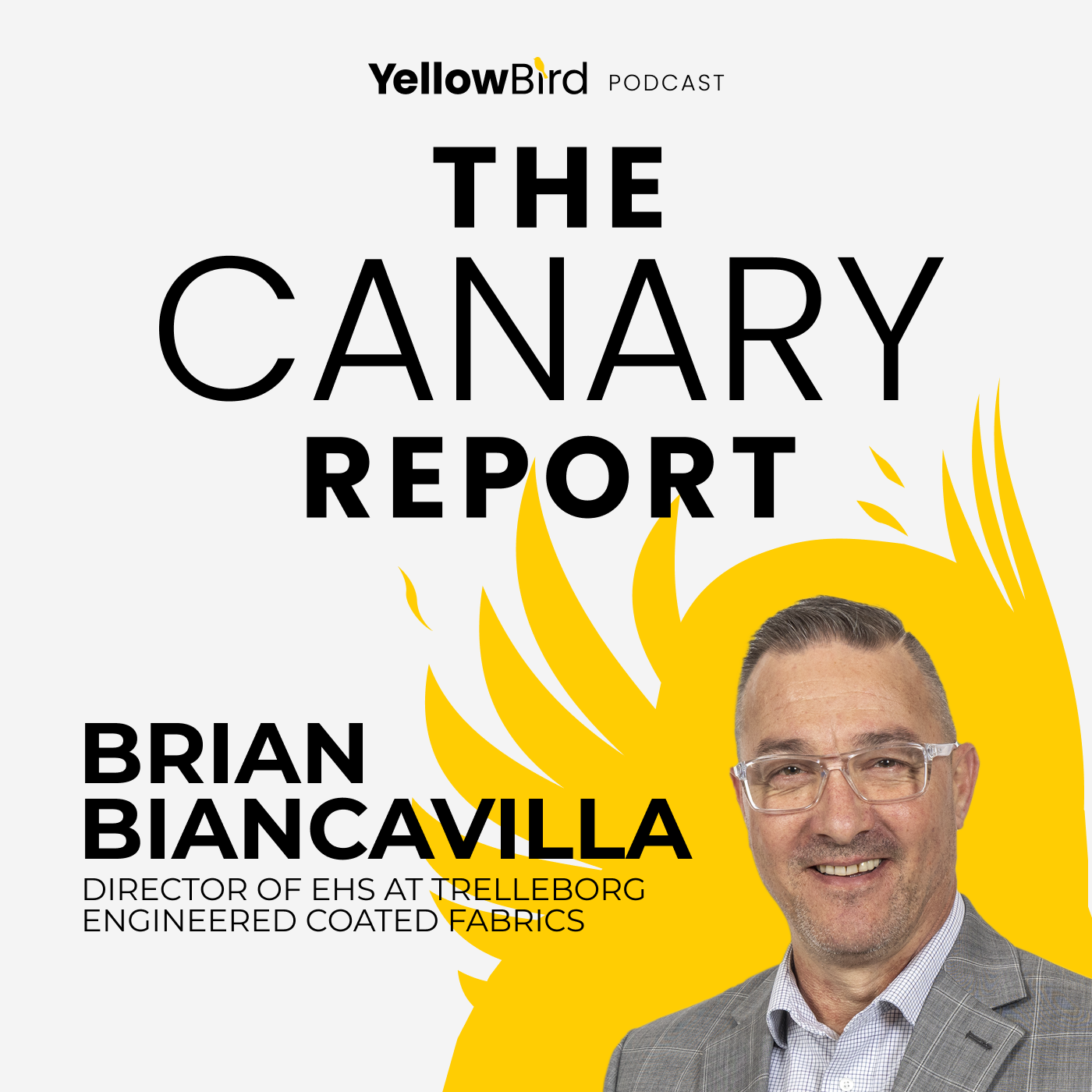
For more insights from Brian Biancavilla, check out this episode of
The Canary Report:
Apple Podcasts: https://bit.ly/44U1cwi
Spotify:
https://bit.ly/4qCf86C
YouTube:
https://youtube.com/watch?v=ip5Je9Hrpno