The Question That Changes Every Safety Meeting
Stew Murphy, Director of EHS at Mactac North America, shares five ways to turn safety from compliance into a choice people make.
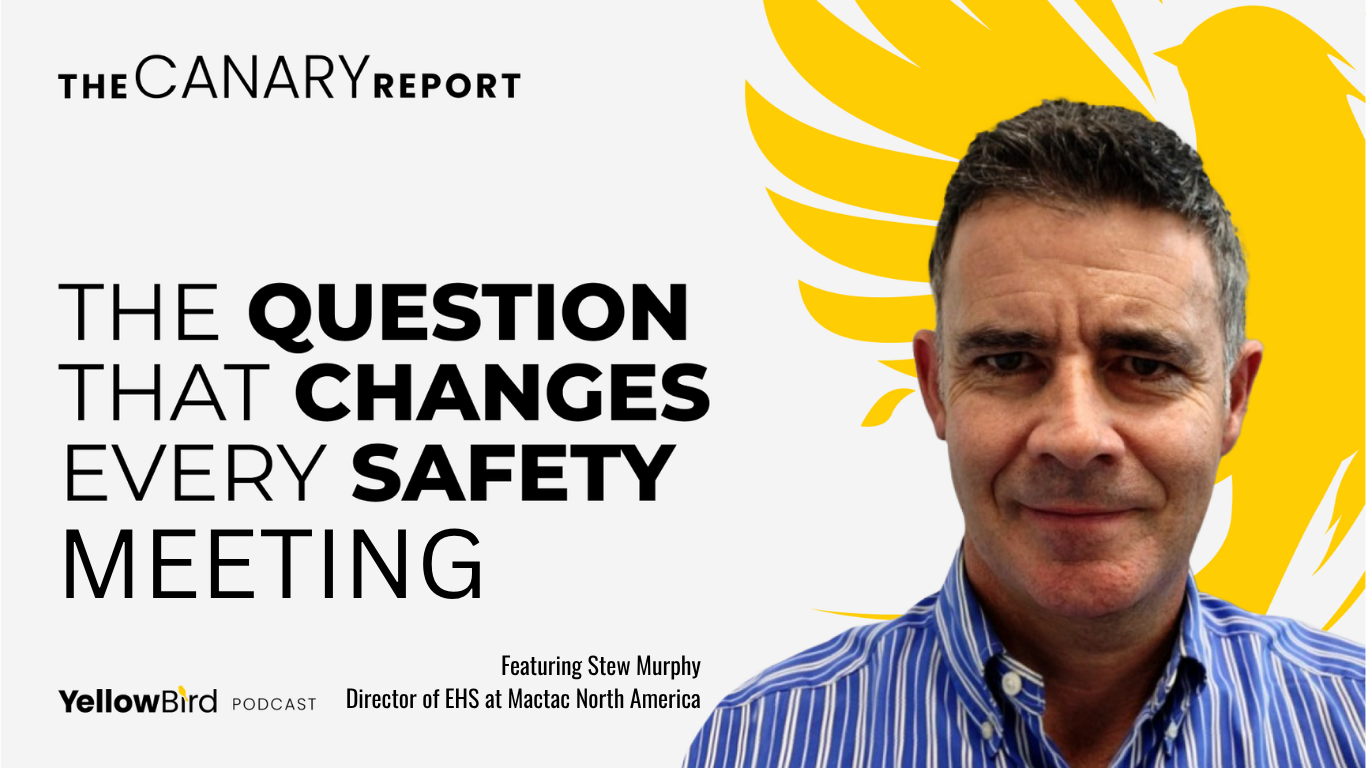
With 25 years in safety—and 35+ years across engineering, EHS, and operational leadership—Stew Murphy has heard every flavor of pushback you can imagine. The most common, by far: “We’ve always done it this way.”
In hands-on work, that mindset can feel efficient and familiar. And when the pressure is on, safety can sound like an interruption—until the people doing the work choose to make it matter.
That’s the shift Murphy cares about most. “I don’t care if the people are safe,” he says. “I care if the people care to be safe. They’ve got to get it. When they get it, your job’s done.”
Now Director of EHS at Mactac North America, Murphy has led teams across manufacturing environments around the world. He’s an engineer by training, but his strongest lever for safety is human: build the conditions where people choose safe work because it fits their values, and the reality on the floor.
Here are the patterns he returns to, plus quick “try this” moves: straightforward ways leaders can help crews
care enough about safety to choose it every day.
1. Turn Resistance into Responsibility
Murphy has worked in environments where injury feels like part of the job—almost a badge of toughness.
“I had guys whose backs of the hands looked like a Google Map because it had that many scars on it,” he says. “They’re like, ‘I work with steel. I get hurt. What’s the big problem?’”
Instead of trying to win that moment with policies, Murphy goes to values.
“When I meet that resistance,” Murphy says, “one of my tricks is to ask the person refusing the change, ‘Could you do a bring-your-daughter-to-work day, and have them work alongside you?”
He’s seen the reaction every time: “The color drains from their face. And they go, ‘I wouldn’t tell my daughter or son to work like that.’ Why? ‘Because they’re going to get hurt.’”
Try this (to move people from defending habits to owning outcomes):
- Ask the values question in the moment: “Would you feel good teaching this method to a new hire—or your kid?”
- Follow with a practical next step: “What’s the smallest change that makes the safe way the easy way?”
2. Make Presence Practical
For Murphy, being present isn’t about a walk-through for optics. It’s leaders staying close enough to the day-to-day work to hear what’s real—especially when the truth is inconvenient.
“Being present means listening,” he says. “I can’t stress enough the listening part of it.”
That listening surfaces the disconnect between written systems and lived systems—where routines settle in and risk gets missed. Murphy calls it “safety blindness.”
“It’s when you see things all the time, but you never really see them, because they’re just there every day,” he says.
Try this (to build trust and get honest answers):
- During walk-throughs, lead with two questions: “Where does the safe way feel harder?” and “What have we gotten used to?”
- Pick one friction point and act fast: remove the barrier (tool, layout, timing, staffing), then circle back and name the change.
3. Bring in Fresh Eyes to Break Old Habits
Murphy likes pulling in someone from another location during incident investigations. That distance helps the team step out of autopilot and look at the work with fewer assumptions.
“They don’t know the site,” he says. “So, they’re not biased.”
Ideally, he’ll also bring in an operator who does the same task. That’s often where hidden habits show up—two shifts doing “the same job” in two very different ways.
“We’ll get shift B in to walk through how they run the same task,” he says. “Shift B has a completely different method that would have stopped the incident, and they never talk about it.”
Try this (to turn one event into shared learning):
- For any incident or near miss, invite one outside voice (another shift/site) and one peer operator who does the task.
- Ask both: “Walk me through your method step-by-step.” Capture differences as a “best-known way,” not blame.
4. Celebrate the Behaviors that Prevent Harm
Murphy is intentional about what he celebrates as a safety leader. He’s seen how quickly the wrong kind of praise shapes behavior. When safety becomes a “streak” to protect, people start managing the number instead of surfacing the risk. When safety becomes a set of repeatable actions—spotting hazards, calling out drift, fixing problems early—people participate.
“The OSHA recordability number is that number,” he says. “The rate is the rate. It is what it is. I’m more interested in what drives it. Let’s celebrate a thousand risk assessments and hazard observations.”
Try this (to reward participation and early problem-spotting):
- Lead updates with actions taken: hazards removed, risks assessed, fixes completed.
- Pair each metric with one quick story: “Here’s what someone caught early, and what we changed.”
5. Make it Easy to Raise a Hand Early
Murphy is rolling out a “safety flag” concept: a quick, consistent way to call out off-normal conditions while there’s still time to reset.
“It’s for the operator to go on the radio and say, ‘I’m throwing a safety flag at my machine because something is out of normal. Not a big event yet,’” he says.
It’s a pause before the problem becomes a story.
Try this (to make speaking up feel normal—and worth it):
- Give teams one standard call-out phrase they can use on the radio: “Safety flag at [task]. Something changed. I need a second set of eyes.”
- Treat every flag like leadership in action: respond quickly, remove the barrier, and recognize the person who raised it.
Where it All Comes Together
“In my email signature,” Murphy says, “it doesn’t say ‘have a safe day.’ It says ‘make a safe day.’ It’s a subtle play on words, but being safe is an active process. You have to make it happen.”
That’s how safety becomes a choice people make: leaders who stay close, reward the right behaviors, and make it easier to speak up early. When crews feel ownership and support, safe work becomes the default—shift by shift, crew by crew.
For more insights from Stew Murphy, check out this episode of
The Canary Report:
Apple Podcasts: https://bit.ly/4aG72F1
Spotify: https://bit.ly/48KTLIO
YouTube: https://youtu.be/-gPpayOVYyY