The EHS Playbook That Turned Hazard Hunts Into Touchdowns
Inside the Scotts Miracle-Gro Company's Proactive Risk Strategy
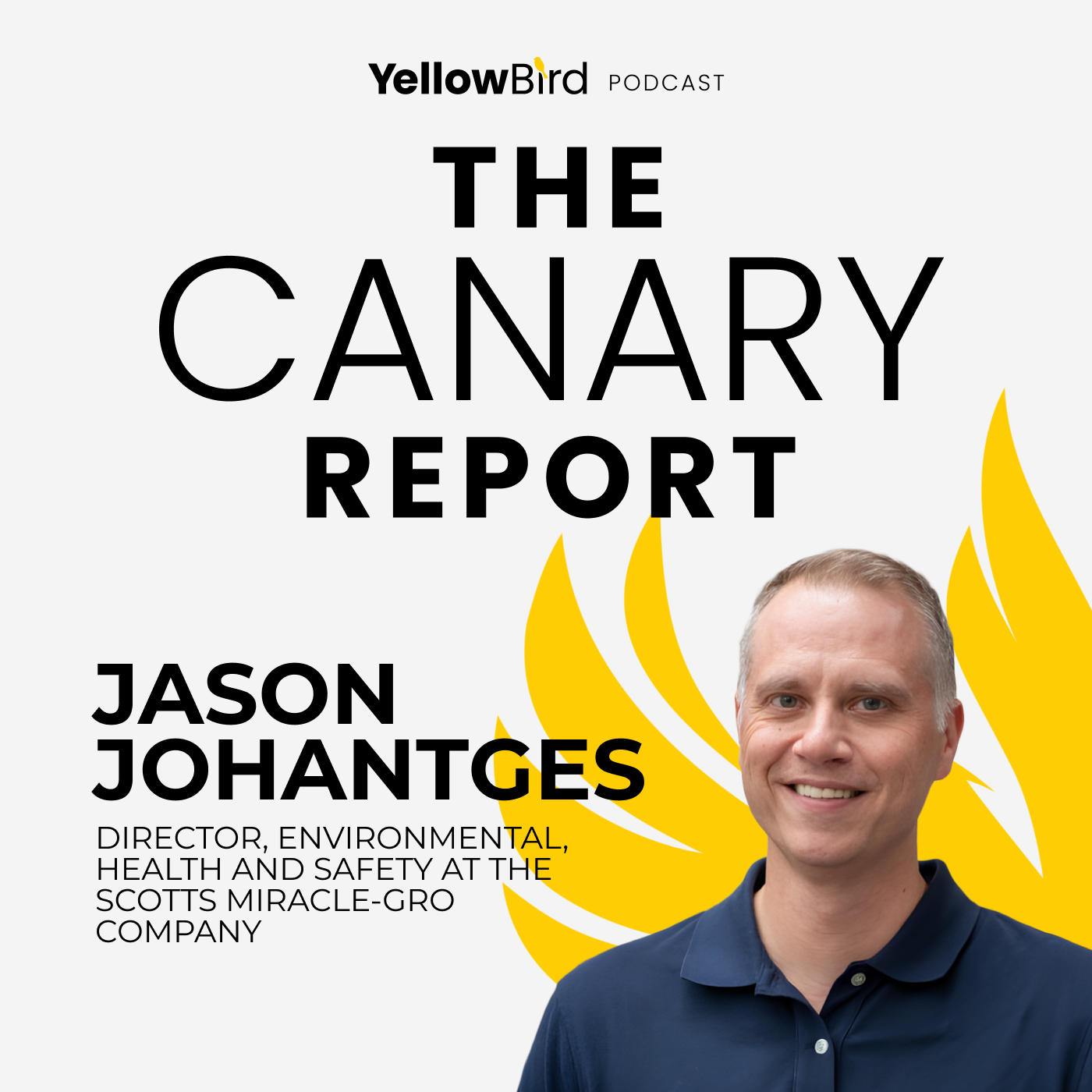
It's easy to get bogged down in the minutiae of compliance and regulatory checklists. But for Jason Johantges, the Director of EHS at Scotts Miracle-Gro, safety is a proactive operational strategy and a commitment to the 8,000 employees who make the company a household name.
With nearly two decades of experience, Jason has moved the needle from reactive "firefighting" to a sophisticated, human-centered approach that makes people feel respected, heard, and on the same team.
Here are some insights Jason shared with us on a recent episode of The Canary Report.
The Anticipation Advantage
One of the most striking lessons from Jason’s tenure is the power of staying ahead of the curve. During the early days of the COVID-19 pandemic, while many organizations were waiting for government mandates, the team at Scotts was already monitoring scientific data and regulatory signals. By the time the rest of the industry was scrambling for PPE, Scotts had already secured their supply chain and even begun manufacturing hand sanitizer and face shields in-house.
This proactive stance was driven by a core philosophy: if an employee shows up to work, they should be as safe, if not safer, than if they were at home alone. This mindset transformed the safety department from a cost center into a vital leadership function. By investing early in worker protection rather than waiting to be told what to do, Scotts achieved the remarkable feat of zero COVID deaths among their workforce.
Gamifying the Frontline Experience
Every organization with a seasonal workforce knows the struggle of injury spikes that happen when production ramps up and temporary labor joins the team. To combat this, Jason introduced "Kickoff for Safety," a program that reframes the first four months of the fiscal year as a football competition. Sites created their own team names and mascots, earning touchdowns for hazard hunts, completed training, and timely incident reporting.
The results were transformative. By gamifying safety, Jason turned a traditionally boring requirement into a competitive, engaging cultural touchstone. This program did not just reduce injuries; it led to the best first quarter in the company's history and its lowest reportable incident rate ever. It proves that engagement beats enforcement every time, especially when dealing with a dispersed and diverse workforce.
Integrating Safety into Strategy
Too often, safety is treated as an afterthought in business decisions, particularly during mergers and acquisitions. Jason has worked to change that by ensuring his team is in the room for due diligence from day one. Rather than trying to fix a broken safety culture three years after a deal is signed, Jason’s team evaluates potential liabilities and cultural misalignments before the acquisition even closes.
This early involvement allows Scotts to bring new companies into their safety family immediately. They do not treat acquired sites like islands; they provide them with the expertise and resources needed to meet the high standards of the parent company. By making safety a key partner in growth strategy, Scotts avoids the long-term risks and hidden costs that often plague post-merger integrations.
Managing High-Consequence Risks
While complex regulations get a lot of attention, Jason never loses sight of the highest risk activity his team faces every day: transportation and heavy equipment operation. Whether it is a yard dog pulling a trailer or a loader operating on-site, the risk of vehicle-related incidents is the one that keeps EHS leaders awake at night.
Jason manages this through a hybrid safety model that balances internal expertise with strategic third-party partnerships. For specialized areas like industrial hygiene, they rely on a firm they consider part of their family to perform sampling and surveys. This allows the in-house team to focus on culture and leadership while ensuring that technical compliance remains world-class.
The Servant Leader Mentality
At the heart of Jason’s success is a humble approach to leadership. He describes himself as a servant of the company, willing to go wherever he is needed to support the mission. This lack of ego has allowed him to build deep operational knowledge across manufacturing, sales, and supply chain, which in turn makes him a better decision-maker.
He also emphasizes that EHS professionals are human beings first. Between managing safety for thousands, Jason co-hosts a long-running podcast about blues and southern rock, a passion that helped him stay grounded during the isolation of the pandemic. This human connection is ultimately what makes his programs work. When leaders lead with clarity and care, employees notice, and the entire organization becomes more resilient.
Ready to move your safety program from reactive to proactive? Subscribe to The Canary Report for more stories from the leaders who are redefining risk and safety management.
Listen to this episode here:
Apple Podcast: https://bit.ly/3OKJXsa
Spotify: https://bit.ly/41R2kib
YouTube: https://youtu.be/jMbq3pGnS3I