Why Crisis Reveals Your Culture and Tests Your Leadership
Henry J. Evans joins Michael Zalle on The Canary Report to discuss crisis leadership, emotional safety, accountability, and building resilient safety systems.
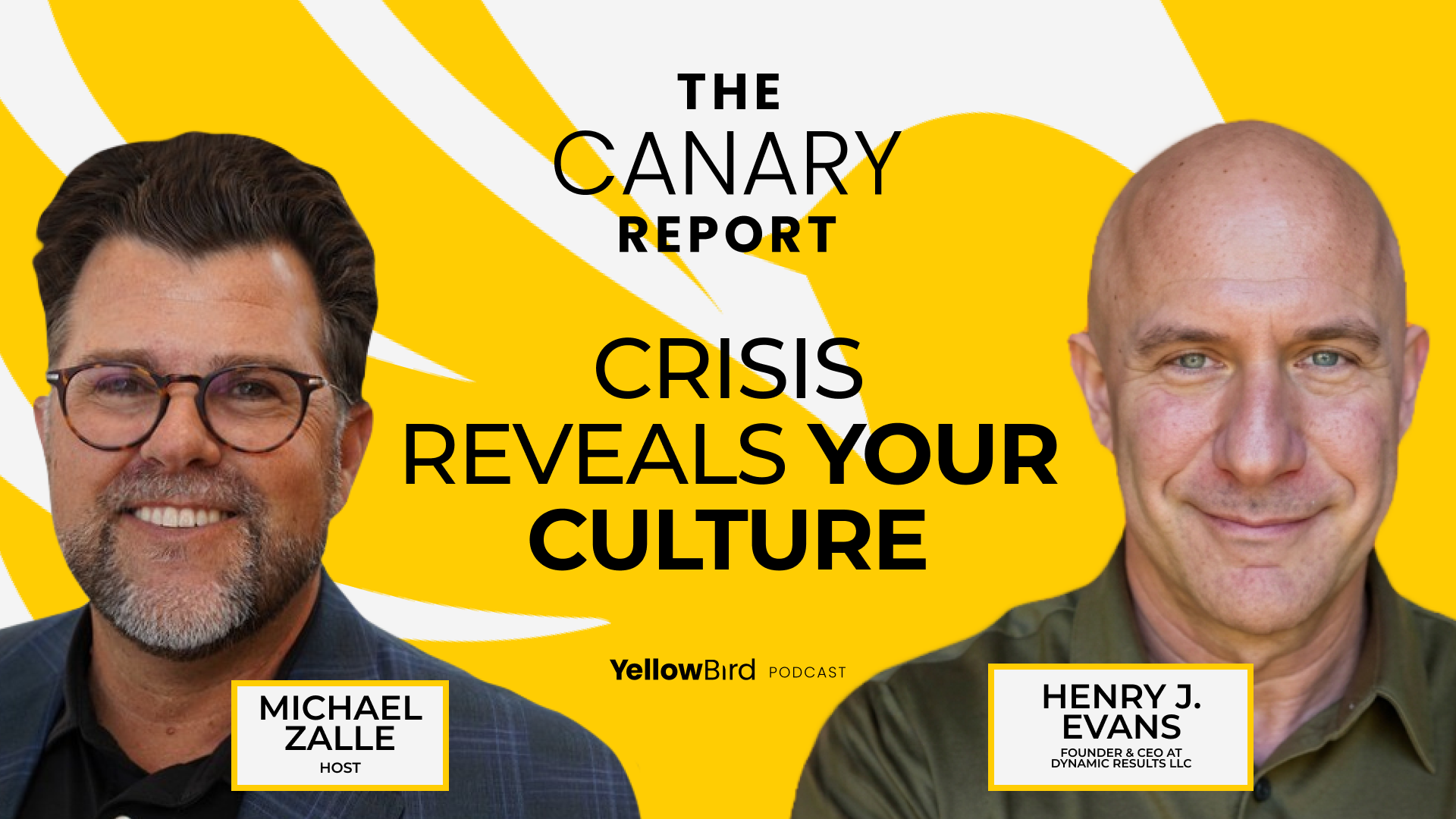
Crisis doesn't create your culture. It reveals the strengths and weaknesses that already exist within your organization. When pressure mounts, leadership decisions, communication, and accountability determine whether teams respond effectively or struggle to adapt.
On The Canary Report, Michael Zalle speaks with Henry J. Evans, founder and CEO of Dynamic Results, about crisis leadership, emotional safety, and managing risk under pressure. Drawing on more than 20 years in counterterrorism and national security, alongside his experience in executive coaching and business leadership, Henry shares practical lessons on challenging assumptions, empowering competent decision-makers, and building stronger organizational cultures.
Challenge Your Assumptions and Solve the Real Problem
Repeated incidents can indicate that an organization is addressing symptoms rather than underlying causes. Henry shares how his counterterrorism team spent two years trying to locate and disarm roadside bombs while casualty rates continued to rise. The breakthrough came when they questioned their foundational assumptions and shifted their focus toward the network training bomb-makers.
Henry explains the importance of learning from failure:
“Don't give up if you're failing. But give up your ego when you're failing and let the best idea win.” Henry J. Evans
This lesson applies directly to safety management. Repeating corrective actions without examining why incidents keep happening can leave organizations exposed to the same risks. Effective crisis management requires leaders to question established approaches, investigate root causes, and adapt when the evidence shows that their strategy isn't working.
Choose Crisis Leaders Based on Competence, Not Rank
Traditional hierarchies can slow decision-making when organizations need to respond quickly. Henry advocates pushing critical decisions to the lowest intelligent level, allowing people with the right competence to take responsibility regardless of their position.
As he puts it: “So we say in a crisis, find out who's competent and has the courage. So it's about courage and ability. And they can leverage the experts when they need them.”
His Subject Matter Competence (SMC) framework emphasizes the ability to act decisively under pressure, rather than relying solely on seniority or technical expertise. Specialists remain essential, but the person with the deepest knowledge isn't always best placed to lead a recovery effort. For safety and operations leaders, empowering capable employees can reduce decision-making bottlenecks and strengthen accountability when every moment matters.
Make Emotional Safety Part of Physical Safety
Employees play a critical role in identifying hazards, reporting near-misses, and highlighting weaknesses in safety systems. However, they may remain silent if they expect blame or punishment for raising uncomfortable issues.
Henry challenges conventional leadership advice that encourages executives to suppress difficult emotions. He explains that high-performing leaders can express their feelings authentically while building trust and strong relationships.
Reflecting on his research, Henry says: “What these super high-performing leaders had was a superpower, and that was that they could bring the weather. They could express how they felt authentically, but in a way that built trust and relationship.”
This principle underpins his Emotional Safety® methodology. Employees need to feel safe and appreciated when they identify broken systems, share bad news, or challenge existing practices. When leaders respond constructively, they create opportunities to address risks before they lead to serious incidents. Emotional safety is therefore an important part of an effective safety culture, not simply a matter of employee morale.
Build Accountability Without Pretending to Have Every Answer
Leaders facing significant disruption often feel pressure to present a complete solution immediately. Yet complex problems rarely come with straightforward answers. Henry's experience demonstrates the value of acknowledging uncertainty while remaining clear about the problem that needs to be solved.
By communicating what they had learned, his team could seek the resources and collaboration needed to develop a more effective strategy. This approach helps leaders build credibility without claiming to know everything in advance.
For organizations pursuing transformational change, the lesson is practical: establish clear ownership, communicate honestly, and give teams the support they need to find solutions. An effective accountability framework combines responsibility for results with the flexibility to learn and adapt.
What Safety Leaders Can Put to Work Today
- Question recurring incidents: Investigate root causes rather than repeatedly treating symptoms.
- Empower competent decision-makers: Match authority to ability, particularly during emergencies.
- Encourage hazard reporting: Reward employees who raise concerns and identify weaknesses.
- Challenge established assumptions: Change direction when evidence shows that an approach is failing.
- Build trust and accountability: Create an environment where people can speak honestly and take responsibility.
Effective crisis leadership starts well before a crisis occurs. By strengthening emotional safety, challenging outdated assumptions, and empowering people to make sound decisions, organizations can improve risk management and build more resilient safety systems.
Listen to the full conversation with Henry J. Evans on The Canary Report:
Apple Podcasts Link:
https://go.fame.so/hdBYbY36
Spotify Link:
https://go.fame.so/vGkkGJrp
YouTube Link:
https://youtu.be/bAsq4EFxiEo
Newsletter: https://go.fame.so/DhJ-MgSE