Why One Safety Leader Hires for Life Experience Before Credentials
Judgment, life experience, and strong systems often matter more to organizations than another certification.
Workplace safety and construction safety management thrive when safety leadership prioritizes safety culture and incident prevention strategies.
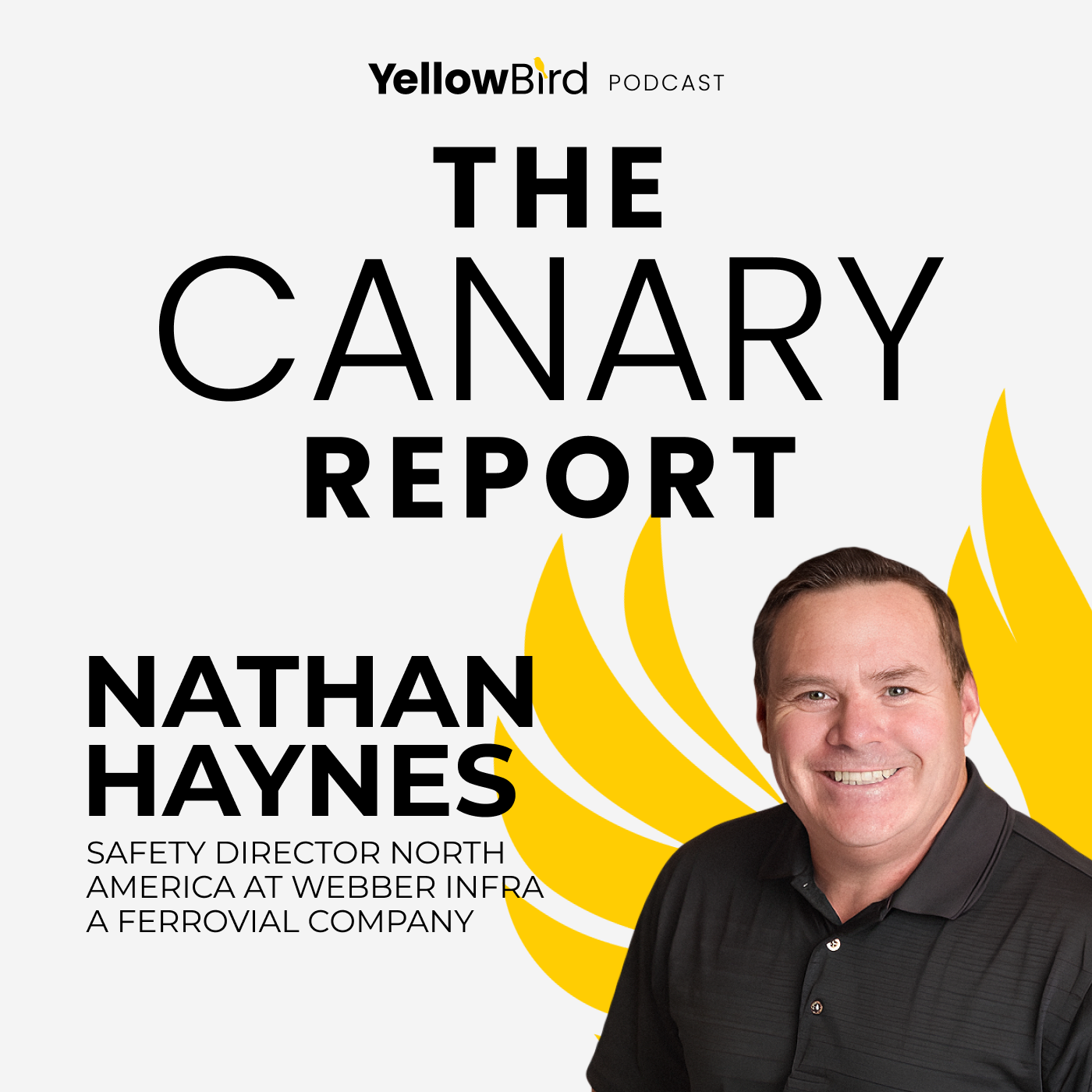
In the latest episode of The Canary Report, guest Nathan Haynes, Safety Director North America at Webber Infra, explains that hiring people for their life experience and maturity, rather than what they’re certified, or hold a degree in, builds a stronger organization.
Standardized Safety Across Projects
Nathan inherited a division with an OSHA rate over five and no uniform training protocols across fifty active construction sites. He recalls that projects lacked consistent ways to learn from their mistakes. As foundational steps, he began by creating a baseline of toolbox talks and investigation protocols to bring accountability to his team. Eventually, this allowed him to scale safety across forty infrastructure projects in several states.
Nathan transformed a disorganized operation into a structured safety system by focusing on the core problems that many leaders often overlook. He began this process by standardizing training and investigation protocols across forty active infrastructure projects to replace the chaos he initially found. His team was able to move from reactive decision-making to a model based on clear expectations and measurable results.
Root Cause Analysis and Learning
True incident prevention involves identifying systemic patterns rather than just replacing broken equipment. Nathan mentions a common industry habit where a company simply buys a new truck after a crash without asking why the accident happened. But that just isn’t enough; he implemented a system that compares similar incidents to find the real reasons behind failures, so that the organization continues to grow from the setbacks.
Safety Training That Sticks
Online modules often fail to prepare workers for the high stakes of a live roadway. Nathan believes that certain high-risk skills require a person to stand on the white line and feel the physical reality of moving traffic. He utilizes in-person instructors who share stories from the field to change behavior. By using the most stringent state regulations as a baseline, he ensures his crews exceed minimum requirements.
Risk Management Through Maturity
Successful risk management depends on a leader’s ability to connect with people. Nathan notes that safety leadership is a people-centric role that requires the judgment earned through diverse life experiences. His history as a commercial diver and an arborist gave him the intuition needed to manage hazards. He finds that individuals who have navigated personal and professional challenges bring a necessary understanding to the safety director role.
Safety Experts and Quality Control
Protecting a workforce requires partners who offer more than generic compliance solutions. Nathan warns that some consultants claim they can perform any task despite having no specialized standard. He emphasizes that a safety director must verify that every trainer uses a consistent and high-quality protocol. Reliable results stem from hiring experts who understand the specific needs of the infrastructure industry.
Listen to the full conversation here!
- Apple Podcast: https://bit.ly/3QWqcPN
- Spotify: https://tinyurl.com/rd8ny57n
- YouTube: https://youtu.be/sQqNuK406oU
- Newsletter: https://tinyurl.com/2k47eewa