Stop Blaming Workers. Start Fixing the System.
Former Air Force pilot James Ferrell shares why lasting safety improvements come from redesigning systems, empowering workers, and building organizations that learn instead of blame.
What happens when you apply the rigorous risk management of military aviation to one of the largest food production companies in the country?
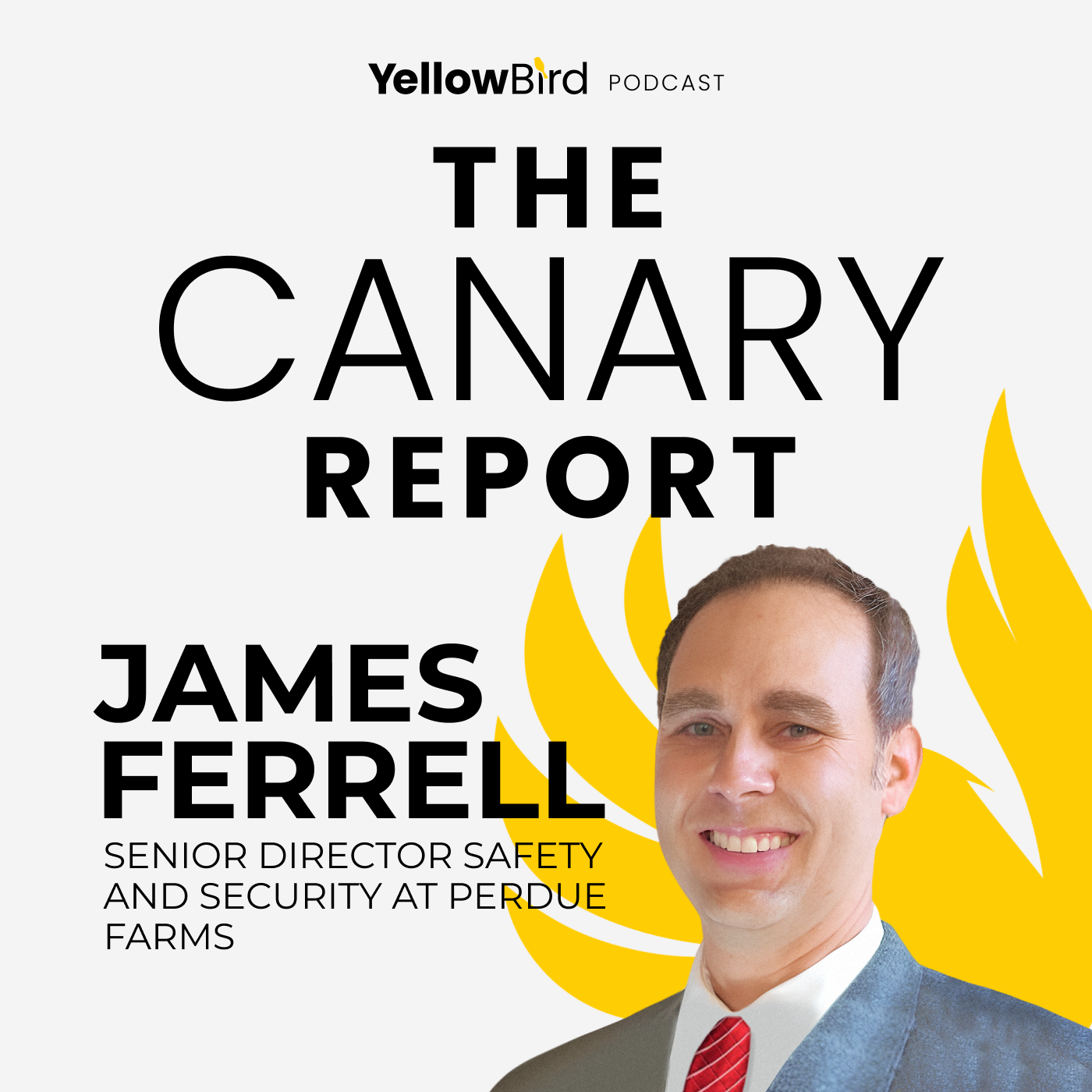
In this episode of The Canary Report: Safety & Risk Management, Michael Zalle sits down with James Ferrell, the Senior Director of Security and Safety at Perdue Farms. James brings a unique perspective to workplace safety, having spent over twenty years as a U.S. Air Force pilot flying the V-22 Osprey before transitioning into the corporate world. The conversation moves past traditional compliance checklists and explores how systems thinking and human performance can fundamentally change how we protect people at work.
From the Cockpit to the Food Plant
James’s journey began in rural central Florida and eventually led him to the Air Force Academy. During his military career, he was involved in the operational testing of the V-22 Osprey, a tiltrotor aircraft that required a startup mindset within a massive government bureaucracy. This experience taught him that even in large organizations, innovation is possible if you refuse to become just another cog in the machine.
When he moved into the food industry, first with Foster Farms and later with Perdue Farms, he carried this innovative spirit with him. He views his role today as a cultural and resource steward for twenty thousand associates across a vertically integrated organization that includes grain silos, refineries, and processing plants.
Fixing the Machine Instead of the Worker
One of the most striking points James makes is the failure of traditional safety campaigns. Many companies rely on posters or slogans that tell workers to avoid certain behaviors, such as reaching into a jamming machine. James argues that these campaigns rarely work because they ignore the underlying reasons why a machine jams in the first place.
At Perdue Farms, the focus has shifted toward a Human and Organizational Performance (HOP) mindset. Instead of blaming a worker for making a mistake, the team looks at the mechanical causes of the jam and works to redesign the equipment. This approach removes the incentive for unsafe acts and ensures that the system supports the worker rather than working against them.
Safety as a Driver for Quality and Efficiency
There is a common misconception that safety is a separate requirement that slows down production. James challenges this by explaining that safety, quality, and efficiency are actually interdependent. He believes that you cannot have a truly safe operation if your machines are constantly breaking down or your processes are inefficient.
By leading through safety, an organization naturally improves its entire manufacturing process. When you solve for the root cause of a safety hazard, you often find that you have also solved a maintenance or production issue at the same time. This integrated view turns safety into a business accelerator rather than a cost center.
Scaling Resilience Across Diverse Operations
Managing risk for twenty thousand people requires a balance of high standards and local flexibility. Perdue Farms operates facilities that range from small grain stations with two people to massive plants with two thousand associates. James notes that a corporate safety plan is simply a place to start and must be allowed to deviate based on reality.
The company encourages frontline workers to use their power to turn off machines for repairs or submit work orders when they see a problem. This empowerment creates a learning organization that values continuous improvement. By using data and monthly surveys, leadership can track progress and ensure that safety programs are working in the field and not just on paper.
The Evolution of Safety at Perdue Farms
This serves as a reminder that protecting people is the most effective way to run a successful business. Leaders who focus on the systems that support workers and embrace a culture of continuous learning build true resilience.
This approach requires a commitment to acting as a steward who is willing to listen to the front lines and adapt as reality evolves. Safety then becomes the engine for quality and efficiency, ensuring the entire company moves forward together. Adopting these principles creates a lasting foundation for excellence that benefits every associate across the entire operation.
Check out the full episode here:
Apple Podcast: https://bit.ly/3TfdBHV
Spotify: https://bit.ly/4eWRr4C
YouTube: https://youtu.be/H3BFxBuaW8E
Newsletter:
https://bit.ly/3SIL39A