Is Your Safety Culture Built to Last—or Built Around You?
This is a subtitle for your new post
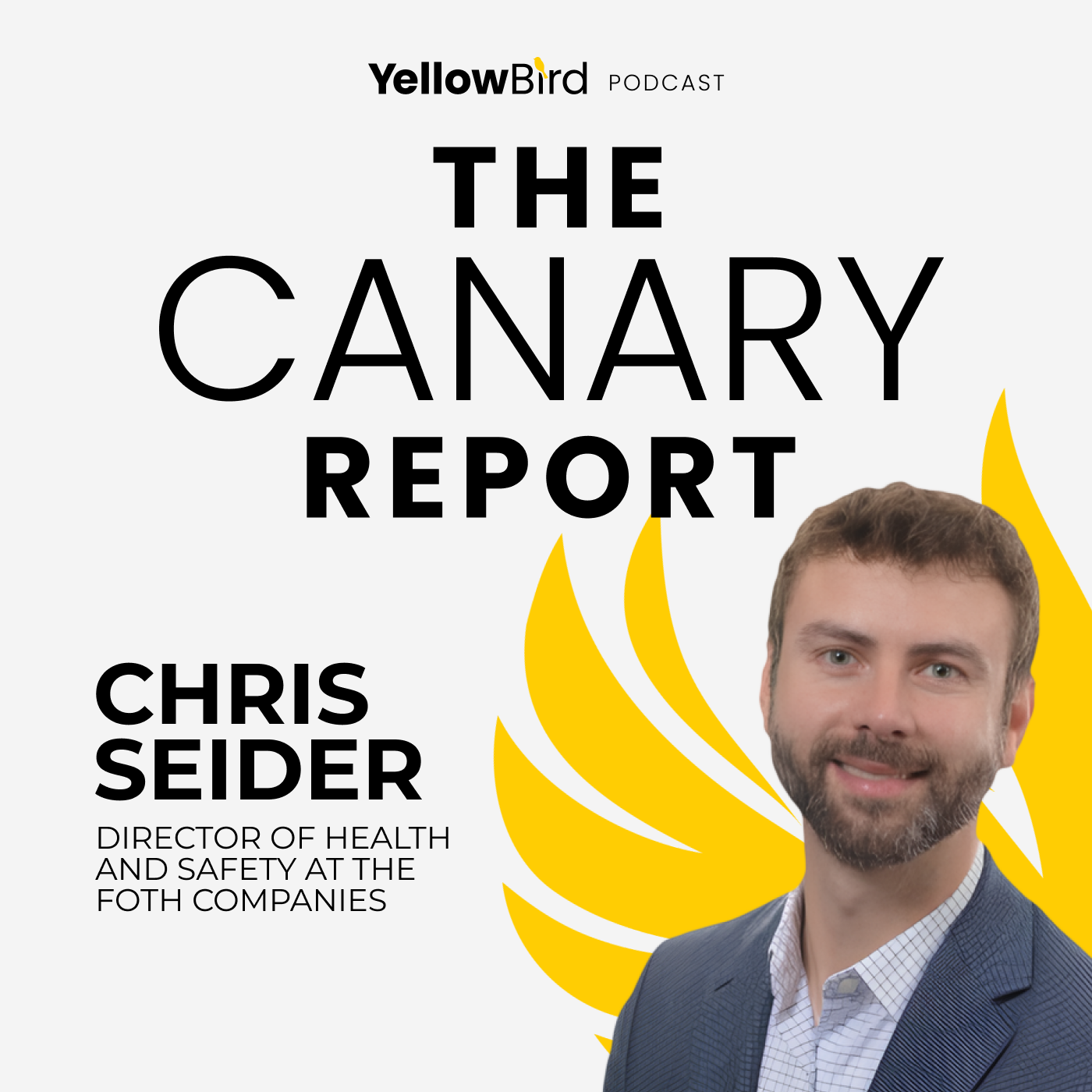
What if the safety program you spent years building is designed to fail the very day you walk out the door? This is the challenging question that guides the latest episode of The Canary Report. Host Michael Zalle sits down with Chris Seider, the Director of Health and Safety at Foth Company, to explore the difference between temporary compliance wins and genuine cultural transformation.
With nearly two decades of experience in the field, Chris has managed safety for everything from custom mega-yacht builders to large-scale engineering firms. At Foth, he currently helps lead a team of 700 engineers across 28 locations, maintaining an exceptional recordable incident rate of below 1% and surpassing 14 million hours worked without lost time. However, as Chris explains during the conversation, these impressive statistics are merely the byproduct of a much deeper philosophy centered on employee safety ownership and human behavior.
The Accidental Safety Professional
Like many leaders in the industry, Chris did not set out to become a safety expert. He originally earned a degree in business administration and was working as a recruiter for a 130-year-old shipbuilder when a sudden vacancy in the safety department changed his career trajectory. He initially agreed to lead the safety committee as an extra responsibility, but he quickly realized that the work offered a unique kind of professional enrichment.
Chris describes safety as a career that can often feel thankless, yet it remains deeply rewarding because it is fundamentally about people. He views the role as one where you can see the positive impact of your efforts on the lives of those you work alongside every day. This "superhero origin story" highlights a critical truth for anyone in a safety professional career: the most effective leaders are often those who view the work as a calling to serve others rather than just a set of administrative tasks.
Marrying Safety to Craftsmanship
One of the most significant challenges Chris faced early in his career was transforming the safety culture at that century-old shipbuilding company. When he took over, the organization was struggling with a staggering 37% incident rate. The workforce was comprised of generations of families who had been building boats the same way for a hundred years, and they were understandably resistant to a young professional coming in to change their traditions.
Rather than trying to build a standalone safety culture or pushing a separate set of rules, Chris looked for the strongest existing element of their heritage. He realized that these workers took immense pride in their skill and their trade. By marrying safety to craftsmanship, he helped the team understand that being a master of their craft required working safely. This strategic shift allowed the workers to own their safety with the same passion they brought to their technical skills, which eventually dropped the incident rate into the single digits within just four years.
The Hidden Risk of Personal Ownership
Despite his early successes, Chris is remarkably candid about what he considers his greatest professional failure. In a subsequent role at a startup, he used "pure blunt force" to slash incident rates from 35% down to under 3% in a short period. On paper, he was delivering massive wins and earning industry recognition, but the culture was built entirely on his own personal energy and drive.
When he eventually left that organization, the incident rates began to climb back up almost immediately. This experience taught him a painful but vital lesson: if a leader does everything themselves, they are building dependency instead of legacy. Chris now advocates for a "coach" model of safety leadership, where the professional acts as a mentor and a resource rather than the person who executes every task. He explains that when you take safety responsibilities away from your team, you inadvertently strip them of their pride and their meaning in the work.
Navigating Complexity in "Somebody Else's House"
The work at Foth Company brings its own set of unique challenges because the engineers are often working in environments they do not control. Chris notes that his team frequently operates in "somebody else's house," including mines, manufacturing plants, and construction sites across the country. This requires a risk management strategy that is far more savvy than what is needed in a controlled factory setting.
Because they cannot always engineer hazards out of a client’s facility, the employees must have a strong culture of identifying and mitigating risks on the fly. This level of maturity only happens when every individual feels empowered to take safety actions without being told to do so. Chris measures his success by the safety initiatives that happen when he is not even in the room, which indicates that the culture has become self-sustaining and automatic.
AI and the Human-in-the-Loop
As technology continues to evolve, Chris is exploring how safety technology like AI can streamline the "administrative chunk" of his department's work. He believes that safety professionals often spend too many hours drafting beautiful plans that ultimately sit on a shelf and are never read by the people who actually need them. By using AI to generate the initial drafts of project-specific safety plans, he can shift his team's focus toward education and real-world implementation.
His framework for this is called "human-in-the-loop," which ensures that human expertise remains at the most critical points of the process. Humans identify the hazards and talk through the risks together, then the system generates the documentation, and finally, the humans bring the plan into action during safety kickoffs. This approach ensures that experts are spending their energy on workplace injury prevention rather than being buried under a mountain of paperwork.
A Legacy of Ownership
Ultimately, the goal of any workplace safety culture should be to create a system that outlasts any single leader. Chris encourages new professionals to be thoughtful about where they spend their energy so they can build a lasting legacy rather than just delivering temporary actions. Safety is not merely about compliance or procedures; it is about human beings understanding the implications of what they do every day.
By focusing on building ownership within the team and utilizing modern tools to remove administrative burdens, organizations can create environments where everyone goes home safe. It takes vulnerability to admit when a system is not working, but it takes true leadership to empower others to take the reins.
Ready to build a safety culture that actually lasts? Listen to the full conversation with Chris Seider and discover how to transform your approach to risk.
👉 Listen on Apple Podcasts: https://bit.ly/4n04VQL
👉 Listen on Spotify: https://bit.ly/4u1eSjH
👉 Watch on YouTube: https://youtu.be/c4RHyrPe2mo