Building Safety Cultures That Scale: How Pennoni’s Kate McGee Turns Smart People into Safety Champions
Why safety cultures succeed or fail, and the leadership behind them.
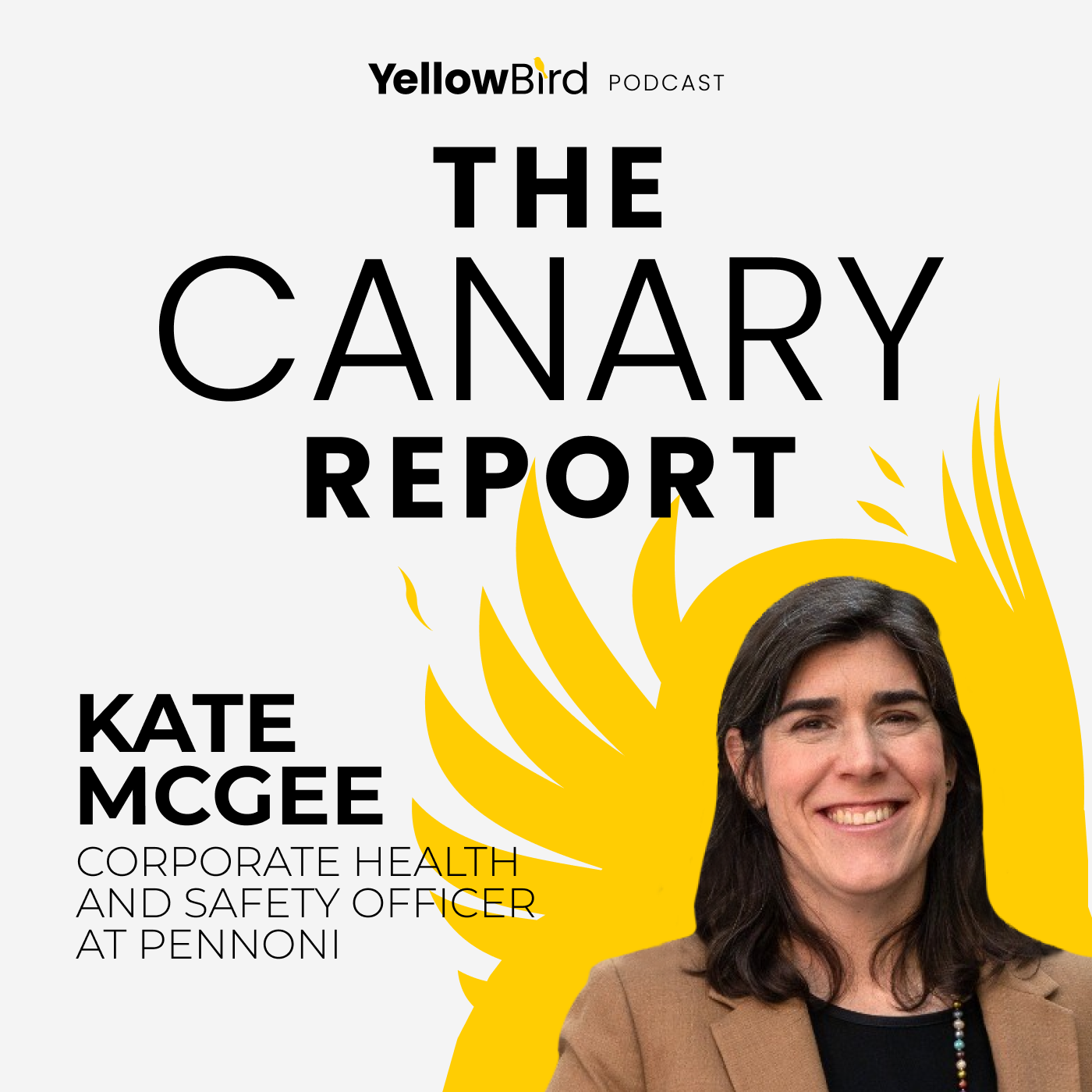
When most organizations think about safety, they think about programs, policies, and compliance. But as Pennoni’s Director of Corporate Safety, Kate McGee, makes clear in this episode of The Canary Report: Safety & Risk Management, true safety performance isn’t driven by rules, it’s driven by people.
More specifically, it’s driven by how well leaders understand the psychology, communication styles, and cultural dynamics of the teams they’re trying to protect.
Across a fast-growing firm of more than 1,400 employees, Kate has learned that scaling a safety culture requires a blend of behavioral insight, documentation discipline, and the courage to make difficult decisions in the name of long-term stability. In this conversation, she breaks down what it actually takes to build a safety system that not only survives growth but also becomes stronger because of it.
Below are the core lessons she shared, each one a blueprint for safety leaders in engineering, construction, manufacturing, or any high-risk, high-complexity environment.
Leverage Your Smart People as Problem-Solvers, Not Rule-Followers
Many safety programs fall apart because they treat highly intelligent technical professionals like workers on an assembly line: Here are the rules. Follow them. But engineers don’t respond to that. Not well, at least.
Kate explains that the smartest people in your organisation, your engineers, analysts, and technicians, hate being told what to do without understanding why. Their instinct is to solve problems, not comply blindly. So when safety is presented as a set of directives, they push back. Not because they don’t care, but because the information doesn’t appeal to the way they think.
Her solution?
Shift from policy-first to data-first mindset.
Instead of lecturing them on rules, she presents real problems, incidents, near misses, data trends, and asks a simple question: “Does this apply to your work?”
The moment technical professionals see a safety theme that affects their domain, their problem-solving brain turns on. Now they’re not being told what to do; they’re designing the solution. Through lunch-and-learns, field conversations, and audit discussions, she reframes safety as an intellectual challenge, not a burden. The result is genuine buy-in, not forced compliance.
Match Communication Style to Personality, Not Credentials
One of Kate’s most powerful insights is that safety success is often determined long before the work begins. It’s determined when you choose who to put in front of a client or business unit.
A highly credentialed expert can still fail spectacularly if their communication style clashes with the client’s preferred style. Some leaders want direct advice backed by strong evidence. Others want a collaborative, conversational approach before they commit to anything. Put the wrong style in the room and even the “best” expert will struggle.
As Kate puts it: “Competence without cultural fit wastes resources.”
The fix is surprisingly simple:
Match your safety professional to the client’s personality type before the assignment begins. For VPs of Risk Management and EHS directors, this requires building systems to assess:
- How a client prefers to receive information
- How your professionals naturally communicate
- Where potential friction may exist
The return on this effort is enormous. Trust builds faster, conflicts decrease, and safety recommendations are accepted more readily.
Document Expectations on Paper: Your Shield Against Scale Chaos
As Pennoni grew from 1,000 to 1,400 people, Kate noticed something dangerous happening. Safety messages changed as they moved through the chain of command. A directive that began with her would sound entirely different once it reached regional vice presidents, office directors, business unit leaders, and finally the supervisors on the ground.
Every layer added interpretation, and sometimes misinterpretation, until the original intent was unrecognizable. To fix this, Kate doubled down on documentation. Signed agreements. Written expectations. Dated policies. Accessible records. These materials become the organisation’s insurance policy against distortion.
When every person in the company can point to the exact same written expectation and say, “This is what we agreed to,” it eliminates the he-said-she-said dynamic that weakens safety culture. In fast-scaling companies, this structure isn’t optional.
It’s the only way to avoid managing by hope.
Recognize When Culture Mismatch Requires Hard Decisions
Safety culture is mostly about development, coaching, and communication, but not always. Sometimes, despite all efforts, a person simply refuses to engage with safety expectations. They’re defensive. Resistant. Dismissive. Perhaps they produce revenue. Perhaps they’ve been around for years. But they fundamentally undermine safety culture.
At scale, these individuals become more visible and more damaging. Kate explains that part of her job is recognising when coaching is no longer enough. In these cases, the organisation must be willing to act quickly, even when it’s painful. Because ultimately: Your values mean nothing if you abandon them when they’re inconvenient.
For safety leaders, this means establishing behavior expectations early, communicating them, documenting them, and, when necessary, enforcing them. Consistently. Even when it has a cost.
Shift Your Intent from “Delivering Content” to “Ensuring Understanding”
Many safety trainers believe their job is to get through the material. Checkbox ticked. Slides completed. Attendance recorded. Kate argues this mindset is why most training is boring and ineffective. If your priority is finishing, you’ll lose people. If your priority is understanding, you’ll engage them.
This small mental shift transforms delivery:
- You slow down when people seem confused.
- You check comprehension instead of reading from slides.
- You make the content interactive rather than instructional.
- You speak
with the audience, not
at them.
Training success is no longer “session delivered”—it’s “information absorbed.” That distinction is where real behavior changes lives.
Hire Early-Career Talent to Shape Their Professional Compass
One of Pennoni’s unusual strengths is its willingness to hire graduates rather than relying solely on experienced professionals. Why? Because early-career professionals come without bad habits. Their values, behaviors, and problem-solving frameworks can be shaped from the beginning. They learn the “Pennoni way” before any other way.
Kate highlights that even their CEO began as a Drexel co-op decades ago, proof that nurturing early talent pays enormous long-term dividends. The upfront investment is real, but the cultural alignment is priceless. For organizations building internal safety teams or consultancy capability, this raises an important question:
Are you overvaluing experience when you should be investing in potential?
Sometimes the most powerful way to build a future-proof safety culture is to hire someone smart, new, and eager, and teach them the right way from day one.
Final Thoughts: Safety Culture Is Built One Person at a Time
Across this episode, Kate offers a refreshing reframe of what modern safety leadership requires. It’s not enforcement. It’s not paperwork. It’s not charisma, credentials, or fear.
It’s understanding how people think, how they learn, how they communicate, and how culture shapes decisions long after training ends.
Whether you’re leading a 50-person company or a 5,000-person enterprise, these principles hold:
- Engage your smartest people through problems, not policies
- Match communication styles to personalities
- Document expectations to protect your message
- Make hard cultural decisions early
- Teach for understanding, not completion
- Invest in the next generation of safety leaders
Safety isn’t a program. It’s a culture, one that must be intentionally designed, taught, documented, and lived. And as Kate reminds us, when you get the culture right, the compliance follows naturally.
🎧 Listen to the full episode on The Canary Report: Safety & Risk Management
Apple Podcasts: https://bit.ly/4pTta3j
Spotify: https://bit.ly/4iD1kpl
YouTube: https://youtu.be/F3cAZi6kzw0