Culture Before Compliance: How Tekta America Builds Safety Leaders, Not Safety Cops
Here’s the uncomfortable truth: Programs don’t keep people safe, culture does.
In high-risk industries, there’s a comforting illusion that you can program your way into safety. Rewrite the manual. Roll out a new checklist. Buy a piece of software. Run a training cycle and declare victory.
But here’s the uncomfortable truth: Programs don’t keep people safe, culture does.
And culture isn’t built by compliance departments, new rules, or shiny systems. It’s built by leaders who show up consistently, tell the truth even when it’s inconvenient, and treat safety as a relationship, not a regulation.
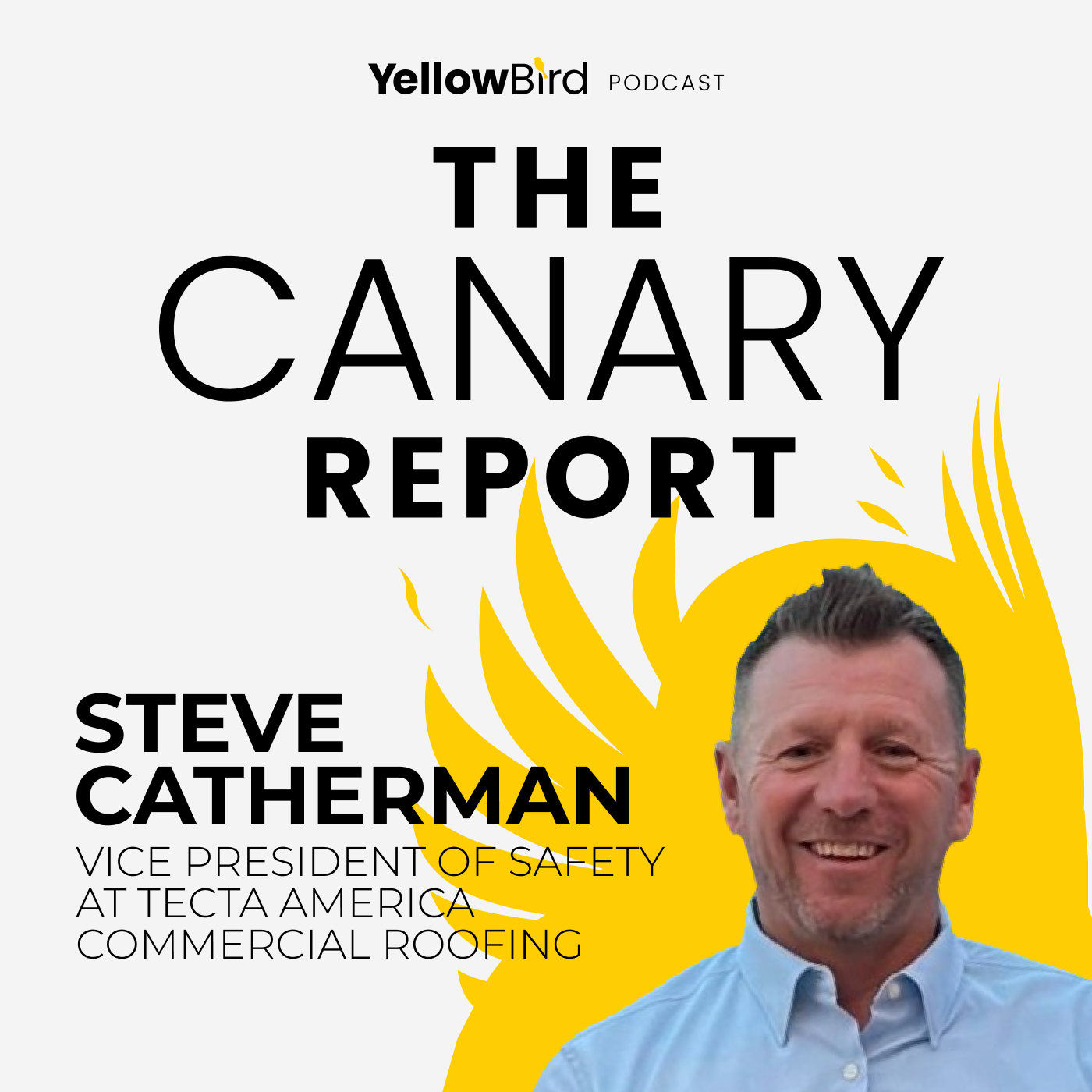
That’s the lesson at the heart of my conversation with Steve Catherman, Vice President of Safety at Tekta America Commercial Roofing, the largest commercial roofing contractor in the country, with 107 offices and a constant drumbeat of acquisitions. Steve brings nearly 30 years of coaching experience to his leadership style, and that background shows up in every word he says.
This isn’t a conversation about the latest OSHA guidance or how to create a more efficient auditing workflow.
This is a conversation about how you build a culture that people actually want to be part of and want to protect.
Why Culture Beats Programs Every Time
The first insight Steve shares is simple but radical: Tekta’s competitive advantage is not its programs, tools, or rules. It’s culture-first leadership.
Most organizations do this backwards. They focus on implementing initiatives, behavior-based safety, new training modules, and digital audit systems without establishing the values and transparency that make those systems meaningful.
Leaders confuse activity with impact. Steve’s approach flips the script.
When Tekta acquires a company, they don’t come in with a compliance-first mindset or a mountain of prescriptive fixes. Instead, they start with a culture diagnosis:
- Does this company tell the truth about its challenges?
- Do leaders believe they have room to improve?
- Are they proud of their work but open to new ideas?
- Are they coachable?
That last question, Are they coachable? is the real differentiation point. Steve has learned over decades that the companies that resist input are the ones that create long-term liability. The ones who are transparent, self-reflective, and curious are the ones who thrive inside Tekta’s system. Culture isn’t about perfection. It’s about receptivity. That’s what allows integration to work.
The Power of Self-Evaluation: Gap Analysis Reimagined
One of the most refreshing elements of Tekta’s model is how they conduct their first major assessment with newly acquired businesses. They call it a gap analysis, but it’s not what most people think.
This isn’t an audit.
This isn’t a report card.
This isn’t a performance judgment.
Instead, Steve sits down with leadership, safety personnel, and operations teams and asks them to evaluate themselves. They go through a structured checklist, rating each area from “we’re strong here” to “big opportunities.” And because they’re doing the scoring, not Tekta, the defensiveness disappears.
People tell the truth when they feel safe. They tell the truth when they’re asked, not told.
They tell the truth when they don’t expect to be punished for it.
Once those gaps surface, Tekta doesn’t try to overhaul everything at once. They focus resources on the 3–5 areas the company says matter most.
When people name the problem, they own the solution.
This single shift, from external judgment to internal ownership, accelerates integration, deepens trust, and builds a path for real cultural transformation instead of surface-level compliance.
Consistency Is the Culture
Safety leaders love to talk about vision, strategy, frameworks, and systems. But if you listen closely to Steve, his real strategy is much simpler: show up, and show up consistently.
Tekta builds that consistency into the operating rhythm:
- Monthly regional meetings with cameras on so people can read faces and build real relationships.
- Quarterly in-person visits to every operating unit—scheduled, never surprise audits.
- Weekly check-ins that track progress and surface obstacles early.
- Bi-monthly one-on-ones focused on accountability, challenges, and leadership support.
- Structured job site audits conducted collaboratively, with the goal of learning, not policing.
There’s nothing flashy in that list. No software platform, no AI solution, no new “EHS transformation program.”
It’s just leadership showing up the same way, every time. And that consistency does three things extraordinarily well:
- Builds
trust – New teams see that Tekta does what it said it would do.
- Reduces fear – Predictability removes the anxiety of “what’s corporate going to surprise us with today?”
- Creates psychological ownership – People start to see safety as a partnership, not an inspection.
When Steve says, “Everything we do, we do it consistently,” he’s pointing to a truth every safety leader needs to hear: inconsistency destroys culture faster than any hazard on a job site.
From Safety Cop to Safety Coach
If there’s one phrase Steve cannot stand, it’s “safety cop.” At Tekta, that’s a bad word—and intentionally so. Steve calls it out clearly: “safety cop” is a bad word at Tekta. Policing breeds silence, and silence is where people get hurt. His team's approach to safety is coaching, asking what people saw, sharing their own observations, and solving problems together.
When a hazard appears, you stop work, no debate. But the posture is support, not blame. That shift unlocks honest reporting, better near-miss data, and deeper ownership from crews who trust they won’t be punished for speaking up. It also accelerates integration, reduces liability, and builds a culture where safety becomes a shared mission, not a compliance chore.
Steve trains regional managers to work like coaches. They ask questions instead of issuing verdicts:
- “What did you see?”
- “Here’s what I see.”
- “What’s the safest way to proceed?”
- “Who else has solved this before?”
And when something serious arises, the response is immediate: stop work, reset, fix it. No debate. But the posture is always problem-solving, never punishment. As Steve describes it, “We’re here to help, but we know those words don’t mean anything until we prove it.”
This approach does something that compliance-first models struggle with: it makes people want to speak up instead of hiding their mistakes. And that’s the difference between preventing incidents and reacting to them.
Why This Matters to Any Leader Trying to Scale Safety
What Steve has built at Tekta isn’t just a safety program; it’s a leadership philosophy. It speaks directly to the challenges so many organizations face:
- You’re acquiring new companies and can’t maintain cultural cohesion.
- You’re rolling out programs but not seeing behavior change.
- You’re losing strong safety people because the environment suffocates them.
- You’re exhausted from managing compliance instead of building capability.
Tekta’s framework shows that the solution isn’t more tools or more rules.
It’s more truth, more consistency, and more coaching. If you want a culture where people take ownership, you have to build the conditions where ownership is possible. If you want honesty, you must remove fear. If you want commitment, you have to show up the same way every single time.
And if you want safety to be more than a program, you have to make it a relationship.
Final Thought
Steve Catherman is one of the rare safety leaders who can speak about trust, behavior, systems, and culture with the clarity of someone who has coached teams for decades. His message is simple: Build people first, and the safety results will follow. Start with programs, and you’ll be chasing compliance forever.
If you lead safety in any capacity, across a single site or a hundred locations, this episode is worth your time.
🎧 Listen to the full episode of The Canary Report: Safety & Risk Management featuring Steve Catherman here:
Apple Podcasts: https://bit.ly/3M55xpF
Spotify: https://bit.ly/4pxpFzi
YouTube: https://youtu.be/xvqUOnBLh3c