What Undercover Boss Gets Right About Safety Gemba Walks
What a GE Healthcare rigging leader learned about safety walks from 25 years in the Army: get in the dirt, stay out of the way.
"When you switch from being an auditor to an advocate, your communication and your operations improves, safety adherence, and participation increases across the board."
Joseph Klinzing has watched it happen. People stop hiding things. They start saying, "this has always been an issue. How can we address this?"
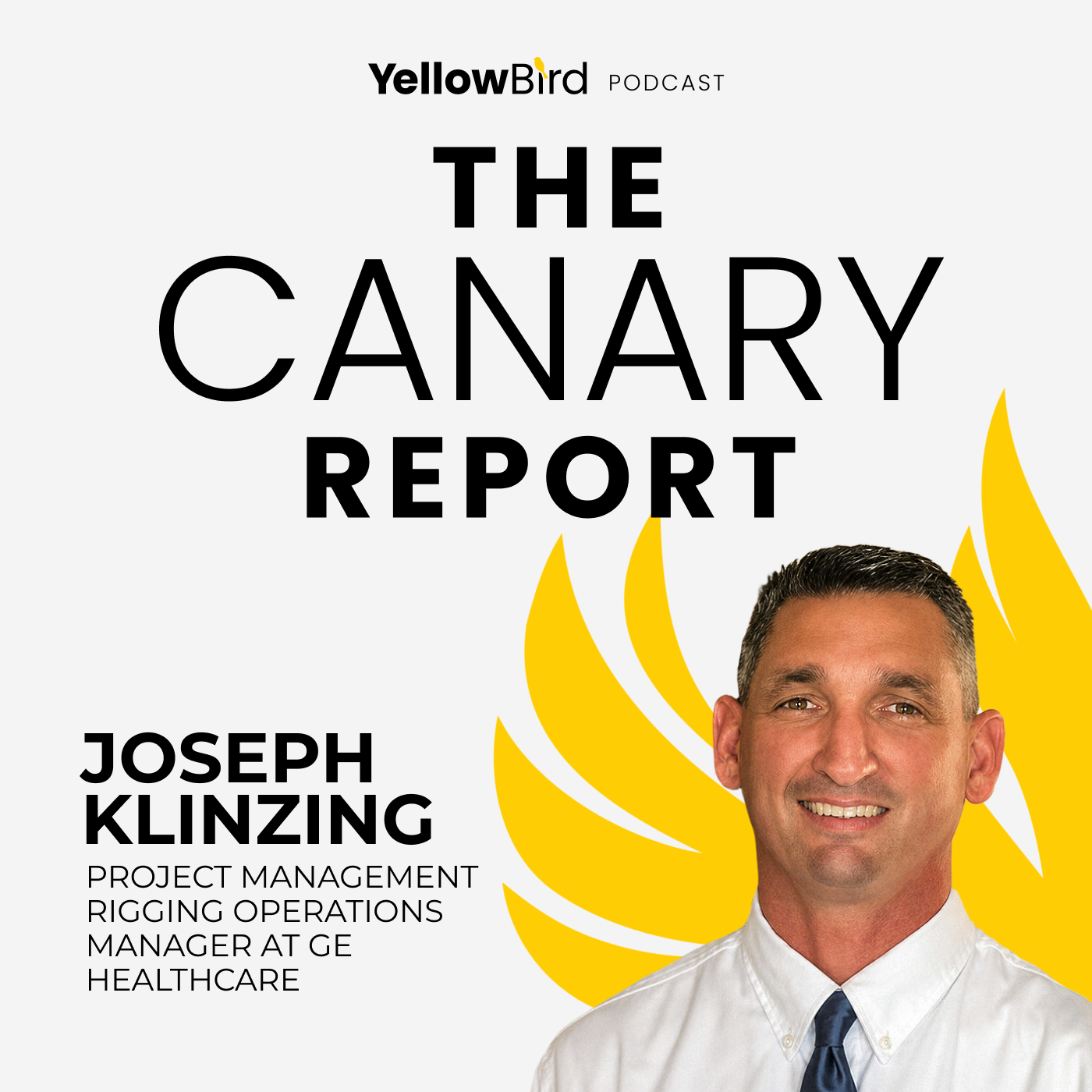
That shift sits at the heart of his approach to the safety gemba walk, and it's harder than it sounds when your workforce is scattered across hundreds of sites. Joseph spent 25 years in the US Army before joining GE Healthcare, where he oversees rigging and critical lift operations across the US and Canada.
On this episode of The Canary Report, he and Michael Zalle dug into what "go and see" really means when there's no shop floor to walk.
A Safety Gemba Walk Wasn't Built for a Distributed Workforce
Gemba, Japanese for "the real place," is the lean practice, popularized by Toyota, of going to where the work happens, observing, and talking with the people doing it.
But as Joseph pointed out, most of what's written about the gemba walk assumes a fixed facility: an assembly line, a warehouse, a loading dock. How do you do it at a construction site? With a field operation?
"We are a huge distributed workforce," he said," and no one situation is the same from another. No one location is the same from another." There's far less guidance for his world, so he's built his own approach, leaning on experience and on what his people tell him.
Gemba Walk vs. Safety Audit: Advocates Hear the Truth
Michael drew the contrast sharply: a gemba walk is about learning, observing, and improving, where a safety audit is about verifying compliance. Collaboration versus inspection. Weekly or monthly versus annual or quarterly. Kaizen actions versus findings and citations.
Joseph's version comes straight from the military.
"Your immediate leadership is out there in the dirt with you. They understand what you're actually doing. They've gone through the exact same training that you've gone through. They've had to do the hard work."
So he attends the same training his field personnel attend. He learns their computer systems, so he knows firsthand how easy, or not, they are to use. And when he visits a hospital site, he coordinates access ahead of time, door codes and key cards, so nobody has to stop working to escort him around. Unless something truly needs addressing in the moment, he observes, stays out of the way, and debriefs afterward.
Because the moment your presence changes the work, you're no longer seeing the work. Michael compared it to his regular coffee shop suddenly buzzing and spotless because the CEO was coming in. That's exactly what happens when the safety walkthrough is scheduled two weeks out. Joseph's favorite example of doing it right? Undercover Boss: leaders who went out to learn, built real relationships, and came back as advocates for the field.
You Can't Plan Away the Human Factor
For all the planning behind a critical lift, Joseph is blunt about the limits: "You can have the best heat map. You can have the best risk analysis. You can have the best person doing the hardest work. You cannot figure for the human factor."
That's why, in his words, EHS work means going to the worst-case scenario and building up from there. And it's why the auditor-to-advocate shift matters so much: the human factor gets a lot more visible when field workers trust you enough to tell you the truth.
Safety Gemba Walk Practices to Put to Work This Week
- Coordinate site access before a field visit (codes, key cards, contacts) so your walkthrough doesn't pull anyone off task.
- Take the same training your field teams take, and use their tools yourself, so you know what their day actually looks like.
- Observe without intervening. Save feedback for a debrief, email, or call afterward, unless something must be addressed in the moment.
- Reframe your next safety walk: you're there to learn so you can advocate for the field, not to verify and cite.
Safety adherence doesn't rise because someone checked a box. It rises because someone in the field decided you were worth telling the truth to.
Hear the full conversation with Joseph Klinzing on The Canary Report
Apple Podcast Link: https://go.fame.so/apple-joseph-klinzing
Spotify Link: https://go.fame.so/spotify-joseph-klinzing
YouTube Link: https://youtu.be/TbUUXN1hFmQ