The OSHA Fatal Four Have a Fifth — And Most of the Industry Hasn't Named It Yet
After 40 years on job sites, Balfour Beatty's Christopher Diaz says construction's deadliest list needs a fifth entry, and it's one your crews face every day.
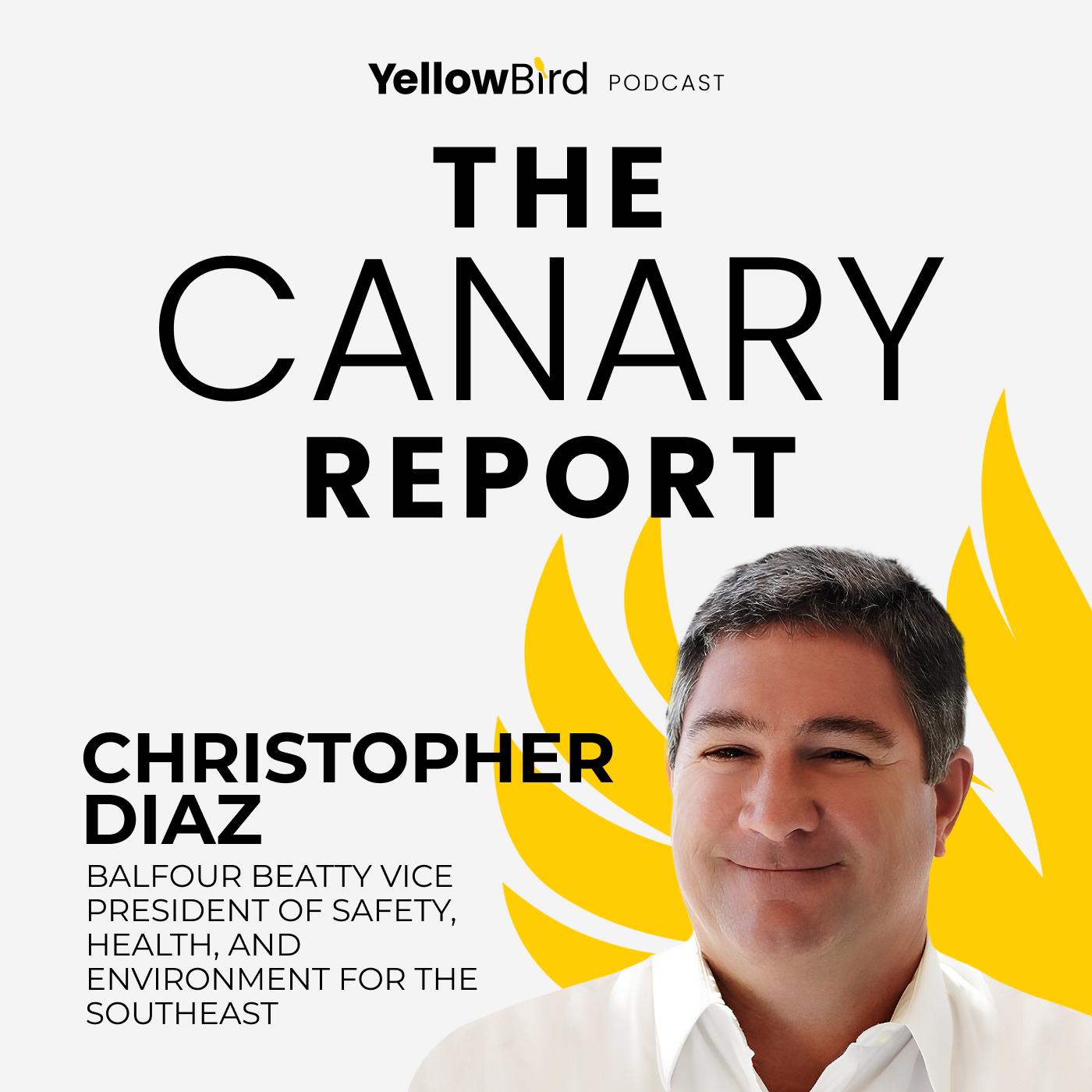
For as long as anyone in construction can remember, the industry has organized fatality prevention around the OSHA Fatal Four: struck-by hazards, caught-in-between incidents, electrical, and falls. Christopher Diaz has spent forty years in the business, the first fifteen in the trades, starting out pulling nails from fire-retardant lumber because it was too expensive to waste. And after all that time, he's convinced the list is incomplete.
"We believe that there's a fifth fatal risk and it's live traffic." — Christopher Diaz
Chris is Vice President of Safety, Health, and Environment for the Southeast at Balfour Beatty, the global contractor. On a recent episode of The Canary Report, he sat down with our founder and CEO Michael Zalle to make the case for a "fatal five" and to talk about what building footbridges in Rwanda taught him about protection, and why a zero harm safety philosophy has to be lived rather than sloganed.
Why live traffic is a construction hazard that belongs with the Fatal Four
Chris's argument is simple: whether a crew is building vertical construction or working roads and bridges, they're in the face of traffic every day. A dropped object can hit a passing car. A vehicle can come into the work zone. Either way, people get hurt: workers and the public alike. Work zone safety isn't just a highway problem; it's a construction site problem.
He believes the industry has stalled, and that naming the fifth risk is one way to get it moving again. "We've been fairly stagnant," he told Michael. "Safety seems to have plateaued, and we have to have something else to grab onto." Balfour Beatty is taking the lead on elevating live traffic as a national topic, betting the rest of the industry will follow.
Michael has seen the same pressure from the insurance side. Carriers are asking for flagger and spotter training and for construction site traffic control plans, egress designs that force vehicles to slow before they ever get near people. Chris is the first guest in The Canary Report to raise live traffic as a named fatal risk. That says something about how early this conversation still is.
What a footbridge in Rwanda taught a 40-year veteran
Through Bridges to Prosperity, Balfour Beatty sends 10 to 12 employees to build pedestrian bridges over creeks that turn into raging torrents in the rainy season, cutting entire communities off from school, work, and medicine. Chris went expecting to teach. He came back having learned.
"What I end up finding out that safety is universal. You know, it's culturally different, but it's universal." — Christopher Diaz
He couldn't speak the local language. It didn't matter. When workers were given harnesses and shown how to use them, they cherished the equipment. There was no replacing it down the street. And watching people protect themselves with limited means changed how he looks at his own job sites back home: "Necessity creates innovation," as he put it. The protection you need is often already on site.
Bilingual safety training only works when people can be honest
Language kept coming up in this conversation, and for good reason. Years ago, Chris started a Spanish safety committee, a place where workers could raise challenges among peers, in their own language, and get real resources in response. He kept it running for about seven years, training hundreds and hundreds of people.
A translated document is not the same as being understood. Workers will say they know what they're doing. Sometimes that isn't true, and the only way to find out is to make it safe to say so.
What you can put to work this week
- Name live traffic as a risk category on your sites, even if your industry lists still stop at four. What gets named gets managed.
- Audit your work zone egress. Is there a forced slow-down before vehicles can reach where people are working?
- Give workers a peer forum in their own language. Chris's Spanish safety committee ran for seven years because people finally had a place to be honest.
- Look for protection you already have. Necessity creates innovation. The fix is often already on the job site.
Chris has lived Balfour Beatty's Zero Harm philosophy for fifteen years: no compromise on the safety of workers, the public, or the environment. What makes his story stick is that it's not a slogan for him... it's forty years of watching what actually keeps people whole.
Hear the full conversation with Christopher Diaz on The Canary Report.
Apple Podcast: https://tinyurl.com/bd7uzz9z
Spotify: https://tinyurl.com/yjvn3zub
YouTube: https://youtu.be/GTo0WaMDknY