What A Bag of Lettuce Can Teach You About Safety
Protecting people doesn't stop with the worker standing in front of the machine. You're also protecting the family sitting around the dinner table.
Think about the last bag of chopped lettuce you picked up at the grocery store. It probably didn't seem all that remarkable.
But before it reached your refrigerator, it had already traveled through farms, processing facilities, transportation networks, distribution centers, grocery warehouses, and countless pairs of hands... each one responsible for protecting both the people doing the work and the people who would eventually eat it.
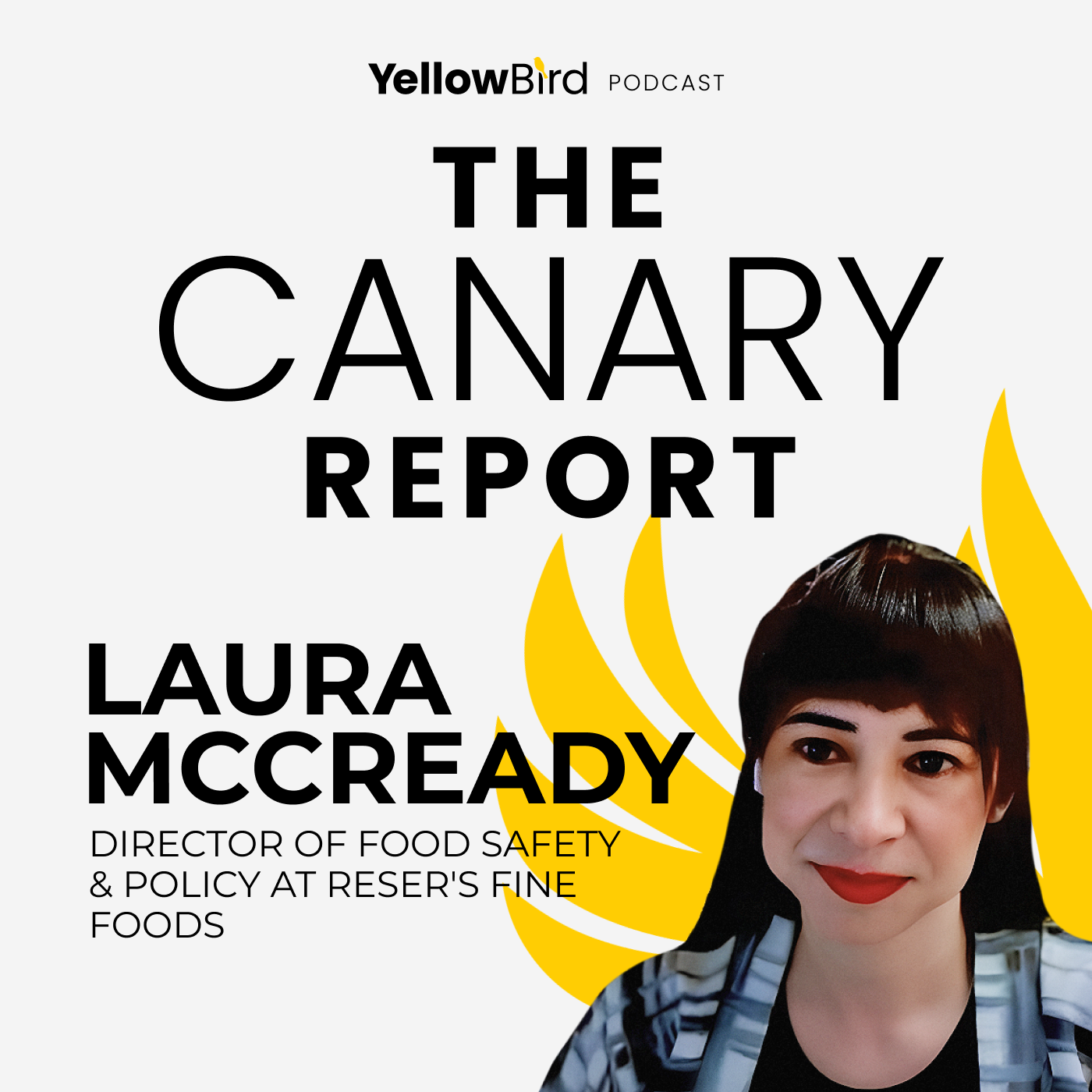
That's why Laura McCready, Director of Food Safety at Reser’s Fine Foods, believes one of the biggest mistakes organizations make is separating worker safety from food safety. Because they're really solving the same problem. Protecting people.
Here's some wisdom Laura shared with us on the latest episode of The Canary Report podcast.
The Safety Tradeoff Nobody Talks About
Most safety professionals have seen this happen:
- A hazard is identified.
- Someone designs a solution.
- Problem solved.
Except... sometimes it isn't. Laura shared an example:
Imagine a machine guard installed to keep an operator's hands away from moving equipment. From an occupational safety perspective, it's a success.
Until someone from food safety points out that the new guard created tiny crevices that are almost impossible to clean... perfect places for bacteria to grow and biofilms to form. One improvement made the worker safer.
The same improvement unintentionally made the food less safe. Neither team was wrong. They were simply looking at the problem through different lenses. The lesson?
The best safety decisions happen when people stop solving problems in silos.
Safety Is Bigger Than the Person Standing at the Machine
Traditional EHS programs naturally focus on protecting workers from physical harm.
Food safety focuses on protecting consumers from biological hazards. Laura sees them as two halves of the same mission.
Whether someone is operating a slicer on the production floor or opening a salad at home, the goal is exactly the same...
Protect the human being. Instead of asking, "Is this safe?" The better question becomes, "Safe for whom?" Often, the answer is both.
A Bag of Lettuce Is More Complicated Than You Think
Consumers see one product. Laura sees an entire system. That single bag of lettuce may pass through more than ten organizations before it reaches the grocery shelf:
- Growers.
- Processors.
- Packaging facilities.
- Cold storage.
- Transportation.
- Distribution.
- Retail.
Every handoff introduces another opportunity for something to go wrong.
- Temperature.
- Sanitation.
- Equipment.
- Documentation.
- Human behavior.
Risk doesn't live in one facility. It travels through the entire supply chain. Which means safety leaders have to think well beyond the walls of their own operation.
Rules Don't Build Culture. Purpose Does.
Laura believes one of the biggest opportunities in safety leadership is helping people understand why procedures matter.
Anyone can tell someone to wash their hands. But when workers understand that those few extra seconds help protect a child, a grandparent, or someone's family dinner... The work becomes personal.
People stop following procedures because they're required. They start following them because they understand the purpose behind them.
The Best Safety Leaders Think in Systems
The conversation with Laura is a reminder that safety isn't a collection of disconnected programs. It's one interconnected system:
- Engineering decisions affect sanitation.
- Maintenance affects quality.
- Worker safety affects consumer safety.
The organizations making the biggest improvements aren't asking how to optimize one department.
They're asking how every decision affects the people on both sides of the process.
Because in the end... Whether you're protecting the employee running the equipment or the family buying a bag of lettuce... You're doing the same job. You're protecting people.
Listen to the Full Conversation
Laura McCready shares more lessons from her two decades in the food safety leadership in this episode, including:
- Why worker safety and food safety should never operate in silos
- The surprising risks created by well-intentioned engineering decisions
- How food manufacturers manage risk across incredibly complex supply chains
- Why explaining why matters more than simply enforcing rules
Listen to the full episode of The Canary Report.
Apple Podcast: https://bit.ly/4p7D9mc
Spotify: https://bit.ly/4f7CAnQ
YouTube: https://youtu.be/M2-ZO1xZIVg
Newsletter: https://bit.ly/4f1qi0k