From Compliance Theatre to Real Risk Leadership: How Safety Actually Sticks at Scale
It's time to talk about why safety systems exist.
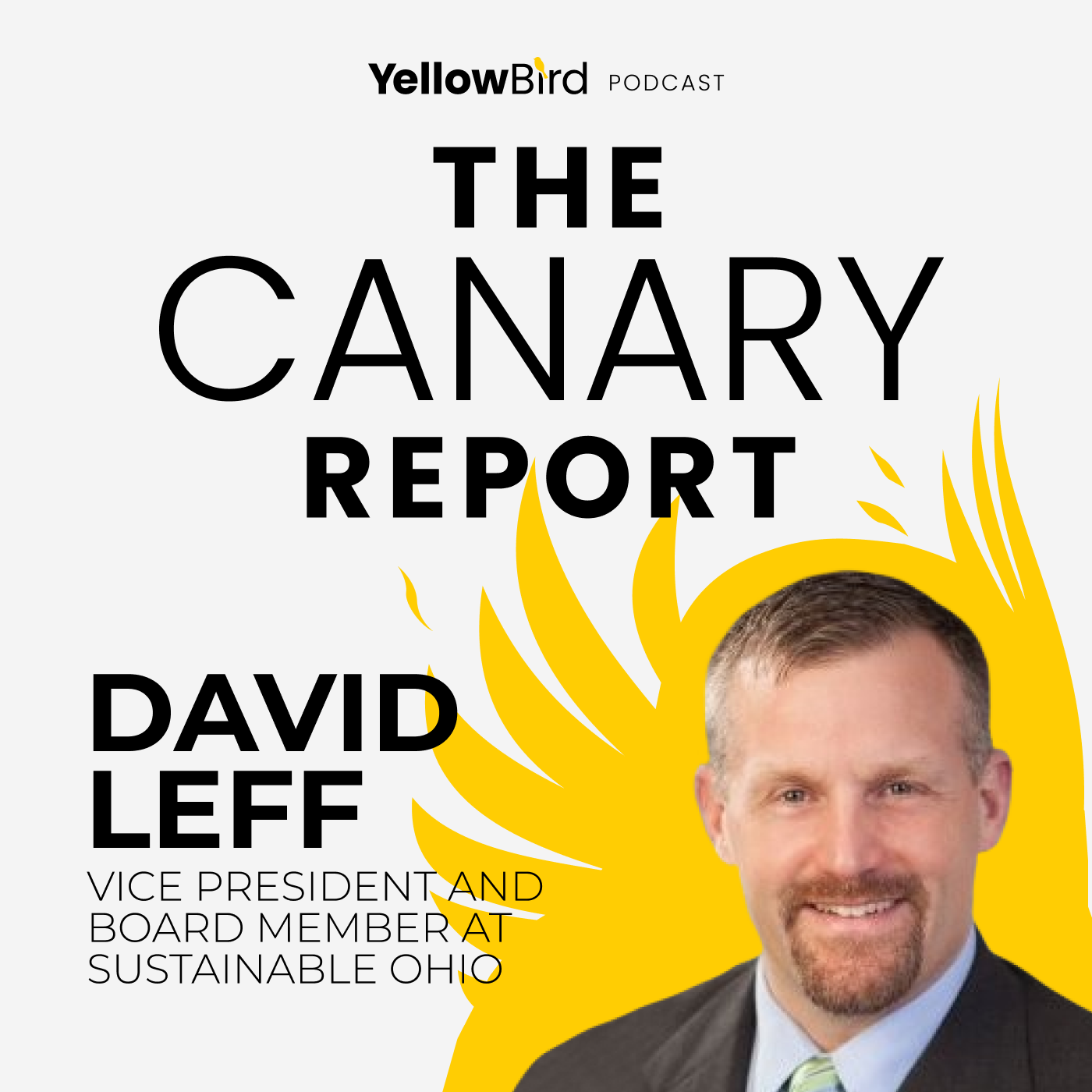
OK, everyone, this is one of those conversations that stays with you long after the recording stops.
In safety and risk management, we spend a lot of time talking about what to do. Policies. Procedures. Training modules. Audits. Metrics. But far less time talking about why those things exist in the first place, and that gap is where most safety programs quietly break down.
In the latest episode of The Canary Report: Safety & Risk Management, I sat down with David Leff, a 25-year veteran in insurance and manufacturing risk management, to unpack what real, durable safety leadership actually looks like when you’re operating at scale. David has led EHS and risk programs across 77 facilities in 11 countries, worked on both the operational and insurance sides of the table, and built high-performing teams in environments where complexity is the norm, not the exception.
What makes this conversation different is that it doesn’t romanticize safety. It doesn’t pretend that checklists are enough. And it doesn’t shy away from calling out the habits that feel productive, but don’t actually protect people.
From compliance theatre to real understanding
One of the clearest throughlines in this episode is David’s challenge to compliance-first thinking. Too often, safety training boils down to “because OSHA says so.” And while regulations matter, that framing rarely creates ownership on the floor.
David explains that when people don’t understand the real-world logic behind a rule, they follow it only as long as someone is watching. The moment conditions change, or pressure shows up, that rule gets bent, or ignored entirely.
The shift is subtle but powerful: replace compliance with context. Instead of leading with regulations, lead with consequences. What actually happens when this step is skipped? Who gets hurt? What fails? How does this protect the person standing here today and the coworker next to them?
When frontline operators understand why a forklift load limit exists, not as a number on a placard, but as the difference between a stable rack and a collapse that could kill someone, behavior changes. Compliance turns into ownership. And ownership is what holds up under real-world conditions.
That mindset shift also changes the role of the safety leader. You’re no longer the rule enforcer. You’re the educator. And that’s where culture starts to move.
The Three Ps: people, property, and product
David also introduces a framework that cuts through one of the most persistent myths in our industry, the idea that safety competes with production.
His “Three Ps” approach focuses on protecting people, property, and product simultaneously. Not sequentially. Not as trade-offs. Together.
In high-performing facilities, safety isn’t siloed from operations. It’s embedded. The same discipline that prevents injuries extends equipment life. The same controls that protect employees improve quality. And the same consistency that drives production efficiency reduces variability and risk.
When leaders frame safety as an enabler, not an obstacle, something important happens. Operations teams stop bracing for conflict. Safety stops being the department that says no. And instead, it becomes a partner in getting work done well.
This is especially powerful in multi-site environments, where processes differ but the underlying protections are often remarkably similar. Whether you’re dealing with galvanizing, welding, presses, or roll forming, the focus always comes back to the employee, and quality follows from there.
Smarter risk prioritization at scale
Another major theme in this episode is how to manage risk across dozens of locations without burning yourself or your team into the ground.
David is clear: you can’t audit your way to safety. Endless spot-checking creates fatigue, not insight. And trying to visit every site equally is a fast track to burnout.
Instead, he starts with data. Injury trends. Auto claims. Product liability. Loss history. The numbers tell you where to look. But data alone isn’t enough.
What really matters is combining those insights with targeted, high-impact site visits. David recommends looking at both ends of the spectrum: the worst-performing locations and the best. The contrast between them reveals patterns, what’s missing, what’s working, and what’s actually transferable.
This approach does a few important things at once. It sharpens focus. It reduces unnecessary travel. And it protects your people from the grind that quietly erodes teams in risk and consulting roles.
You’re visiting for insight, not optics. And that’s a crucial distinction.
Ownership beats outsourcing, every time
When it comes to training and specialized operations, David doesn’t mince words: rotating external trainers rarely builds lasting capability.
The most durable safety wins he’s seen come from empowering people who are already on-site, operators who care deeply about the equipment, the process, and the people they work with every day.
Whether it’s forklift certification, confined space programs, or specialty equipment, the principle is the same. Identify a local champion. Invest in their expertise. Give them real responsibility and authority.
When training is owned by someone who works shoulder to shoulder with the team, accountability sticks. Knowledge doesn’t walk out the door with a consultant. And safety becomes embedded in daily work, not bolted on from the outside.
It’s also more cost-effective. But more importantly, it’s more human.
Building a risk philosophy, not just a program
One of the most strategic moments in the conversation comes when David talks about risk philosophy. Instead of treating risk as a scattered list of issues, safety here, cyber there, property somewhere else, he advocates for casting a wide net and then making deliberate choices.
What risks will you mitigate?
What risks will you accept?
What risks must be transferred?
And what do carriers care most about, based on how they actually underwrite?
When those questions are answered upfront, everything downstream gets clearer. Controls are prioritized. Investments make sense. And insurance stops feeling like a black box.
You’re no longer hoping your carrier notices your efforts. You’re showing them, with intent and evidence.
The human cost we don’t talk about enough
Finally, this episode doesn’t shy away from the personal toll of how this industry operates.
David shares his own wake-up call after years of 60% travel, when his daughter asked, “You’re leaving again?” That moment forced a rethink, not just for his own life, but for how he led teams.
Travel strategy is people strategy. When leaders normalize missing birthdays, anniversaries, and milestones, burnout isn’t a risk, it’s a certainty. And losing seasoned professionals to exhaustion costs far more than adjusting schedules ever will.
Putting life events on the calendar first isn’t soft leadership. It’s sustainable leadership. And organizations that figure this out retain talent in a field that has historically chewed people up.
Moving beyond theatre
What this conversation with David Leff makes clear is that safety doesn’t fail because people don’t care. It fails when systems ask them to comply without understanding, to perform without ownership, and to endure without support.
If you’re responsible for multiple locations, high-risk operations, or teams under constant pressure, this episode is an invitation to rethink how you lead. Not by adding more rules, but by clarifying purpose, focusing effort, and treating safety as the human system it really is.
Because when people understand why the work matters, see risk clearly, and feel empowered to act, safety stops being something they’re told to do, and becomes something they choose to build.
🎧 Listen to the full episode on The Canary Report: Safety & Risk Management
Apple Podcasts: https://bit.ly/4qtiRDm
Spotify: https://bit.ly/4aC8wAp
YouTube: https://youtu.be/gBavx1_UZsM