Relationship Management Is Your Safety Superpower: Tom Garske on Owner-Builder Representation
Why Relationship Management Is Risk Management with Tom Garske
If you’ve spent enough time around construction, utilities, or field-based work, you realize pretty quickly that safety culture isn’t created by policies. It’s created by people, by the way they think, the way they work, the assumptions they make, and the attitudes they carry from one job-site to the next.
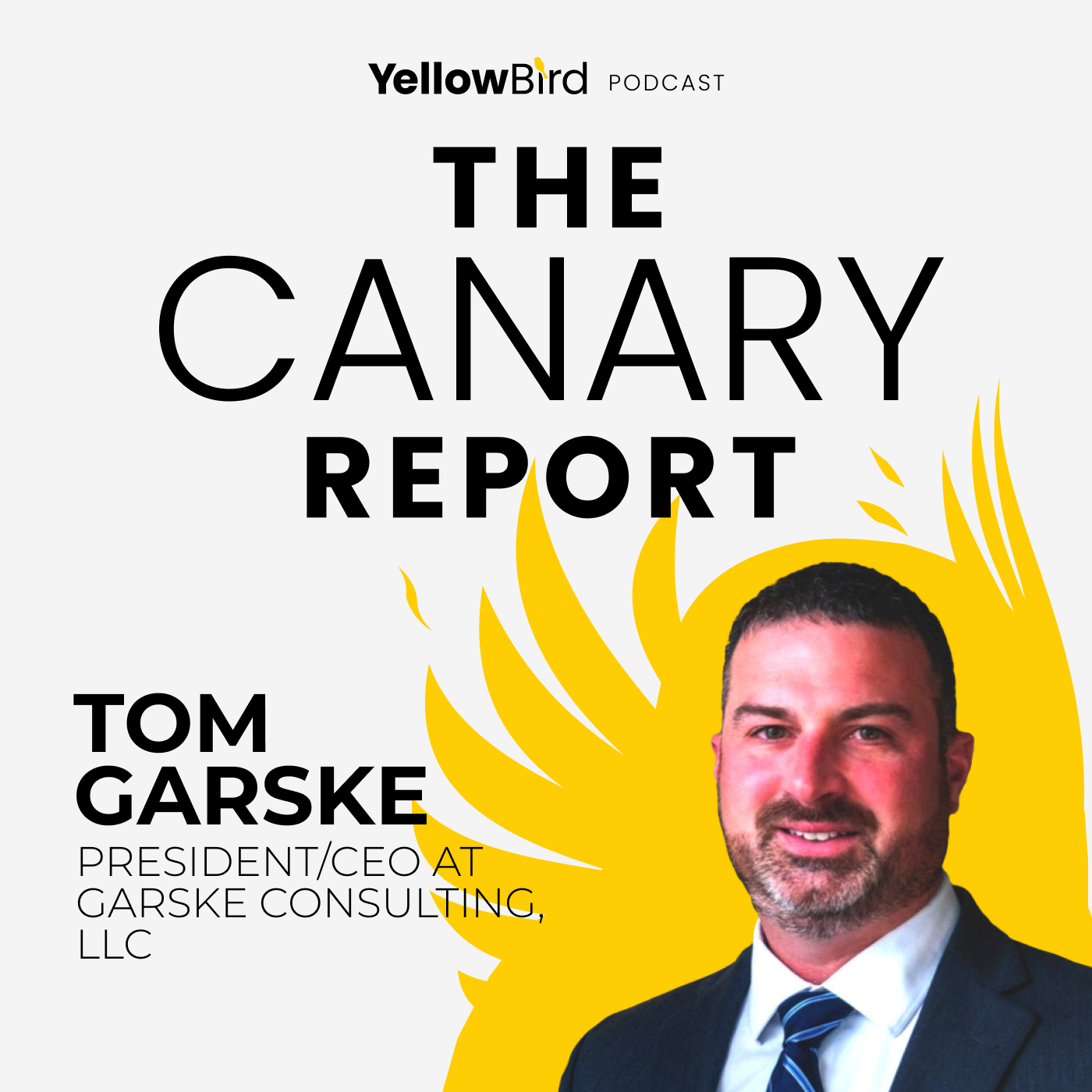
In this episode of The Canary Report: Safety & Risk Management, I sat down with Tom Garske, President and CEO of Garske Consulting, and a safety leader shaped by decades in construction and heavy civil environments, to talk about what real safety leadership looks like when you’re responsible for keeping people safe in high-risk, high-pressure conditions.
Tom’s career was forged inside a company where safety wasn’t a slogan; it was the non-negotiable backbone of the culture. That early grounding changed everything. It formed the lens through which he evaluates work, leads teams, and shapes safety expectations today. And it reinforced something too many organizations still misunderstand:
Safety isn’t primarily about compliance. It’s about mindset.
It’s about the instincts, the habits, and the awareness people bring with them long before an incident report ever exists.
And crucially, it’s about the discipline and consistency required to make sure those instincts scale as the organization does.
The Early Lessons That Shape a Career
Tom’s introduction to safety was not theoretical. It was drilled into him from day one.
At Whiting-Turner, the culture was clear: You work safely, or you don’t work at all.
There was no ambiguity. No mixed messaging. No optionality. It was an expectation woven into the identity of the company.
Tom carried that mindset forward through every role after. And here’s the part leaders often overlook: when someone experiences that level of clarity early in their career, it becomes baked into their operating system. They don’t have to be convinced of the value of safety — they already understand its weight, its business impact, and its human cost.
This is how cultural DNA gets formed. Not through posters or handbooks, but through the standards that shape a person’s sense of what “normal” looks like.
As Tom put it, that clarity has guided every single decision he’s made since.
Safety Is Human, but It’s Also Business
One of the themes we explored was a tension leaders sometimes avoid: safety is deeply personal and unavoidably financial. Tom described conversations he’s had with owners, particularly those who may be newer to structured EHS thinking, about the real business consequences of incidents. A serious injury doesn’t just stop work for a day or two. It can sink a project. It can sink a business.
He’s watched it happen. That’s why gaining leadership buy-in often requires meeting them where they are:
Yes, we want people to go home safe.
Yes, we care about their families.
But also, one trench collapse, one confined space incident, one electrocution can produce costs that ripple across an entire organization. Safety is mission-critical to business continuity.
And when leaders understand that, compliance shifts from a burden to a business strategy.
The Quiet Dangers Most Workers Underestimate
One of the most eye-opening parts of our conversation was Tom’s perspective on trench safety, an area where he’s seen routine and overconfidence create serious blind spots. He described how casually workers will hop into a six-foot, unshored trench as the weather begins to change, not recognizing how quickly conditions can deteriorate.
To the untrained eye, a trench can look stable. To someone with Tom’s experience, it looks like seconds away from catastrophe.
The danger isn’t loud.
It doesn’t announce itself.
It’s quiet, subtle, and incredibly fast.
And that’s the challenge with many of the hazards safety leaders face today: the riskiest moments are often the ones people assume they’ve done “a hundred times.” This is where leadership matters most, not in punishing mistakes, but in building awareness that prevents them.
Culture Scales When Leaders Stay Close to the Work
One of the most important ideas we unpacked and a recurring theme across many Canary Report episodes is the difference between managing safety and leading safety.
Managing safety happens from a desk. Leading safety happens shoulder-to-shoulder with the people doing the work. Tom’s philosophy is simple: If you want to influence behaviour, you must understand the conditions people are actually working in. You have to see the environment, feel the pressures, listen to the team, and build credibility not from authority, but from presence.
That proximity creates two things that scale:
- Trust — people listen to someone who understands their reality.
- Clarity — you can’t improve what you’ve never observed.
When leaders stay close to the work, culture becomes something that lives, breathes, and evolves, not something printed, laminated, and forgotten.
Safety as a System, Not a Department
One of the central ideas driving Tom’s approach is this: safety isn’t “owned” by EHS.
It’s owned by the entire organisation. A safety department can set direction.
But only the day-to-day interactions, decisions, and habits of frontline teams determine whether that direction turns into reality.
Systems create consistency.
Consistency builds culture.
Culture drives performance.
When safety is treated as a system, not a silo, it becomes embedded in every job briefing, equipment check, and field decision. And when that system is reinforced consistently, it scales.
Why Mindset Is Still the Missing Link
A recurring theme in our conversation was the idea that many organizations pour resources into training, compliance tracking, and policy creation, but still struggle to shift behavior. That’s because awareness is not created by checklists. It’s created by understanding.
Workers don’t change their habits because you told them to. They change because they understand the risk, see the data, feel the consequences, and know why a procedure exists.
This is especially true in technical environments. As Tom noted, when workers are highly skilled problem-solvers, the fastest path to engagement is giving them information, not instructions.
What Leaders Can Take Away from This Conversation
If there’s one message Tom brings to the surface, it’s this: world-class safety doesn’t happen by accident.
It happens through:
- Continual awareness and clear communication
- Leaders who understand both the human and business impact of incidents
- A refusal to normalize risk, even when tasks feel routine
- A
culture shaped by presence, not policy
- Systems that create alignment and consistency at scale
Organizations that get safety right don’t rely on heroics. They rely on habits.
They don’t rely on slogans. They rely on clarity.
And they don’t rely on compliance alone. They rely on culture, the kind shaped by leaders like Tom who refuse to separate safety from the work itself.
If you’re a safety leader, field manager, executive, or anyone responsible for aligning operations across complex environments, this conversation is worth your time. It’s a grounded, real-world look at what modern safety leadership actually requires inside fast-moving, high-risk organizations.
You can listen to the full episode of The Canary Report: Safety & Risk Management here:
Apple Podcasts: https://bit.ly/4q88CE4
Spotify:https://bit.ly/4j9Pp2S
YouTube:https://youtu.be/E358U0gwxSk