Listening Before It Breaks: How Real Safety Leadership Shows Up on the Floor
This conversation is about what actually separates safety programs that look good from safety cultures that hold up when real-world pressure hits.
OK everyone, this episode hit a nerve for me, in the best possible way.
Because if there’s one thing I’ve seen over and over in safety and risk management, it’s this: we’re surrounded by systems, policies, audits, and dashboards… and yet the most important signals are often standing right in front of us, wearing PPE, and trying to tell us something quietly.
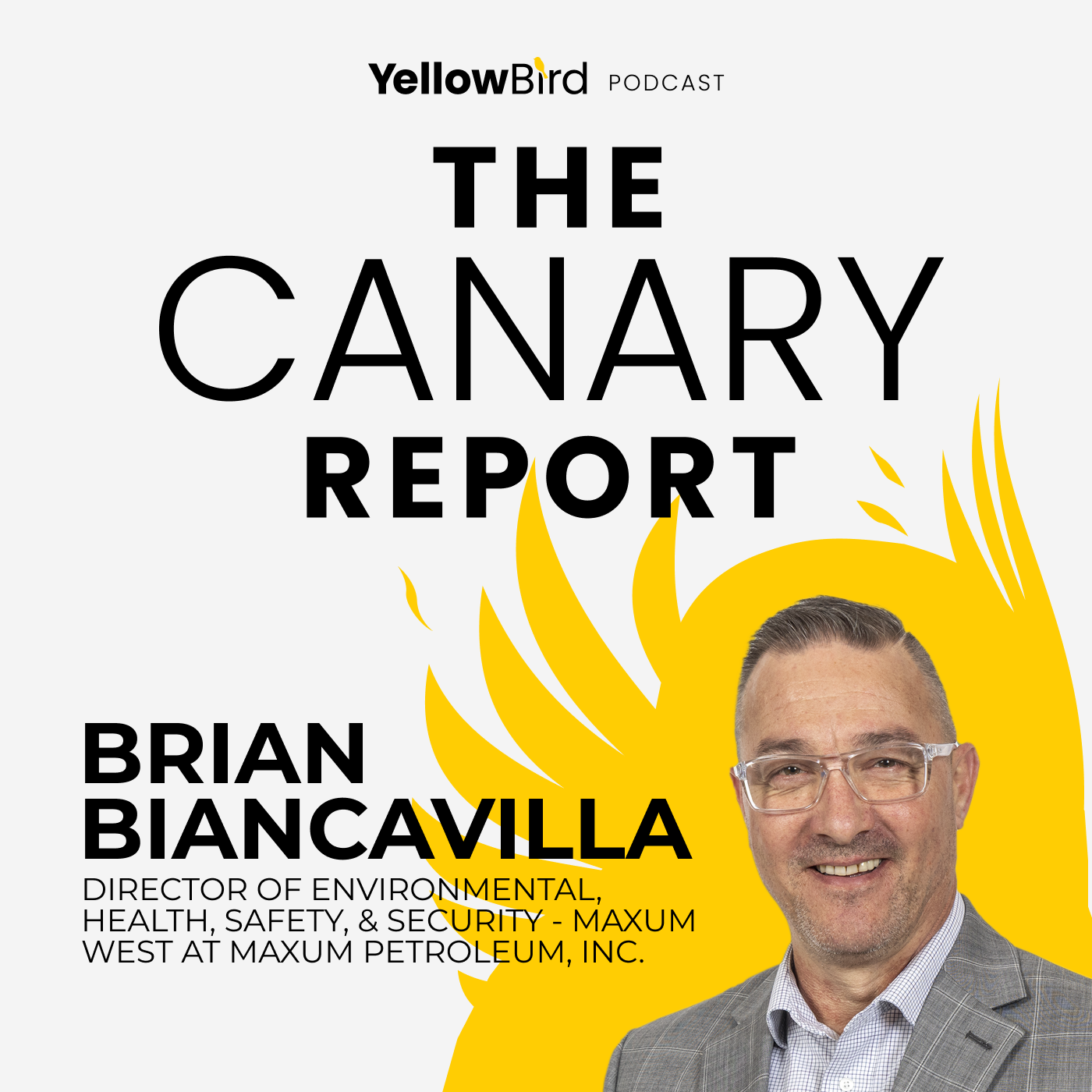
In this episode of The Canary Report: Safety & Risk Management, I sat down with Brian Biancavilla, EHS Director at Maxum Petroleum and a 35-year veteran of emergency response, hazmat remediation, and EHS leadership. Brian has lived safety from every angle, on scene, in the aftermath, and now at the leadership table. And what he brings to the conversation isn’t theory. It’s lived experience, scars included.
This conversation is about what actually separates safety programs that look good from safety cultures that hold up when real-world pressure hits.
Safety Isn’t Broken; Our Approach Is
One of the biggest themes Brian challenges right out of the gate is the idea that more internal control automatically equals better safety. It feels intuitive, right? Keep everything in-house. Own the process. Reduce dependency.
But here’s where Brian brings a hard truth: some EHS functions carry so much liability that doing them internally can actively hurt you.
Industrial hygiene surveys. HAZWOPER training. RCRA certifications. DOT hazmat instruction.
Brian explains that when you assess your own exposure, sample your own data, and validate your own conclusions, bias, real or perceived, enters the picture. And in the eyes of regulators or attorneys, perceived bias is enough.
If something goes wrong, opposing counsel won’t ask whether you acted in good faith. They’ll ask whether you cherry-picked.
Brian’s solution is disciplined and defensible: use certified third parties, let them design the assessment, step completely out of the process, and document that distance. That arm’s-length relationship doesn’t outsource responsibility, it proves diligence. It turns safety documentation from a liability into evidence of care.
That’s a mindset shift a lot of organizations need to hear.
Designing for Reality, Not Ideal Conditions
Another place where Brian’s thinking really stands out is how he handles compliance training in a high-turnover environment.
We love clean cycles in safety. Annual refreshers. Three-year certifications. Neat timelines that look great in a spreadsheet.
But the workforce doesn’t operate on clean cycles.
People get hired. People leave. Shifts change. Roles evolve. And in that reality, one-and-done training creates blind spots fast.
Brian doesn’t fight turnover; he designs around it.
At his facility, safety runs on a monthly pre-shift rhythm. Each month focuses on a single safety topic, and that topic gets explored four different ways over four weeks. The goal isn’t to check a box. It’s to stimulate conversation, reinforce understanding, and keep regulatory requirements alive in people’s minds.
Supervisors pull the materials from a shared drive. Teams discuss them. Employees sign off to verify understanding and ask questions in real time.
This isn’t compliance theatre. It’s continuity.
And for leaders managing dynamic operations, it’s a powerful reminder: safety has to be built into the cadence of work, not bolted on as an event.
How a $400K Fire Alarm System Got Approved
One of the most tangible examples in this episode is Brian’s $400,000 fire alarm system, five miles of wiring, voice evacuation, medical and environmental pull stations, and protocols tied directly to local and state law enforcement.
What’s interesting isn’t just the technology. It’s how he got it funded.
Brian didn’t lead with fear. He didn’t argue worst-case scenarios or abstract “safety is important” messaging. He led with a risk-probability heat map.
Likelihood multiplied by exposure.
High-probability, high-consequence risks first. Lower-risk items addressed over time. Every dollar tied to a specific, defensible risk.
That framing changed the conversation at the board level. It shifted safety from an emotional appeal to a business-critical investment protecting against the organization’s highest exposure threats.
And just as importantly, Brian showed fiscal discipline by not demanding everything at once. That credibility matters. Boards fund clarity, not panic.
Turning Insurance into Intelligence
Here’s a lever many organizations underuse: their insurance carriers.
Brian’s facility is audited by FM Global, which insures operations across Trelleborg’s global footprint. That means FM sees patterns, failures, and near-misses across dozens of facilities Brian will never personally visit.
Instead of treating insurance audits as a necessary annoyance, Brian treats them as intelligence briefings.
Those insights help him benchmark against peers, anticipate regional risks, and justify investments with external validation. For leaders overseeing multi-site programs, this is a powerful reminder: your carrier has seen your competitors’ worst days. Learn from them before you have one of your own.
Where Safety Actually Lives: Trust and Follow-Through
And then there’s the part of the conversation that cuts through all of it.
Brian’s safety culture isn’t built on systems alone. It’s built on listening.
He spent his first year getting to know nearly 200 people in the plant by name. Not to be friendly for the sake of it, but to be present. To notice subtleties. To catch issues that don’t show up in formal reporting systems.
Because here’s the truth: people do see problems early. They just don’t always report them the way leadership wants.
When those signals get ignored, people stop talking.
What changed everything for Brian was follow-through. When someone mentioned a leaking barrel or a confusing lockout procedure, even casually, it got addressed. And people saw that.
That’s when trust forms. And trust turns conversations into early warning systems.
Safety doesn’t fail because workers don’t care. It fails when they stop believing anyone is listening.
The Thread That Ties It All Together
What I appreciate most about Brian’s approach is its consistency.
Whether we’re talking about third-party assessments, monthly training rhythms, capital investment, insurance partnerships, or frontline trust, the through-line is the same:
Pay attention. Be disciplined. Follow through.
This episode isn’t about flashy tools or silver bullets. It’s about doing the fundamentals exceptionally well, with people at the centre.
And that’s the work. It’s not always glamorous. But it’s what keeps people safe when pressure shows up.
If you’re responsible for sending people home safe, across one site or many, this conversation is worth your time.
Because the canary doesn’t scream. It signals.
And leaders who listen early don’t have to react later.
🎧 Listen to the full episode on The Canary Report: Safety & Risk Management:
Apple Podcasts: https://bit.ly/44U1cwi
Spotify:https://bit.ly/4qCf86C
YouTube:https://youtube.com/watch?v=ip5Je9Hrpno