Building a Stronger Safety Culture Through Curiosity and Trust
This is a subtitle for your new post
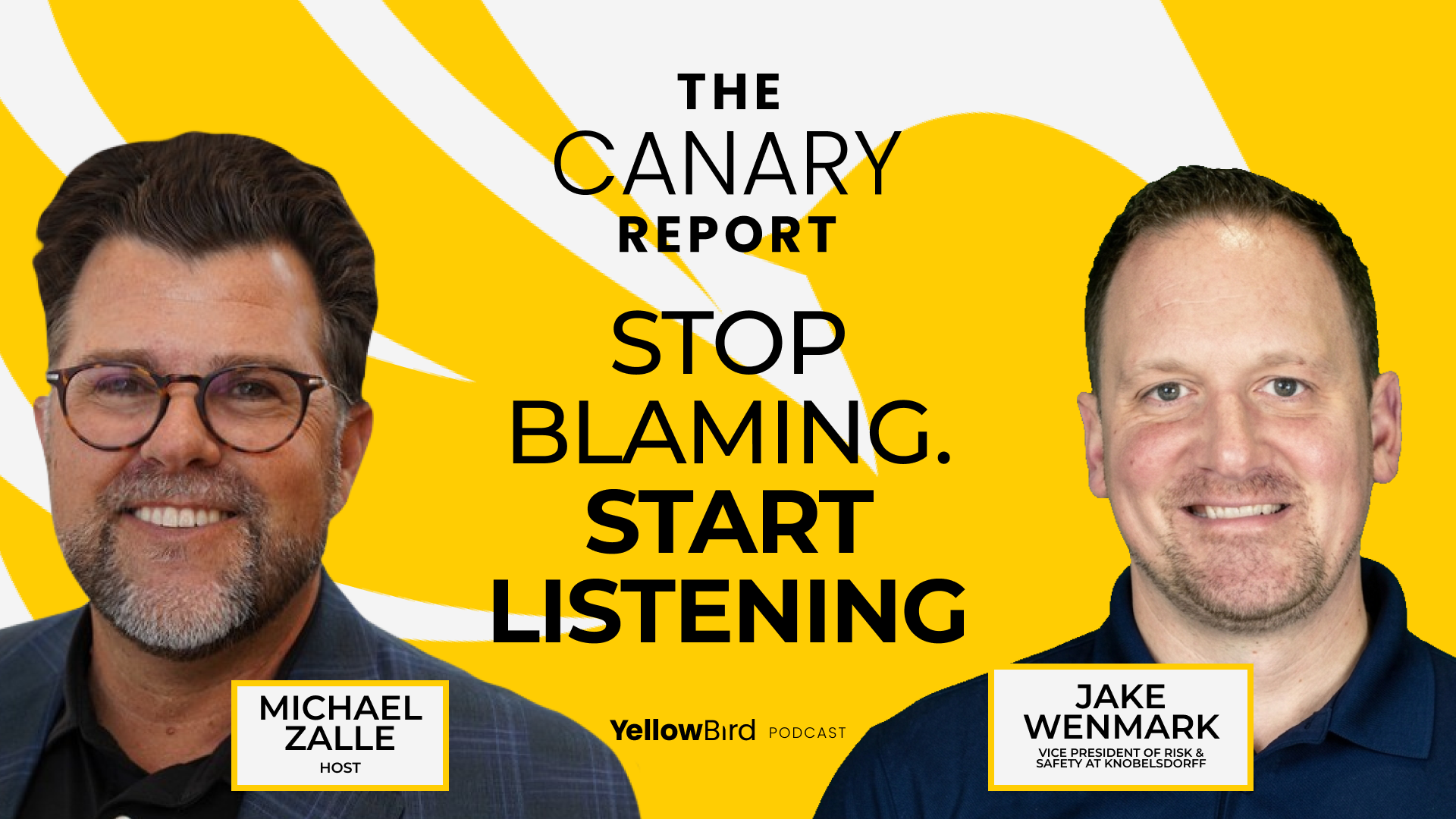
Safety leadership starts with understanding people. Procedures, training, and compliance requirements matter, but leaders also need to understand how people work, what motivates them, and what stands in the way of safer decisions.
On The Canary Report, we spoke with Jake Wenmark, VP of Risk and Safety at Knobelsdorff, about building safety programs through curiosity, trust, practical experience, and employee well-being. Drawing on his background in law enforcement, ski patrol, and occupational safety, Jake shared lessons from organizational change and rapid growth.
Replace Judgment With Curiosity
Safety professionals risk overlooking important context when they assume they already have the answers. Jake believes understanding the full story is essential when addressing concerns and working with people who have different experiences.
“Be curious, not judgmental. And as a safety professional, that's so key. Because as soon as we're judgmental and we assume that we know or have all the answers and we don't understand the whole backstory, we're going to lose that all day, every day.”
Jake's grandfather, a heavy equipment mechanic, encouraged him to take things apart and learn how they worked. That early hands-on experience helped shape his curiosity. At Vail Resorts, he applied the same mindset when integrating acquired ski areas, listening to employees and respecting the history behind their operations.
Build Trust During Organizational Change
Integrating teams means addressing concerns about losing established practices and workplace culture. As Vail Resorts expanded, Jake and his colleagues focused on listening, building relationships, and explaining changes without dismissing what already worked.
“I think what we found ourselves, or what I found myself and the team that was working for me, is that we found ourselves front and center in those integration activities and kind of those pivotal part of having those hard conversations around people struggling with the transition and the change of transitioning from one company or a very small operation to now all of a sudden being part of a big corporation.”
Jake also learned the value of consistent communication while managing 150 volunteer ski patrollers. Keeping people informed and involved helped maintain engagement by connecting their individual motivations to a shared purpose.
For safety leaders, the lesson is to listen before making assumptions, communicate the reasons for change, and give employees a voice in the process.
Build Safety Teams Around Practical Expertise
When Jake joined Knobelsdorff, its safety function had five professionals. As the company grew, the team expanded to 14, supporting operations across 40 states. Its industrial electrical, automation, and solar projects create varied demands for training and oversight.
Jake believes effective safety teams need complementary skills, including practical experience of the work itself. His team includes a master electrician and a journeyman electrician alongside safety professionals.
“I want a diverse workforce; I want a diverse team. Because not any one person. I don't have all the answers. Not any one person's gonna have all the answers. But as a collective team, we are a powerhouse because we work together, share information, and we learn from each other constantly because that's, at the end of the day, the most effective way to run a safety group.”
Sharing knowledge and learning from one another allows the team to address challenges that no individual could resolve alone.
Make Well-Being Part of Safety Leadership
Jake's commitment to safety includes mental and emotional health. Drawing on difficult experiences in law enforcement and the ski industry, he speaks openly about his PTSD and the importance of discussing stress and trauma.
“When you start to feel those anxieties, when you start to feel that stress and trauma, like, you name it, to tame it, you share it.”
Knobelsdorff includes mental health training in weekly new-hire onboarding and works to provide employees with support. This is particularly relevant in an industry where demanding projects and frequent travel can mean extended periods away from family.
Jake also stresses patience. Safety teams cannot solve every problem at once.
Sustainable improvement requires small, consistent steps, support for employees, and recognition of progress.
What Safety Leaders Can Put to Work Today
- Ask before assuming: Understand the circumstances behind an incident or concern.
- Communicate consistently: Keep employees informed and involved during change.
- Value practical experience: Build teams with complementary skills and knowledge of the work.
- Support well-being: Encourage open conversations about stress and provide appropriate resources.
- Recognize incremental progress: Set realistic priorities and keep improving over time.
Strong safety cultures grow through relationships, practical knowledge, and sustained effort. Jake's experience shows why listening to people, respecting their expertise, and supporting their well-being must complement formal safety systems.
At YellowBird, we believe better safety outcomes begin with understanding the people and conditions behind the work. Listen to the full conversation with Jake Wenmark on The Canary Report to learn more about building safety programs that grow with the business while keeping people at the center.
Listen to the full conversation on:
Apple Podcasts Link:
https://go.fame.so/apVtyrze
Spotify Link:
https://go.fame.so/bv0ufzKg
YouTube Link:
https://youtu.be/W7MvJ1YUX3Y
Newsletter: https://go.fame.so/oYCTP4NF