Rethinking Safety Investigations: Lessons in Safety Leadership From Joseph Bachi
Why curiosity is a safety leader's greatest superpower.
Safety does not become stronger simply because an organization adds another procedure, training session, or compliance requirement. Sustainable safety performance depends on how leaders respond when things go wrong, how well they understand the conditions surrounding work, and whether the systems they create help people make safer decisions.
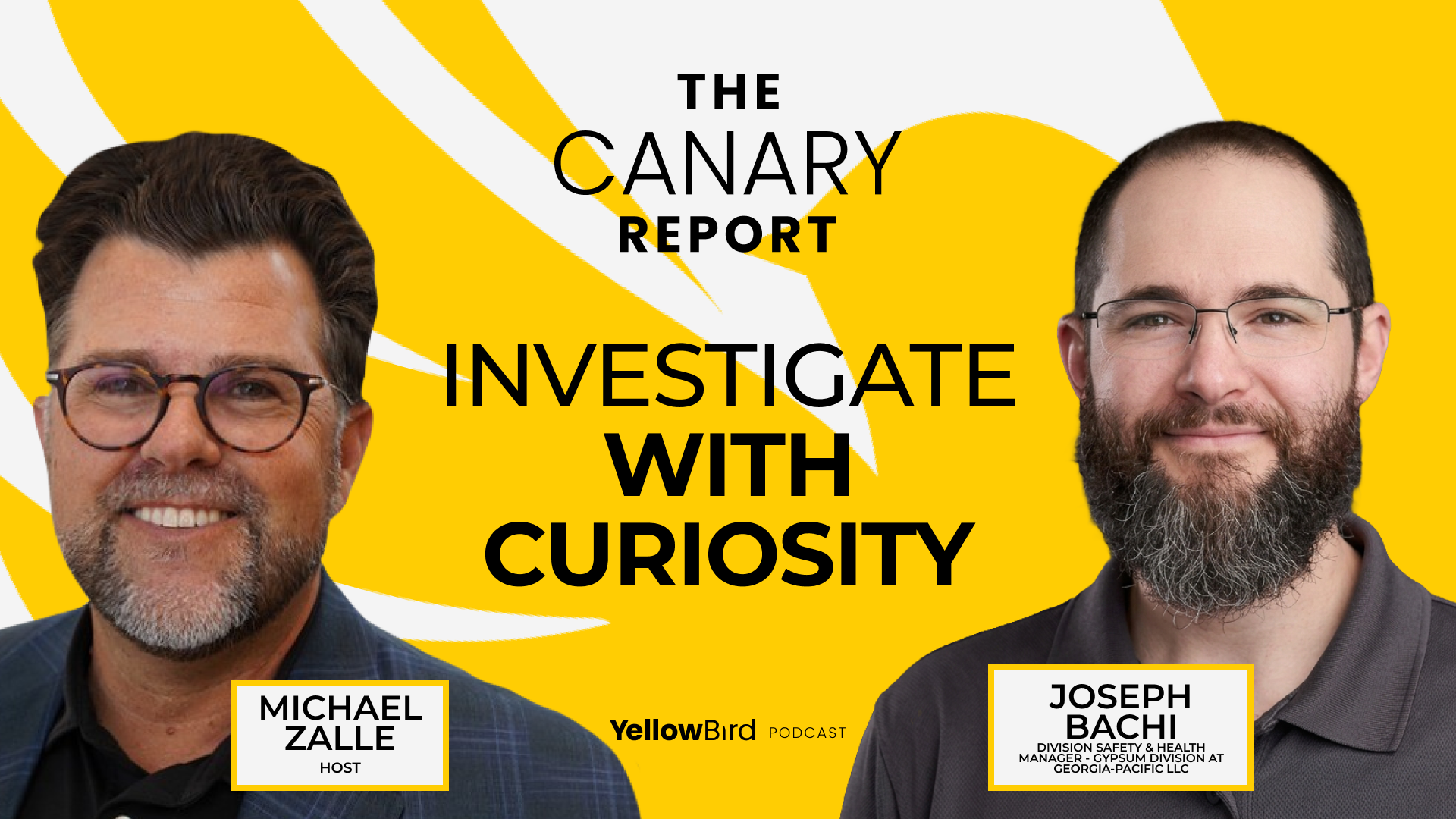
We sat down with Joseph Bachi, Division Safety & Health Manager for the Gypsum Division at Georgia-Pacific, to explore what that looks like in practice. Joseph brings 12 years of experience leading safety programs across 16 facilities, with a background spanning health and beauty care, automotive, corrugated operations, and other manufacturing environments. His approach is shaped by Principle-Based Management and Human and Organizational Performance (HOP), with a focus on understanding how work really happens.
Move From Blame to Curiosity
One of the central ideas in Joseph's approach is replacing blame-focused incident investigations with curiosity-driven conversations.
Traditional investigations can unintentionally put employees into a defensive mindset. When people believe the goal is to establish fault, they may focus on protecting themselves rather than explaining the conditions surrounding an event.
"It takes that blame away, and it's so powerful. We can get so much better by applying those principles. The amount of knowledge that you can learn from all the context just by asking some different questions and getting to understand what's happening is amazing."
Joseph experienced this firsthand during a near-miss investigation. Instead of immediately asking what the operator had done wrong, he and a colleague asked broader questions about what a good day and a bad day looked like. That conversation uncovered staffing shortages, unfamiliar trials, missed breaks, and additional responsibilities that helped explain what had happened.
Make It Easy to Do Right
HOP recognizes that human error is part of normal work. Rather than expecting people to rely on perfect memory, attention, or decision-making, safety leaders can design systems that make the correct action easier.
"The core principle around HOP is making it easier to get things right and more difficult to get things wrong.”
Joseph applies this principle by getting onto the floor and observing how people interact with equipment. Worn labels, confusing control panels, and poorly positioned buttons can all become error traps, even for experienced operators.
The solution is not simply telling people to pay more attention. It is identifying where the system creates unnecessary opportunities for error and redesigning those conditions.
Strengthen Engineering Controls
Training, procedures, and communication all have an important role in safety, but they are not always enough to prevent a serious mistake.
Joseph discusses the value of engineering controls that physically prevent critical errors from occurring. Software restrictions, for example, can stop an operator from selecting a particular function during a critical operation.
“And then, from an engineering control level, hey, if it's absolutely critical not to push the reject button while a certain operation is going on, let's add some software rules that say, hey, you can't do this.”
This approach moves safety beyond reminding people what they should do. It creates systems that actively support the right behavior and prevent high-consequence actions when conditions are not appropriate.
Give Sites Ownership of Safety
Joseph's role across Georgia-Pacific's 16 facilities is not simply to manage safety from the center. Site safety teams report directly to their plant managers, keeping ownership of safety close to the operation.
Joseph focuses on building capability, developing relationships, and sharing best practices across locations. This structure allows individual sites to maintain accountability while still benefiting from common learning and support.
“I'm a capability leader. I support and work with all the teams, but none of them report to me directly, which has its pros and cons. But I enjoy it. I get to work with every group and support them as best I can, and it definitely keeps me busy.”
For organizations with multiple facilities, this provides an important lesson. Consistency does not necessarily require centralized control. Strong safety performance can come from giving local leaders ownership while creating the capability to learn from one another.
What Safety Leaders Can Put to Work Today
- Replace interrogation with curiosity: Ask questions that help employees explain the context surrounding an event.
- Design out error traps: Look for confusing equipment, labels, controls, and processes that make mistakes easier.
- Strengthen engineering controls: Use system-level safeguards to prevent critical errors rather than relying only on training.
- Give local leaders ownership: Keep accountability close to the people responsible for the operation while providing strong capability support.
- Learn from near misses: Treat events that caused no injury as opportunities to identify weaknesses before they contribute to something more serious.
- Build trust through connection: Create an environment where people feel safe speaking openly about mistakes, concerns, and operational challenges.
Safety is ultimately about understanding people and the conditions in which they work. Procedures, training, and metrics are valuable tools, but they cannot replace curiosity, trust, and thoughtful system design.
Joseph's experience shows what can happen when safety leaders stop looking only for individual mistakes and start examining the systems surrounding the work. When organizations listen to frontline employees, strengthen engineering controls, and make it easier to do the right thing, incident investigations can become more than a process for closing an event. They can become a powerful source of learning and meaningful safety improvement.
Listen to the full conversation on:
Apple Podcasts Link:
https://go.fame.so/3S9WkuPO
Spotify Link:
https://go.fame.so/PKLrALUg
YouTube Link:
https://youtu.be/qjdwdt6IPuA
Newsletter:
https://go.fame.so/MP0aYEFc