Why Safety Is the Foundation of Sustainable Profitability
Low injury rates and clean loss records are worth celebrating, but they don't necessarily prove that an organization has effective safety systems
Safety and productivity are not competing priorities. When leaders make safety part of how a business operates, they can protect employees, improve performance, and build a stronger foundation for sustainable profitability.
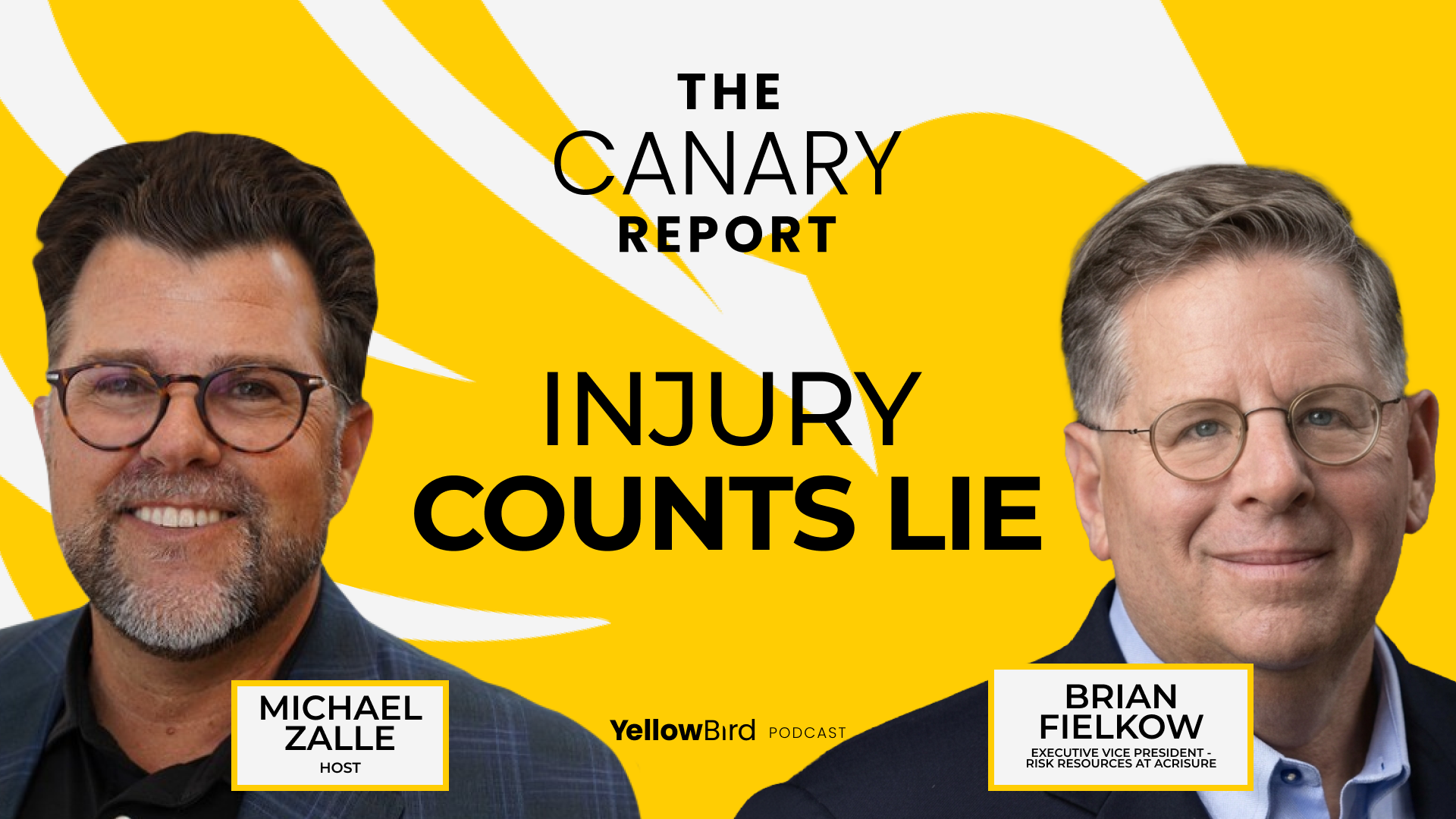
On The Canary Report, Michael Zalle speaks with Brian Fielkow, Executive Vice President of Risk Resources at Acrisure, about turning safety from a compliance requirement into a competitive advantage. Drawing on more than 25 years of experience in business leadership, risk management, and cultural transformation, Brian shares practical lessons on measuring safety performance, prioritizing serious risks, and growing businesses without losing their culture.
Measure Safety Beyond Injury Counts
Low injury rates and clean loss records are worth celebrating, but they don't necessarily prove that an organization has effective safety systems. Brian encourages leaders to look beyond lagging indicators such as TRIR and assess whether their approach genuinely prevents incidents or simply benefits from good fortune. Brian compares the need to report safety as we do with financials:
“We don't necessarily measure financial success by the lack of bankruptcy, but we measure safety success by injury counts, by the lack of injuries. And when you measure injuries or crashes or whatever it is you're measuring, you're measuring pain and suffering. I'm not sure that's the right way to do it.” Brian Fielkow
Leading indicators, including
training quality, internal audits, hazard reporting, and employees' willingness to call a stop-work timeout, offer a clearer picture of safety performance. These measures help organizations identify weaknesses and strengthen injury prevention before someone gets hurt.
Turn Safety Into a Competitive Advantage
In price-driven industries, competing on cost alone can limit growth and profitability. Brian's experience building Jetco Delivery demonstrates how a strong safety culture can differentiate a business.
Rather than abandoning existing strengths such as customer service and work ethic, he focused on preserving what worked while introducing better technology, processes, and equipment. Over 13 years, Jetco grew tenfold while maintaining profitability and safety standards. Brian explains how safety can be turned into a competitive advantage:
“I really learned about safety from an executive standpoint: it's not a department, it's not a sign on the wall, it's who you are. And by focusing on that, you wind up attracting the right customers. You wind up competing against a much smaller, more refined group of competitors.” - Brian Fielkow
Safety management is more than a defensive measure. When safety and culture become part of a company's value proposition, they can strengthen customer relationships and support sustainable growth.
Focus on the Risks That Matter Most
Safety teams can lose effectiveness when they spread resources across too many initiatives without prioritizing the hazards most likely to cause serious harm.
Brian discusses the Serious Injury and Fatality (SIF) framework, which encourages organizations to focus on high-consequence risks rather than treating every hazard as equally significant. Asking leaders which risks concern them most provides a practical starting point for developing targeted prevention strategies and allocating resources effectively.
Close the Gap Between Leadership and the Frontline
A company's safety values may look clear in the boardroom but become less consistent across managers, departments, and locations. Brian recommends asking the same safety questions at different organizational levels and comparing the answers.
“So I always look at kind of the leader's role. Are there gaps? In other words, if I ask questions, the same questions to different levels of the organization, leadership, frontlines, mid-management, or different locations, will I get the same answers? I want to know where the gaps are, because those gaps are everywhere." - Brian Fielkow
These differences can reveal gaps in communication, safety accountability, and everyday practice. For organizations managing multiple locations or integrating acquired businesses, consistent communication and employee engagement are essential to building a workplace safety culture that translates into action.
Make Safety the Foundation of Business Performance
One persistent leadership blind spot is the belief that safety slows productivity, particularly when deadlines and customer commitments create pressure. Brian points to Paul O'Neill's leadership at Alcoa as an example of how an unwavering commitment to safety can support business success.
Leaders must maintain safety standards even when operations become challenging. Meeting customer commitments requires better planning and execution, not shortcuts that put employees at risk.
What Safety Leaders Can Put to Work Today
- Track leading indicators: Measure prevention efforts, not just past incidents.
- Prioritize serious risks: Focus resources on hazards with the greatest potential for harm.
- Challenge outdated thinking: Treat safety as a driver of productivity and profitability.
- Listen across the organization: Identify gaps between leadership expectations and frontline experiences.
- Protect culture during growth: Preserve established strengths while introducing the systems needed to scale.
Building a strong safety culture requires consistent leadership, meaningful measurement, and a commitment to protecting people under pressure. Brian's experience shows how effective risk management and workplace safety leadership can strengthen employee well-being while supporting business performance.
Listen to the full conversation with Brian Fielkow on The Canary Report:
Apple Podcasts Link:
https://go.fame.so/WMoYE1ma
Spotify Link:
https://go.fame.so/nb38V9gk
YouTube Link:
https://youtu.be/U8aK7uPrSxY
Newsletter: https://go.fame.so/eY_dLU7i