Fear-Based Safety Management Doesn’t Work (Here's What Does)
How one construction safety leader is replacing fear-based compliance with trust, coaching, and field-level ownership across a growing workforce.
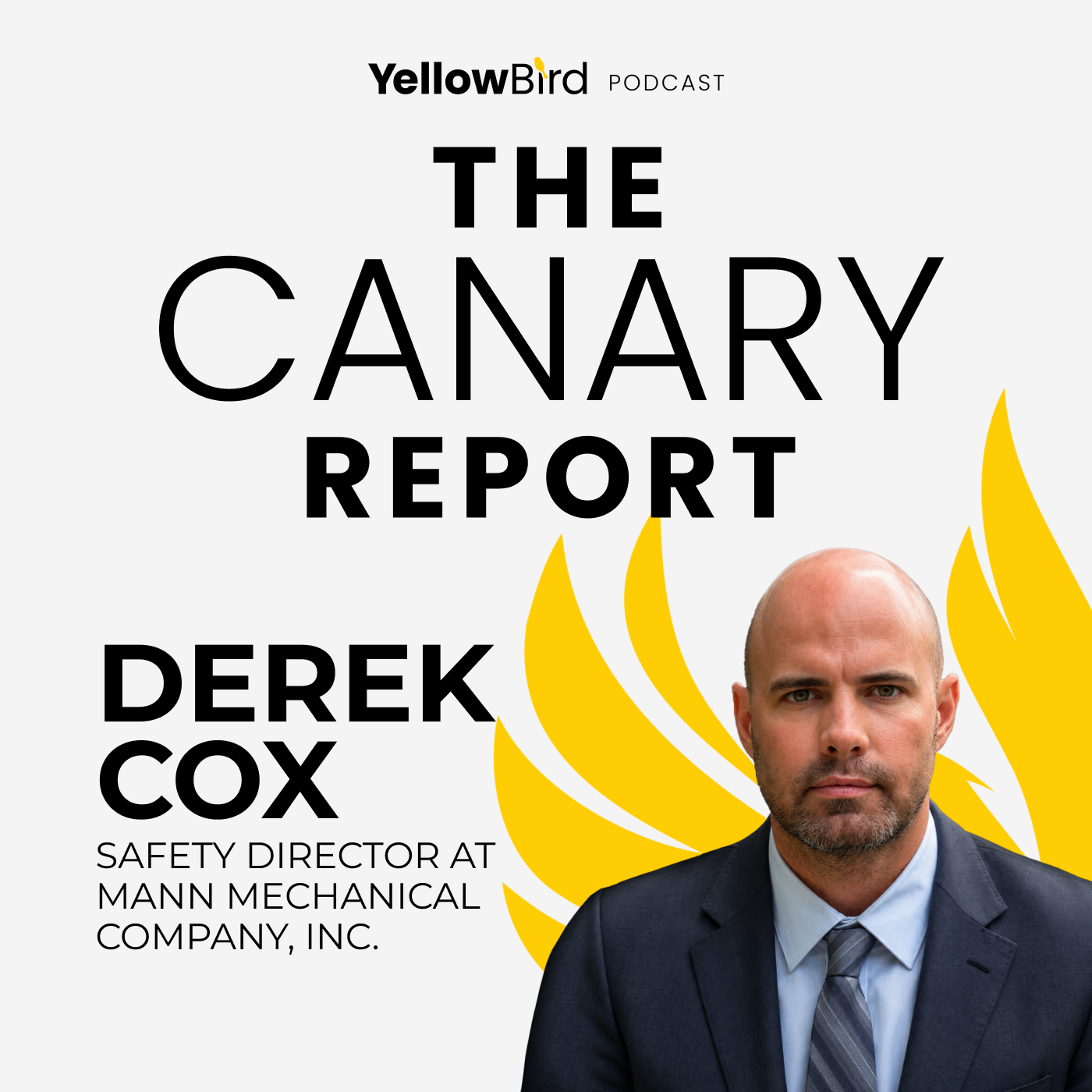
Derek Cox has spent over two decades in the construction industry, and his perspective on safety leadership is built on a foundation of real-world experience and hard-won humility. He often shares his unconventional journey from being a troubled youth with a GED to becoming a union journeyman plumber and eventually a safety director.
This background gives him a unique level of credibility when he walks onto a job site because he has lived the life of the people he now protects. He believes that authenticity is a leader's greatest asset, as workers are much more likely to trust someone who understands the actual physical demands of the tools.
Moving Beyond the Legacy of Crime and Punishment
One of the most significant changes Derek has implemented is moving away from the old-school mentality of using fear to drive compliance. He points out that the traditional approach of yelling and using "crime and punishment" tactics might have worked decades ago, but it fails to resonate with the modern workforce. Today’s workers have more options and expect to be treated with a level of respect that was often missing in the past.
By choosing a coaching-based leadership style, Derek ensures that safety becomes a shared value rather than a mandated burden. This human-centered safety approach focuses on building genuine relationships with all 270 employees across every project location.
The Power of the 95/5 Rule and Positive Observations
In many organizations, safety programs tend to obsess over the small percentage of errors while ignoring the vast majority of safe behaviors that occur every day. Derek has flipped this script at Mann Mechanical by implementing a risk management strategy that focuses on positive observations.
He recognizes that ninety-five percent of the workforce is doing exactly what they are supposed to be doing, yet they rarely receive appreciation for their diligence. By requiring his team to document what is going right, such as a worker correctly tying off on a lift, he reinforces a positive safety culture. This strategy shifts the focus from hunting for violations to celebrating the successful habits that prevent incidents before they happen.
Scaling Safety Leadership Through Strategic Empowerment
As Mann Mechanical grew from 100 to over 270 employees in just three years, Derek realized he could not be everywhere at once. To maintain high standards across twelve to fifteen active job sites, he developed the Safety Champion Program to distribute expertise throughout the company. This program identifies natural leaders within the crews and provides them with specialized training to handle immediate safety questions on-site.
By empowering foremen and crew leaders to own the safety on their projects, he creates a self-sustaining system of hazard management. This transition allows him to act as a support system rather than a supervisor, giving the field teams the air cover they need to lead effectively.
Addressing the Technical and Human Realities of Risk
Protecting workers requires a deep understanding of both the specialized technology and the physical limitations of the human body. In the world of data center construction, Derek manages unique hazards involving liquid-to-chip cooling systems and Aquatherm piping that requires heat bonding.
Beyond the technical challenges, he also addresses the "hidden" risks of fatigue in specialized operations like concrete pumping. He notes that these crews often wake up at 1:00 AM and find themselves walking on rebar in the dark by 2:00 AM, only to drive 90,000-pound trucks home after a fifteen-hour shift. Effective site safety must account for these grueling human factors to ensure every worker returns home whole at the end of the day.
Listen to the full episode of The Canary Report to hear Derek's perspective on trust, leadership, workforce development, and what it takes to build a safety culture that grows with the business.
Apple Podcasts: https://bit.ly/4fz71W1
Spotify: https://bit.ly/4xonCCf
YouTube: https://youtu.be/Pg8vlZm9d-0
Newsletter: https://bit.ly/446xyCU