The Real Reason Safety Programs Fail (Hint: It’s Not Training or Compliance)
A real-world look at how trust and connection drive safer jobsites
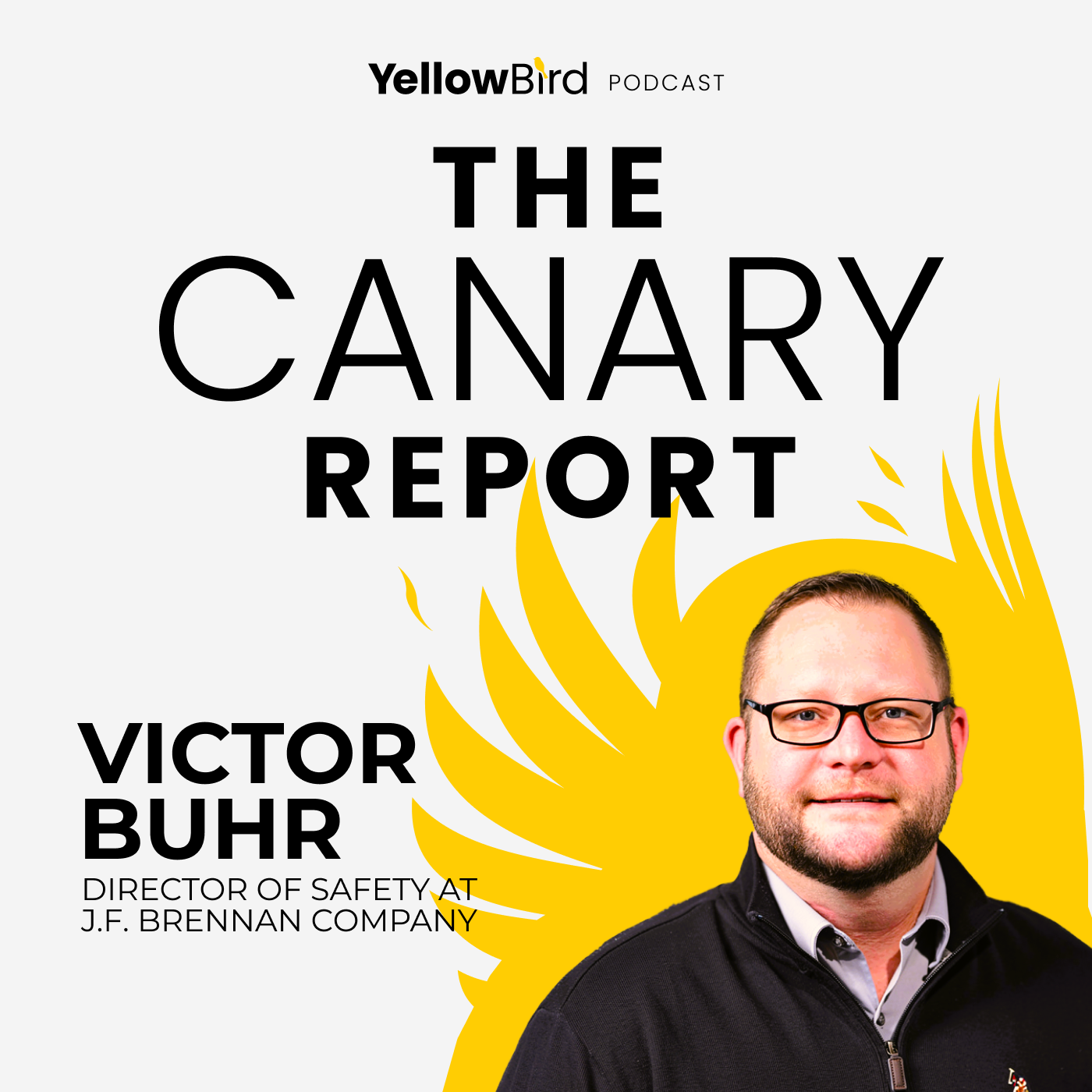
Safety in high-risk industries often carries a reputation for being bureaucratic, enforcement-driven, or, at worst, disliked on the jobsite. But in a recent episode of The Canary Report: Safety & Risk Management, host Michael Zalle sits down with Victor Buhr, Director of Safety at J.F. Brennan Company, to explore a different perspective: that the true levers of safety are connection, trust, and human-centred leadership, not credentials alone.
J.F. Brennan, a century-old marine heavy civil contractor, runs more than 60 projects across 48 states, with crews ranging from divers and construction teams to equipment operators on complex waterways. Victor joined the company at a pivotal moment, when leadership decided to rethink safety from the ground up. What he found was a department and culture that weren’t focused on checking boxes; they were focused on people.
“Safety isn’t about being the cop,” Victor explains in the episode. “It’s about building relationships, earning trust, and ultimately getting people home to their families.” For Victor, this reframing of safety was transformative. It shifted his role from enforcing compliance to actively supporting employees, and it gave him a chance to make a real difference for the people on site and the families waiting for them at home.
Hiring for Personality and Trainability
One of the most striking lessons from the conversation is the approach J.F. Brennan takes to hiring safety leaders. Many organizations still prioritize credentials first, degrees, certifications, and years of technical experience. While these qualifications matter, Victor points out that credentials alone don’t guarantee effective leadership.
“Just because someone has a card doesn’t mean they connect with people or can influence behavior,” Victor notes. Historically, this gap created the “safety cop” dynamic: a figure on the site seen as enforcing rules rather than enabling safe work. At Brennan, they flipped the model. They hire for personality and trainability first, and then train the technical skills second.
This shift isn’t just theory; it has measurable outcomes. Field safety managers now spend time building relationships on jobsites, teaching why safety matters rather than imposing rules. The result is a culture where safety is a shared commitment, not a burden, and employees are more engaged, more compliant, and more likely to look out for one another.
Victor’s experience underscores a broader lesson: safety leadership isn’t a title; it’s a function of influence. Those who can connect, empathize, and communicate often achieve more than those with the longest list of certifications.
Safety Is About Families, Not Just Employees
Another theme that resonates throughout the episode is the human dimension of safety. Victor emphasizes that the work doesn’t just protect employees, it protects families. Parents, siblings, spouses, and children all rely on these leaders to make thoughtful, responsible decisions every day.
Victor reflects: “I wanted to help people. And while this is a roundabout way of doing that, I feel like I am. And I’m helping people beyond the people that we see on the project site. It’s the people that we don’t see who we really have to be thinking about, the family members, parents, brothers, sisters, uncles, aunts that are all expecting this person to come home.”
This perspective transforms compliance from a series of abstract rules into a human responsibility. Leaders who internalize this shift make decisions differently, whether it’s prioritizing training, enforcing procedures, or coaching employees on the nuances of safe behavior. It’s safety framed as caregiving, not gatekeeping.
Hands-On Training That Sticks
Victor also stresses that high-risk industries demand hands-on, real-world training. Many organizations rely heavily on digital modules or classroom-style instruction, but in marine construction and heavy civil work, the difference between knowing a procedure and executing it safely can mean the difference between a near-miss and a serious incident.
Brennan’s approach is simple but effective: every January through April, employees participate in an intensive, in-person training program at a dedicated training center. Employees practice skills in realistic conditions, under supervision, and with real equipment. Throughout the rest of the year, the team reinforces these lessons through micro-training, refresher sessions, and performance evaluations on site.
This model balances operational demands with safety priorities. By front-loading training during slower months and integrating it into daily routines, Brennan ensures that employees are capable, confident, and ready for high-stakes work when the production clock is ticking.
Automated Compliance That Scales
Keeping track of certifications, renewals, and regulatory requirements across dozens of employees and multiple jurisdictions is no small feat. Victor explains that Brennan moved from spreadsheets to Power BI-driven predictive alerts. Employees and supervisors receive notifications months in advance of certifications expiring, avoiding last-minute scrambles and ensuring everyone is current.
This shift from reactive to proactive compliance frees safety teams to focus on coaching, culture, and real-time problem-solving rather than administrative firefighting. It’s a clear example of how systems can support people rather than burden them, a recurring theme throughout the episode.
Observed Competence Over Paper Credentials
Victor shares one of Brennan’s most innovative practices: operator performance evaluations. Every operator, on every piece of mobile equipment, is observed performing tasks in real conditions. Supervisors use iPads and equipment-specific checklists to verify competence, ensuring that safe operation is consistent across the board.
This is a critical distinction. A certification card indicates training, but it doesn’t prove the operator can handle the pressures and realities of a live jobsite. By making observation and verification standard practice, Brennan closes the gap between compliance and competence, raising the standard of safety across all projects.
Preparing for Language and Cultural Challenges
Finally, Victor highlights the importance of anticipating workforce diversity and language differences before they become problems. Brennan’s experience with a French-speaking crew on a Quebec submarine cable project gave them early insight into building organizational muscle memory for multilingual operations.
By proactively preparing training materials, visual protocols, and culturally competent leadership, safety leaders can prevent communication errors, reduce risk, and improve onboarding for diverse crews. Planning ahead is far easier and safer than reacting after the fact.
Key Takeaways
The conversation between Michael Zalle and Victor Buhr offers multiple lessons for safety leaders, risk managers, and operations executives:
- Hire for personality first: Credentials matter, but emotional intelligence and the ability to influence behavior matter more.
- Think beyond the jobsite: Safety is about protecting people
and their families, not just checking boxes.
- Hands-on training saves lives: Real-world practice is non-negotiable in high-risk environments.
- Leverage smart systems: Automating compliance tracking frees teams to focus on coaching and culture.
- Verify competence, don’t assume it: Observed performance closes the gap between knowledge and execution.
- Plan for cultural diversity early: Language and cultural competency reduce risk and build resilience for growth.
Victor’s insights demonstrate that safety leadership is about more than enforcing rules or achieving compliance metrics. It’s about building systems, processes, and culture that make safe behavior easier, more natural, and more human. It’s about caring for people, empowering teams, and seeing beyond the immediate site to the families depending on every decision made.
Michael sums it up perfectly in the episode: safety works when people want you there, not because they have to be. The Canary Report episode with Victor Buhr is a masterclass in transforming compliance into connection, rules into relationships, and procedures into purpose.
For leaders grappling with turnover, multi-site complexity, or compliance fatigue, this conversation offers practical strategies grounded in experience, empathy, and results.
🎧 Listen here:
Apple Podcasts:
https://hubs.ly/Q0420Lx-0
Spotify:
https://hubs.ly/Q0420Jwg0
YouTube:
https://hubs.ly/Q0420KRm0