Zero Risk Is a Lie. Smarter Risk Saves Lives.
Why the best safety leaders aren’t eliminating risk. They’re designing systems that help people navigate it with clarity, confidence, and control.
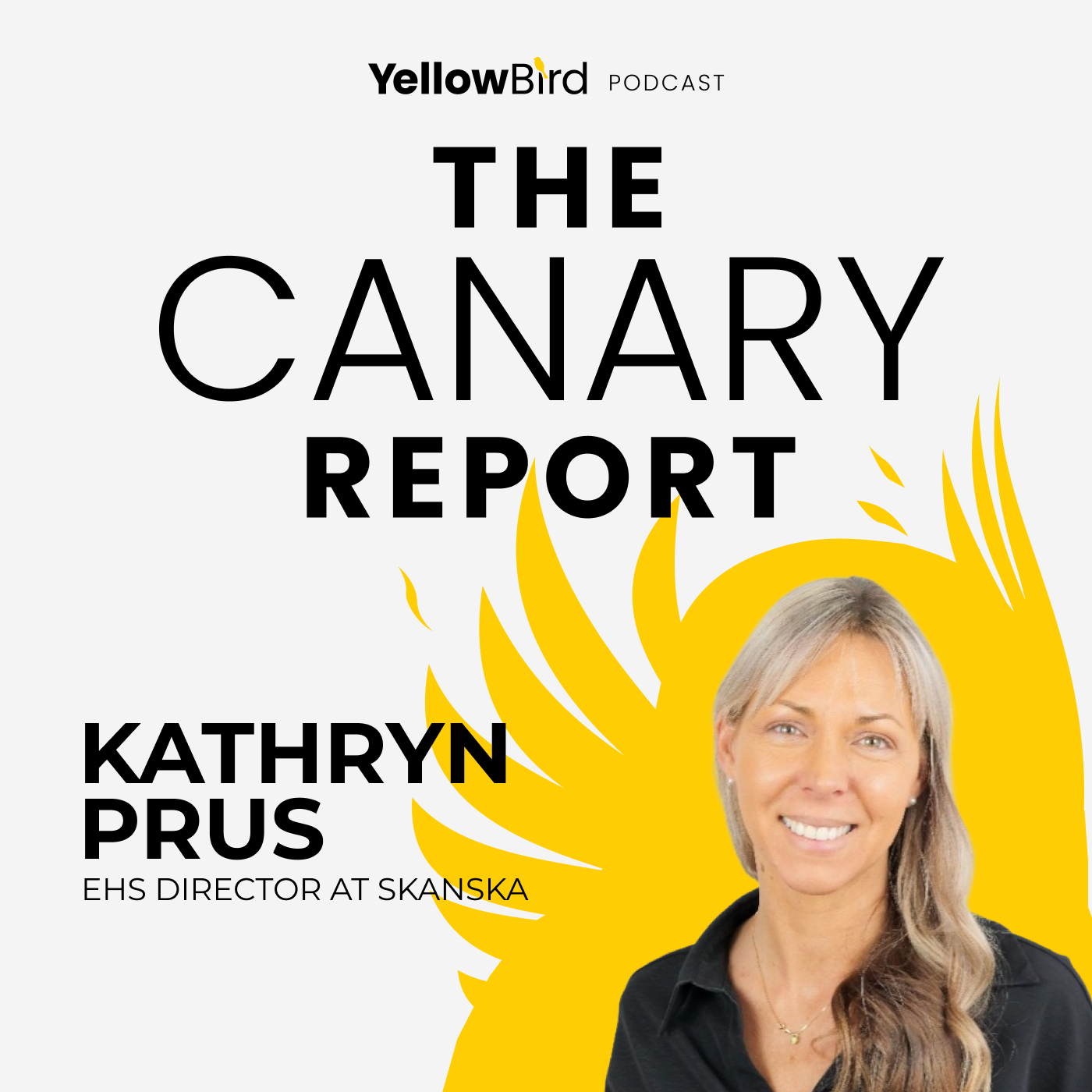
Safety rarely fails because people don’t care. More often, it fails because the systems around them make safe choices harder than they need to be. Rules stack up, expectations shift from one site to the next, and before long, workers are spending more energy decoding requirements than identifying real hazards.
That idea sits at the centre of this episode of The Canary Report: Safety & Risk Management, where host Michael Zalle sits down with Kathryn Prus, Environmental Health & Safety Director at Skanska. What unfolds is a grounded, experience-led conversation about what actually works in construction safety, and why the future of EHS depends less on enforcement and more on trust, consistency, and engagement.
Make Safety the Path of Least Resistance
Kathryn’s core philosophy is deceptively simple: make it easy for people to follow the rules. In construction, crews regularly move between job sites run by different general contractors, each with its own safety manuals, expectations, and enforcement styles. That inconsistency creates friction. Workers aren’t thinking about hazards; they’re thinking about which rule applies today.
The solution isn’t more policies. It’s alignment. By standardising core safety expectations across projects and trade partners, organisations reduce confusion and free up mental bandwidth for what actually matters: risk awareness and decision-making in the field. Kathryn shares how regional collaboration in Oregon, through groups like the SafeBuild Alliance, has helped contractors align on fundamentals, even while competing for work.
When compliance becomes the easiest option, it stops feeling like enforcement and starts feeling like good work.
Why Zero Risk Is the Wrong Goal
Another powerful thread in the conversation is the idea of calculated risk. Michael notes a pattern he’s seen across exceptional safety leaders: many of them are adventurers. Skydivers. Dirt bike riders. Shark cage divers. People who understand risk not as something to eliminate, but something to manage intelligently.
Kathryn agrees. Chasing “zero risk” sounds good on paper, but in real operations, it creates paralysis and false expectations. Every task carries risk. The role of safety leadership isn’t to deny that reality; it’s to build systems that help people make better decisions under pressure, with incomplete information.
This reframing is liberating for many EHS professionals. You’re not failing because risk exists. You’re succeeding when people understand it, respect it, and have the tools to manage it well.
Engagement Beats Enforcement Every Time
One of the most practical moments in the episode comes from Kathryn’s approach to hazard identification. Instead of defaulting to traditional toolbox talks, her team set up a mock hazard identification zone directly on a live job site. Crews competed in teams to find as many hazards as possible in 15 minutes. The prize? A pizza party.
The result was more than participation; it was insight. Over 60 workers cycled through the zone, and patterns emerged quickly. Certain trades spotted specific hazards immediately while completely missing others. When those blind spots were discussed afterward, learning happened organically, without lectures or defensiveness.
The takeaway is clear: when safety becomes interactive, people lean in. Gamification isn’t about trivialising risk, it’s about making learning stick by turning workers into active participants instead of passive recipients.
Test Safety Systems the Way Work Really Happens
That same philosophy shows up in how Kathryn’s team approaches work at height. When they know scissor lifts or boom lifts are coming up, they don’t just review procedures. They put someone in a harness, start the clock, and ask them to deploy trauma straps, gloves on, tools attached, pressure on.
Watching workers fumble with zippers, belts, and straps isn’t about catching mistakes. It’s about revealing the gap between written procedures and real-world conditions. Those moments spark better conversations, better equipment choices, and better preparation.
Paper safety looks clean. Real safety looks messy, and that’s exactly where the learning lives.
Trust Is Built One Conversation at a Time
While structured programs matter, Kathryn is clear that culture is built in daily interactions. Workers don’t decide whether they trust safety leadership based on manuals. They decide based on moments, like whether they feel safe saying, “I’m not sure how to do this safely.”
In Kathryn’s approach, those moments are invitations, not violations. Instead of dictating answers, she and her team talk through options, surface resources, and solve problems alongside the worker. That shift, from inspector to ally, changes everything.
When people trust that safety is there to help, not punish, they raise concerns earlier, report near-misses more honestly, and look out for each other. Compliance follows culture, not the other way around.
Mental Health Is Safety: Full Stop
One of the most human parts of the conversation centres on mental health. In Oregon, contractors are partnering through a construction suicide prevention initiative to run monthly toolbox talks focused specifically on mental health. These aren’t one-off awareness sessions. They’re ongoing, normalised conversations.
Topics range from alcohol use to seasonal pressures, especially around the holidays when call volumes to crisis lines spike. By partnering with organisations like Lines for Life, companies are grounding these discussions in real support systems tailored to the realities of construction work.
The message is simple but critical: psychological safety is not separate from physical safety. When leaders talk openly about mental health, stigma drops, and people are far more likely to ask for help before a crisis hits.
Collaboration Over Competition
Perhaps the most hopeful theme in the episode is collaboration. Despite operating in a competitive bidding environment, safety leaders across Oregon meet regularly to share lessons learned, near-misses, and new initiatives. Not because it improves margins, but because everyone wants people going home safe.
When one contractor shares a lesson, others implement it immediately. The impact multiplies. This kind of transparency strengthens regional safety culture and builds reputations that attract both talent and trust.
Safety, Kathryn reminds us, isn’t a zero-sum game. A rising tide really does lift all boats.
What This Means for Safety Leaders
This episode is a reminder that effective safety leadership is less about control and more about design. Design systems that reduce friction. Design conversations that build trust. Design experiences that engage people where they actually work.
When safety is consistent, human, and practical, it stops feeling like a burden and starts feeling like part of doing good work.
That’s how safety cultures stick, and that’s how people go home whole at the end of the day.
🎧 Listen to the full episode of The Canary Report: Safety & Risk Management
Apple Podcasts:
https://bit.ly/3LFMQt5
Spotify:
https://bit.ly/4qQODe2
YouTube:
https://youtu.be/5-ytKQpzKc8