The “Hub and Spoke” Safety Model That Keeps 60 Locations Aligned
This is a subtitle for your new post
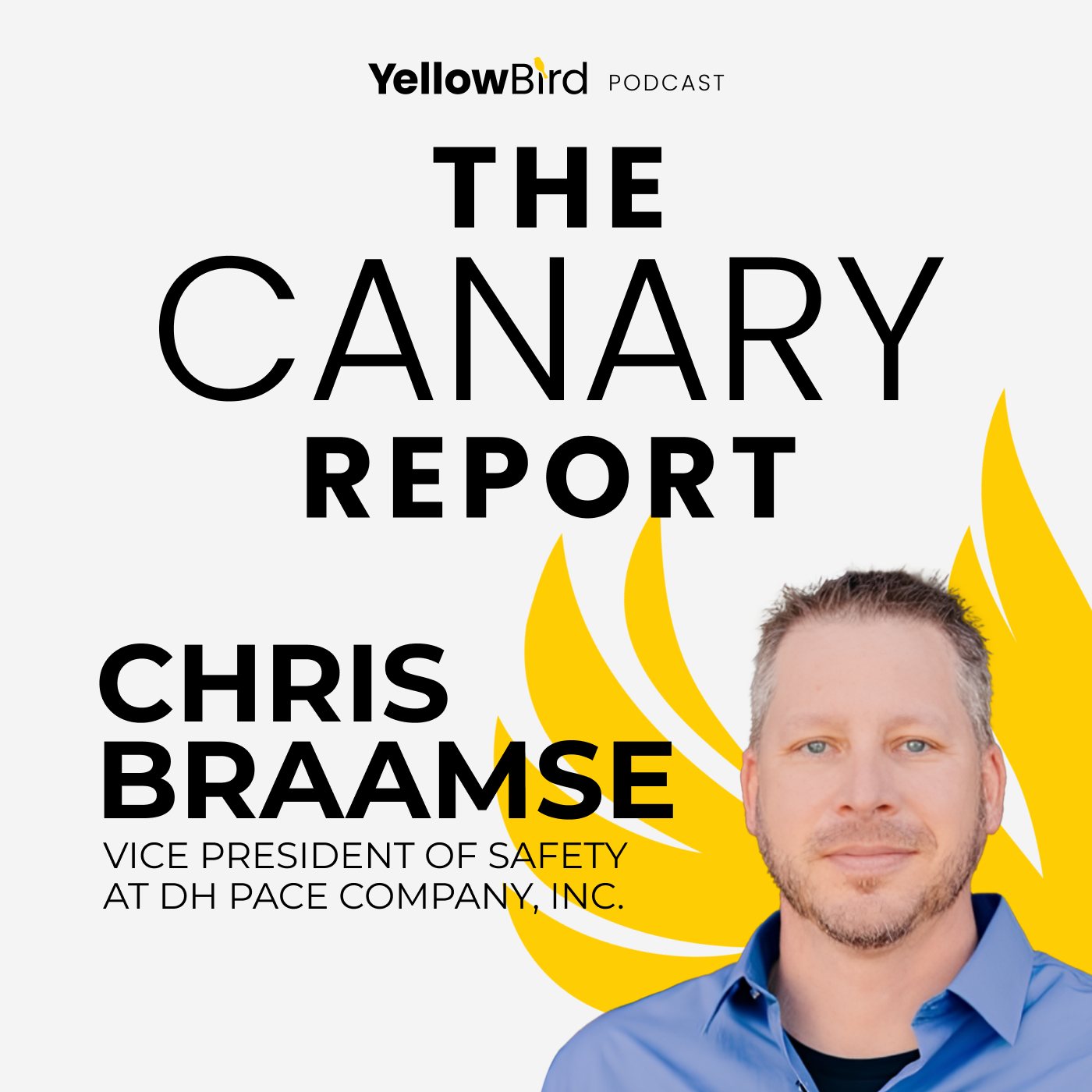
What happens when a career in protection starts entirely by accident?
This episode of The Canary Report details workplace safety leadership and OSHA compliance strategies used by Chris Braamse to manage a national program effectively.
For Chris Braamse, Vice President of Corporate Safety at DH Pace, the journey began as a volunteer firefighter who found the safety degree program on the literal next page of a college course catalog. That accidental discovery led to a masterclass in risk management strategy that spans some of the most demanding industries in the country.
In this latest discussion on The Canary Report, host Michael Zalle sits down with Chris to explore how safety culture building and injury prevention remain constant regardless of the sector. The conversation moves through Chris’s "baptism by fire" in the refuse industry to his current role overseeing 60 locations nationwide.
The Universal Language of Safety
One of the most striking lessons Chris shares is the idea that the core principles of protection are entirely portable. Throughout his career, which includes stops in food manufacturing, construction, and pharmaceutical labs, he has maintained that the fundamentals never change.
Whether a team is building Jolly Ranchers or battleships, the requirements for lockout tagout, electrical safety, and personal protective equipment are identical.
This perspective is essential for safety professional career development because it encourages leaders to look beyond industry silos. By mastering the basics of hazard recognition, a professional can transition between vastly different environments with confidence.
Chris explains that once you understand how to protect a human being from a specific hazard, the specific product being manufactured or serviced becomes a secondary detail.
Scaling with the Hub and Spoke Model
Managing safety for a national enterprise like DH Pace requires a structure that supports growth without losing the human element. Chris oversees a lean department of nine people who support 60 locations using a smart hub and spoke model. In this system, regional safety managers are based in major hubs like Kansas City or Atlanta and provide support to the surrounding satellite operations across multiple states.
This approach allows the team to be highly efficient while maintaining a strong leadership presence. Instead of attempting to place a full time safety coordinator at every small site, they use geographic clustering to ensure that every location has a dedicated point of contact. This model is particularly effective for managing EHS management during acquisitions or when launching new greenfield operations because it provides a clear framework for support from day one.
The 25% Travel Rule and Burnout Prevention
A common challenge for national safety leaders is the demand for constant travel, which often leads to professional exhaustion and high turnover. Chris has addressed this by implementing a 25% travel rule for himself, reserving his time on the road for high impact moments. He focuses his travel on employee appreciation dinners, strategic support for acquisitions, and major team events rather than routine audits.
By delegating the majority of the fieldwork to regional managers who handle "windshield time" in their own territories, Chris protects his leadership team from the grind of constant flying. This focus on workplace safety leadership through servant leadership ensures that when the VP shows up, it is to celebrate and support the team rather than simply check a compliance box. It is a strategy that values the family life of the safety professional as much as the safety of the frontline worker.
Building Culture Through Community
At DH Pace, building a safety culture goes beyond training sessions and manuals. The company invests heavily in community engagement through initiatives like "Team Impact" and the Kansas City Corporate Challenge. These programs turn the workplace into a community where employees compete in everything from volleyball to weightlifting, fostering a sense of pride and connection.
Chris believes that a fun and engaging workplace is naturally a safer one. When people feel connected to their colleagues and valued by their leaders, they are more likely to take ownership of the safety program. His philosophy of "say what you do and do what you say" ensures that these cultural values are reflected in daily operations. By involving operations and maintenance teams early in the decision making process, safety becomes a shared responsibility rather than a corporate mandate.
If you’re ready to rethink how you scale your safety program, subscribe to The Canary Report on Apple Podcasts or Spotify to hear more real world stories from risk leaders who are transforming the industry.
Find the full episode with Chris Braamse here:
Apple: https://bit.ly/3Rj1sRy
Spotify: https://bit.ly/4dBwWd3
YouTube: https://youtu.be/HjunD9SwkFs