The $70M Lesson: How Disability Is Quietly Producing Some of the Toughest Entrepreneurs
A conversation with Diego Mariscal on why navigating a world not built for you may be the best entrepreneurial training there is.
What if disability isn’t a limitation in business, but preparation for it?
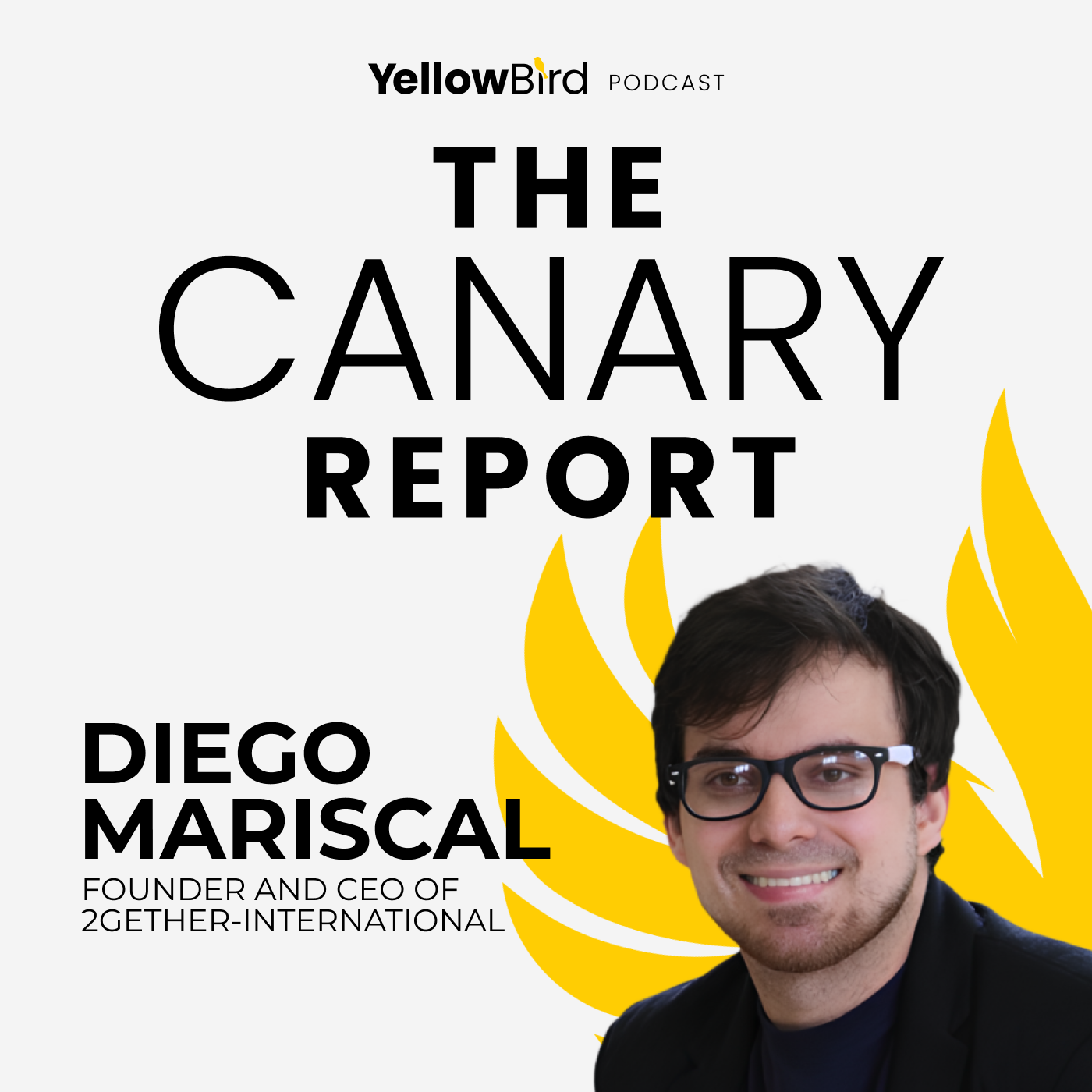
In this episode of The Canary Report: Safety & Risk Management, host Michael Zalle sits down with Diego Mariscal, Founder and CEO of 2Gether International, to explore that exact question. The conversation moves beyond surface-level inclusion and into something more strategic: how resilience, systems design, and access to capital determine whether disabled entrepreneurs can truly compete and scale.
With more than a decade of disability advocacy and entrepreneurial leadership, Diego has accelerated over 80 startups and helped mobilize more than $70 million in funding. But his most powerful message isn’t about statistics. It’s about reframing how we think about disability itself.
Disability as Entrepreneurial Training
Diego challenges a common assumption: that disabled founders succeed in spite of their disability. Instead, he argues they often succeed because of it. Navigating a world not built with you in mind requires constant adaptation. From transportation to communication to daily logistics, disabled individuals develop problem-solving skills under constraint. That daily repetition builds resilience, creativity, and comfort with uncertainty. Interestingly, these are the same traits every entrepreneur needs.
Entrepreneurship is, at its core, navigating imperfect systems and finding a way forward. For many disabled founders, that training began long before they wrote a business plan.
“Nothing About Us Without Us”
One of the pivotal moments in Diego’s journey came when he realized his early work in disability education wasn’t fully aligned with the community it aimed to serve. He encountered a principle that reshaped his leadership approach: “Nothing about us without us.”
If you are building programs, policies, or companies that serve a community, that community must be front and center. Not symbolically included, but a guiding principle of all activities.
That shift transformed Together International. Rather than designing programs about disabled For leaders in safety, compliance, and operations, the lesson extends beyond disability. Sustainable systems are built with the people closest to the risk and the work.
Breaking the Funding Barrier
Access to capital remains one of the most persistent challenges for disabled entrepreneurs. Higher rates of unemployment and poverty create a vicious cycle: fewer disabled individuals accumulate generational wealth or investor networks, which limits early-stage funding opportunities.
Diego explains that this is about structural barriers. Traditional investment ecosystems often evaluate disabled founders through a charitable lens rather than a competitive one. To address this, Together International is raising a $40 million blended-capital fund dedicated exclusively to founders with disabilities. By combining philanthropic and traditional investment capital, the fund challenges the false choice between doing good and delivering returns.
Navigating the Poverty Trap
Another systemic obstacle is the “benefits cliff.” Many disabled individuals rely on essential services such as Medicaid. In some cases, earning above certain thresholds can trigger a loss of benefits, creating a perverse incentive against growth.
The episode explores practical solutions, including corporate structuring strategies and ABLE accounts that allow entrepreneurs to build income while protecting critical services. These tools don’t eliminate systemic flaws, but they provide pathways for independence.
For leaders thinking about workforce development and inclusion, this conversation highlights an often-overlooked reality: policy design is often the barrier.
Designing for Disability First
Perhaps the most expansive idea in the conversation centers on innovation. Diego points to examples like curb cuts, audiobooks, and smartphones. These were technologies originally designed to support disabled users that ultimately benefited everyone. Designing for disability most often expands markets. When organizations treat accessibility as a compliance obligation, they limit its potential. When they treat it as a design principle, they unlock broader adoption and stronger systems.
For EHS leaders and executives, this insight reframes inclusion as strategic foresight. Systems built to accommodate edge cases are often more resilient for everyone.
Systems Change at Scale
Diego’s work doesn’t stop at startup acceleration. Through partnerships with institutions and advisory roles at the policy level, he’s working to shift the broader ecosystem from data collection to investment frameworks.
The conversation makes clear that meaningful change requires both individual empowerment and structural reform. Supporting one founder matters. Changing how capital flows matters more.
Inclusion as Strategy
Throughout the episode, a consistent theme emerges: disability should not be framed as a compliance requirement or a charitable obligation. It should be understood as a source of resilience, innovation, and competitive advantage.
It takes humility to acknowledge that existing systems may be flawed. It takes discipline to redesign them. And it takes conviction to invest in talent others may overlook.
Scaling opportunity without losing the human element is possible. But it begins with recognizing that resilience is already present, often in places we haven’t fully valued
👉 Tune in and subscribe to The Canary Report: Safety & Risk Management for candid conversations about leadership, risk, and building systems that actually work.
Apple Podcasts:https://bit.ly/4lachjJ
Spotify:
https://bit.ly/3PiJbm7
YouTube:https://youtu.be/TOIbgpFf_kM