The “Silent Stakeholder” Every Safety Leader Should Be Listening To
A conversation on scaling safety culture, preventing shortcuts, and helping employees reach retirement healthy and whole.
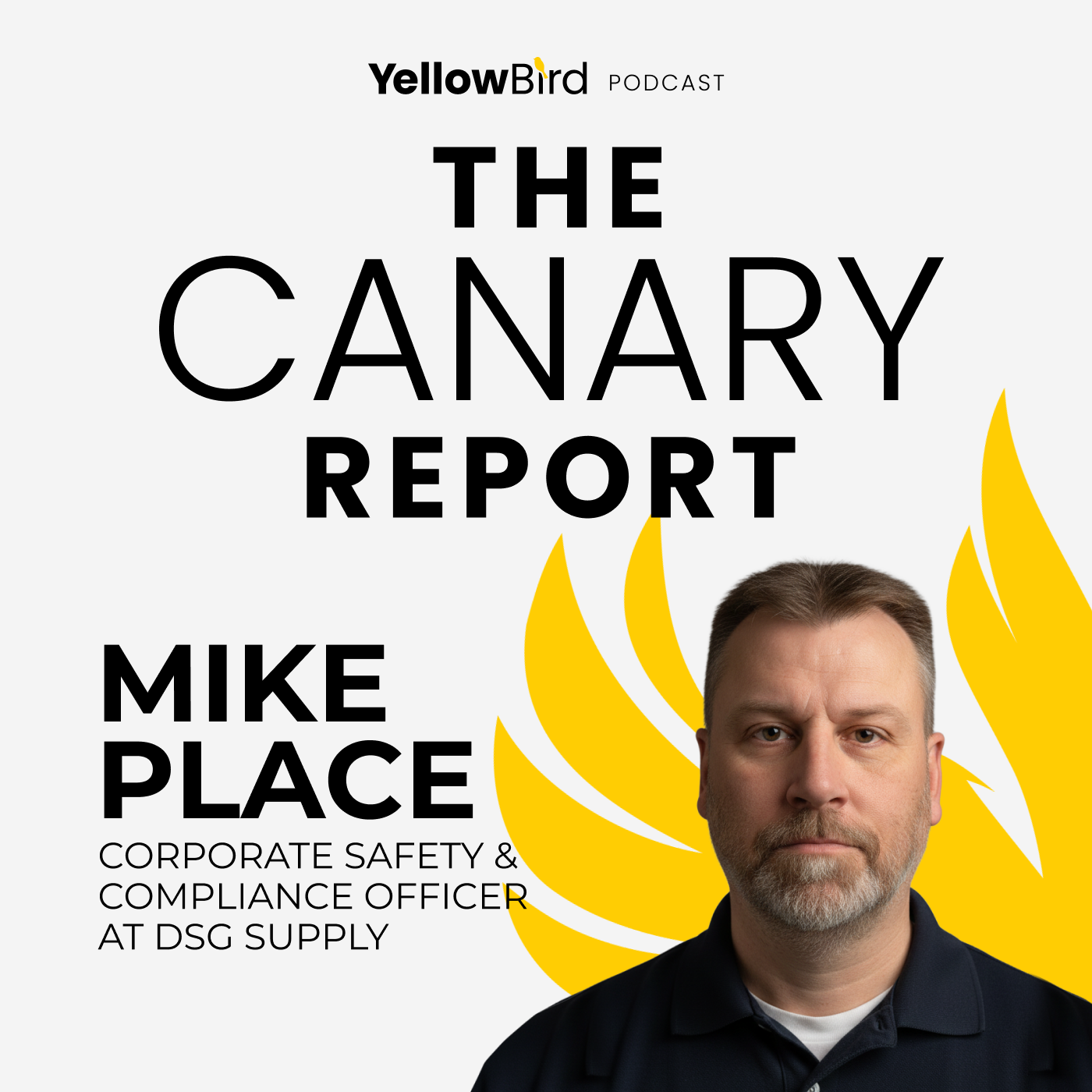
Imagine a warehouse supervisor in North Dakota considering a quick shortcut on a busy Tuesday afternoon. He might think about skipping a lockout procedure to save a few minutes, but he stops when he thinks about his children waiting for him at home. This moment of pause is exactly what Mike Place describes as the influence of the silent stakeholder.
As the Safety Director at Dakota Supply Group, Mike has spent two decades learning that effective occupational health and safety is a promise made to the families of every employee.
In a recent conversation on The Canary Report, Mike shared the strategies that helped him scale a workplace safety culture from 15 branches to over 60 locations. His approach moves away from rigid compliance checklists to focus on the human side of risk management strategies. For Mike, the goal of safety leadership is to ensure that every worker can eventually reach a healthy, vital retirement.
The Mandate of the Silent Stakeholder
Most organizations view safety through the lens of regulatory rules and citations, but Mike identifies the real authority as the moms, dads, spouses, and children of his team. These individuals are the silent stakeholders who do not just hope their loved ones come home safely; they view it as a mandate. When a leader amplifies this perspective, safety stops being a corporate burden and becomes a personal commitment to the people who matter most.
This shift in safety mindset transforms how workers view their daily tasks. Instead of following a rule to avoid a fine, they follow a protocol to honor their families. This emotional connection is a powerful tool for incident prevention, as it encourages workers to look out for one another with a sense of genuine care.
Scaling Safety in a Growing Organization
Managing a workplace safety culture across 64 locations requires a system that is both effective and replicable. When Dakota Supply Group grew by 400 percent, Mike realized that he could not be the "hero" who personally delivered every training session or conducted every inspection. He shifted his focus to building a network of safety coordinator roles at every branch location to ensure that safety remains a local priority.
Mike explains that a high-level safety director should act as a program manager and a cheerleader rather than trying to fly every plane. By delegating the delivery of safety training programs to local leaders and third-party partners, he created space for strategic vision and long-term planning. This scalable model allows the organization to onboard new acquisitions smoothly without losing its grip on occupational health and safety standards.
The First Filter: Leading with a Parental Eye
One of the most effective ways to cultivate safety-first decision making is to adopt what Mike calls the parental mindset. He compares safety leadership to the hyper-vigilance a parent feels for a newborn child, noticing every sharp corner and potential hazard in the room. When leaders train themselves to see the world through this filter, they begin to identify threats before their teams even encounter them.
This proactive approach is a practiced behavior that improves with consistency over time. By making safety the first filter in every professional decision, leaders can lower injury rates and build a culture of deep trust. Mike encourages his team to maintain this "head on a swivel" mentality, ensuring that hazard awareness becomes second nature for every employee-owner.
The Retirement Test and the Ownership Advantage
At Dakota Supply Group, the fact that the company is employee-owned serves as a "hidden elixir" for safety commitment. Because every worker has a stake in the business, they view risk management strategies as a way to protect their own investment and their colleagues' futures. This sense of ownership encourages a brotherhood where people are less likely to take unsafe shortcuts that could harm the organization or their fellow owners.
Ultimately, Mike believes the true measure of a safety program is whether its people can enjoy a healthy retirement. Safety is an investment in the long-term quality of life, preventing the wear and tear that leads to a golden age filled with chronic pain. By focusing on this long-term vision, organizations can move beyond mere safety compliance to create a legacy of health and vitality for every member of the team.
Are you ready to transform your approach to risk and build a safety culture that scales? Listen to the full conversation with Mike Place to discover how to put people first and lead with heart.
👉 Listen on Apple Podcasts: https://bit.ly/4cVD1lx
👉 Listen on Spotify: https://bit.ly/4wh4LZq
👉 Watch on YouTube: https://youtu.be/F6NfWyDxZ7E