Chris Murphy on Safety Built for Imperfect People
Why blame fixes nothing, how superintendents became the company's best safety teachers, and what it takes to build safety that works for real people.
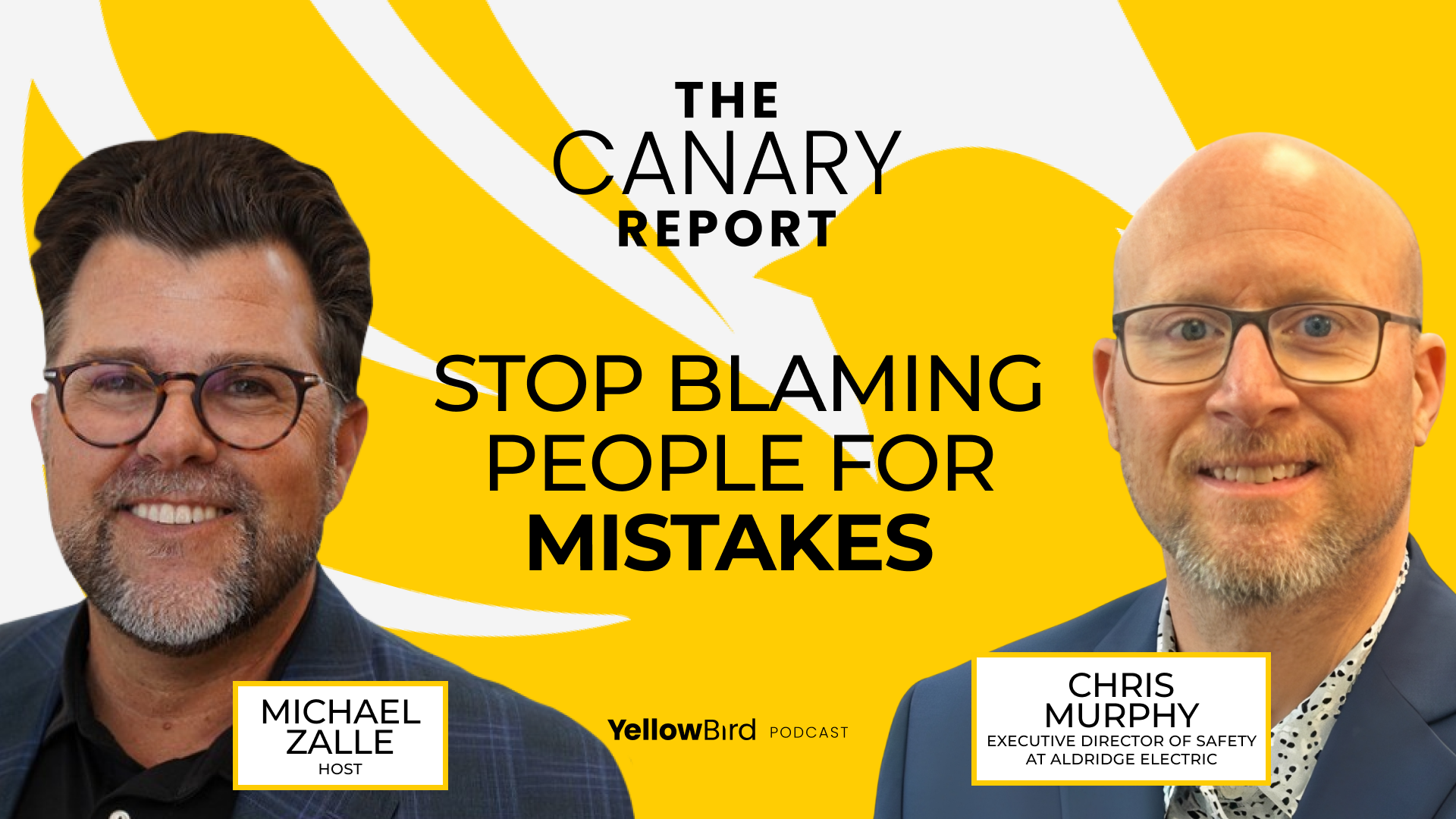
Chris Murphy spent years looking at the bottom of the safety pyramid, and so did most of the industry.
"For decades, a lot of times we were always looking at the bottom of the pyramid, like we can just control those unsafe acts and those unsafe conditions and everything above that's going to dissipate and everything's going to be unicorns and rainbows. And that's not how it is." - Chris Murphy, Aldridge Electric
His conclusion? If the traditional approach is going to work, then people have to be perfect, and people aren't.
Chris is Executive Director of Safety for Aldridge Electric, delivering complex infrastructure across transportation, power and other mission-critical industries. He came to safety by way of juvenile probation, and he still sees it as the same mission: protecting people by understanding what actually drives their decisions.
Michael Zalle recently sat down with him for The Canary Report. Their conversation is dives into what "Safety Differently" means when a company of a little over 2,000 people commits to it.
Blame Fixes Nothing: Why Aldridge Moved to HOP
Chris hears the same reaction every time someone meets Safety Differently or Safety 2.0: are we letting people off the hook? His answer is no. Standards and accountability stay where they are, and what goes away is the idea that you can eliminate every human mistake through rules and discipline.
For decades, he said, investigations started with "who messed up?" and focused heavily on the individual. Why didn't they follow the procedure, and why did they make that bad decision? In his experience, that line of questioning just doesn't help.
What Aldridge uses instead is human and organizational performance (HOP), which Chris boiled down to five principles off the top of his head: errors are normal; blame fixes nothing; context drives behaviors; work as planned isn't always how work actually takes place; and how we respond matters. He made the last one personal: when your kid does something wrong, you can coach and teach, or you can yell and punish and stifle learning.
Underneath all of it is a different view of the field.
"It's looking to them and looking at them as a solution provider rather than the problem. They're the solution provider for you, right? They're the ones that are going to give you that honest feedback." - Chris Murphy, Aldridge Electric
Michael described a roundtable of 20 professionals reviewing a scope for a reporting tool. The thing they cared about was fifth on the list. "I was way off," he said. The people in the field were being practical about what's important.
Superintendents at the Front of the Room
The thing Chris calls one of the best he's seen in his career had nothing to do with new rules. Before Aldridge built its SIF (serious injury and fatality) prevention program, it ran training on human performance and what the company calls brain-centered hazards, like fatigue.
The safety department didn't teach it. About 40 to 50 superintendents and general foremen were made safety champions and taught their own craft, in different classes, for almost an entire year.
"Never in a million years would I have thought the general foreman and superintendents and those individuals would have got up there and taught." - Chris Murphy, Aldridge Electric
When supervisors, or someone in the same union who has experienced it, are up front, Chris said, people listen more intently. Because those leaders were part of the solution, the material now shows up organically in daily task analyses and job-site conversations, and Aldridge uses that model for anything it rolls out.
The same patience shows in how HOP itself is spreading. It has lived with executives for a year and a half to two years before moving to the next level, because force-feeding it isn't genuine. Some things never go online, either. Culture training is facilitated in person, two trainers at a time, around the country, and Aldridge foots the bill rather than treating it as a cost question.
Failure Is Coming, So Plan to Recover
Chris admits he was always a thrill seeker. He loves jumping out of airplanes and still wants to BASE jump, and he says hiring him as a safety professional straight out of school would have been the wrong move. Michael noted that people in safety often enjoy risk outside work and framed it as controlled risk: there's no such thing as zero risk in getting anything done.
"Listen, a failure is going to occur. It's going to happen. Something's going to happen. You just want to make sure you have those effective controls in place so that you could recover. You don't get seriously hurt. You can still have fun."- Chris Murphy, Aldridge Electric
That's SIF prevention in one breath: build capacity, put effective controls in place (proactive safety), and accept that normal work always involves some variability. Chris's department of about 60 safety professionals teaches it in house, in a form he wants simple enough that people actually understand it.
What you can put to work this week
- Change the first question in your next investigation. Drop "why didn't they follow the procedure" and ask what made that decision make sense to the person in the moment, because context drives behaviors.
- Pick your next safety champions from the field. At Aldridge, when superintendents and general foremen taught their own craft, people listened more intently. Chris calls it a game changer compared with a safety professional standing up in front of a class. Start with one topic and one group.
- Decide which trainings never go online. Chris says Aldridge doesn't look at it from a cost perspective. Culture training is all in person, and that's one they won't make any changes on. Name yours and protect them.
- Treat the crew as your honest feedback loop. Before you finalize a process or tool, put it in front of the people who do the work and listen to which priorities they say matter.
Nobody wakes up planning to get hurt
Chris's career started with trying to understand why young people make the choices they make, and he says the mission in safety is the same one. Once you accept that errors are normal and blame fixes nothing, you stop building systems that only work for perfect people and start building ones that let real people recover.
Hear the full conversation with Chris Murphy on The Canary Report
- Apple Podcasts Link: https://go.fame.so/JfcjJAMw
- Spotify Link: https://go.fame.so/spotify-chris
- YouTube Link: https://youtu.be/ab6jF_KTeZI
- Newsletter: https://go.fame.so/newsletter-chris